Art silk
A History of the Printed Silk Scarf: From Woodblock to Digital
Printed silk handkerchiefs were sold in London by 1707. How woodblocks, yuzen, copper plates, rollers, screens and inkjets put pictures on silk, from museum records.
Which era of printed silk is yours?
3 questions, 15 seconds.
Question 1 of 3
Which do you love most?
Question 2 of 3
Colour?
Question 3 of 3
How will you wear it?
Your answer
Today: an artist's painting, printed on both sides
One artist's own drawings and paintings, printed on both sides of the silk. Aubrey Kurlansky's 90 cm squares are limited editions with hand-rolled hems: from $219 (£169).
See Aubrey Kurlansky's squaresYour answer
The 19th-century printed handkerchief
Maps, news and souvenirs, finely printed from engraved plates. For a picture you can wear now, Aubrey Kurlansky's squares start as his own drawings and photographs: from $219 (£169).
See Aubrey Kurlansky's squaresYour answer
The roller-printed silks of the 1890s
Dense, repeating florals like Liberty's. Aubrey Kurlansky's mirrored botanical prints follow the same idea in silk twill: $219 (£169) for a 90 cm square.
See Aubrey Kurlansky's squaresGet 20% off a first order
We'll email you a personal 20% code for your first order, then new designs as they arrive.
One email with your code, then new designs. Unsubscribe any time.
The printed silk scarf is much older than most histories say. People printed patterns on silk two thousand years ago, and London map sellers were selling silk handkerchiefs printed from engraved plates by 1707; by 1713 people called them “printed handkerchiefs”. Since then each new method has changed what silk could carry: woodblocks, Japanese yuzen paste resist (around 1700), copper plates, rollers (from 1783), screens (on silk scarves by about 1925) and inkjet printers (in commercial use from 1990).
Ask for the history of the silk scarf and you’ll usually be told it starts in 1937, with one Paris house’s square. That’s a famous chapter, but it’s late. Every date below links to a museum record, and every picture is a public-domain museum piece, most of them silk.
How each method put a picture on silk
| Method | On silk by | Colours | What it needs |
|---|---|---|---|
| Painting and resist dyeing | 2nd century BCE (China) | Any, by hand | A painter for every piece |
| Woodblock | 700s (China, Japan) | One block per colour | Carved blocks, many impressions |
| Yuzen paste resist | c.1700 (Japan) | Many, brushed by hand | Rice paste, a skilled dyer |
| Engraved copper plate | 1707 (London) | One, fine lines | An engraver |
| Engraved roller | 1890s on silk (invented 1783) | Up to 20 or more by 1900 | Factory machines, long runs |
| Screen | c.1920–25 on silk | One screen per colour | A screen for every colour |
| Inkjet (digital) | 1990 (commercial) | As many as the inks can mix | No screens; a design file |
Before the press: painting and resist on silk
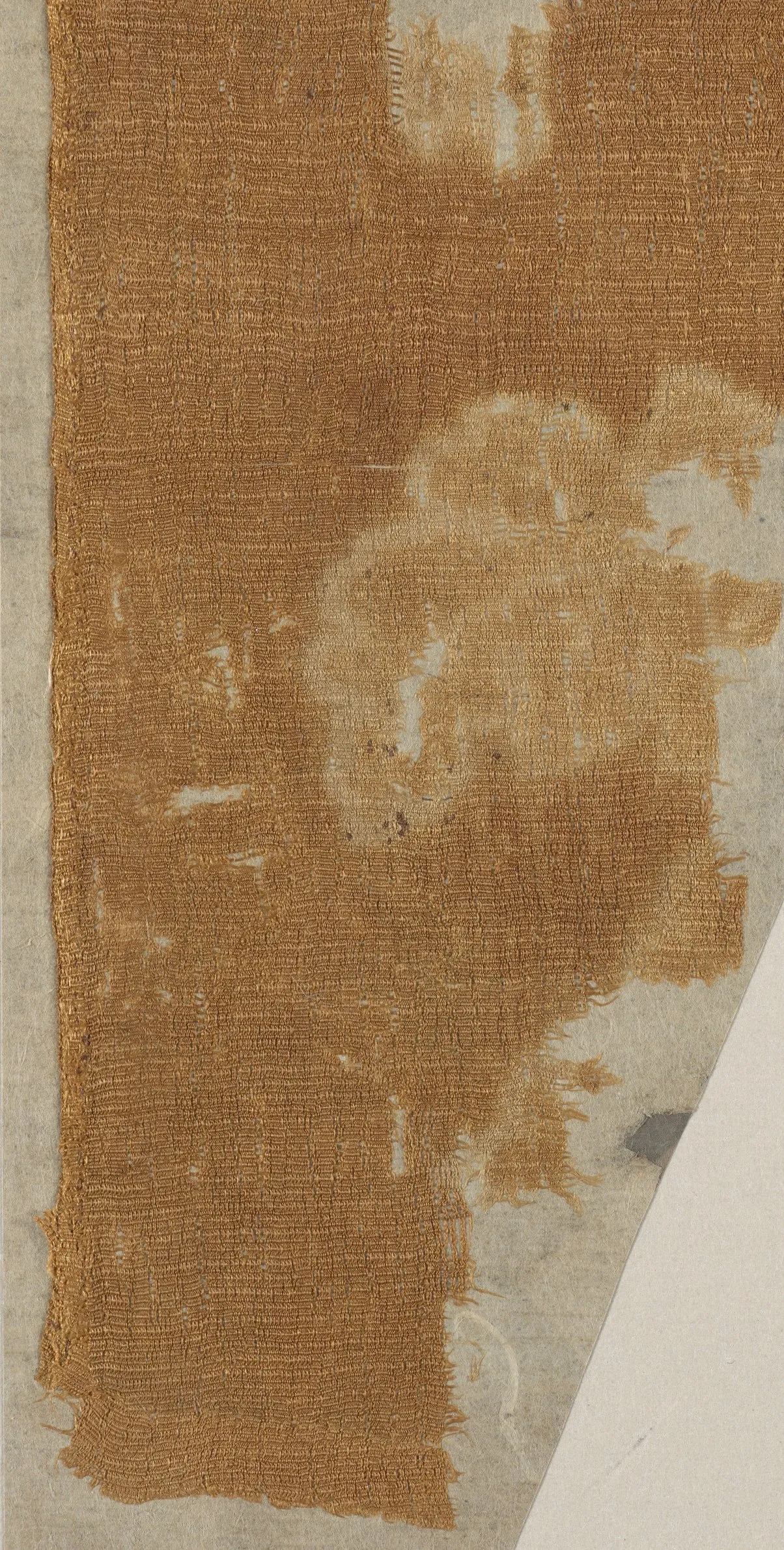
The oldest example is Chinese. A silk gauze from Mawangdui Tomb 1 (2nd century BCE) has tendrils that “are printed on the fabric while the buds, flowers and leaves are painted”, which the Hunan Museum calls “the earliest textile ever discovered that combines printing and painting methods”. In the tomb of the king of Nanyue (203–111 BCE), archaeologists found bronze printing plates next to silks printed with the same pattern; the Nanyue King Museum describes them as tools for printing on silk.
By the 8th century, resist dyeing was refined. A scholarly study dates a Tang-dynasty inventor surnamed Liu, “whose personal name is unknown”, to between 712 and 724: she clamped silk between carved boards to dye a pattern. The Shōsōin treasury in Nara still holds textiles with “the three ancient” resist methods, tied, wax and clamp, according to the Tokyo National Museum.
The woodblock
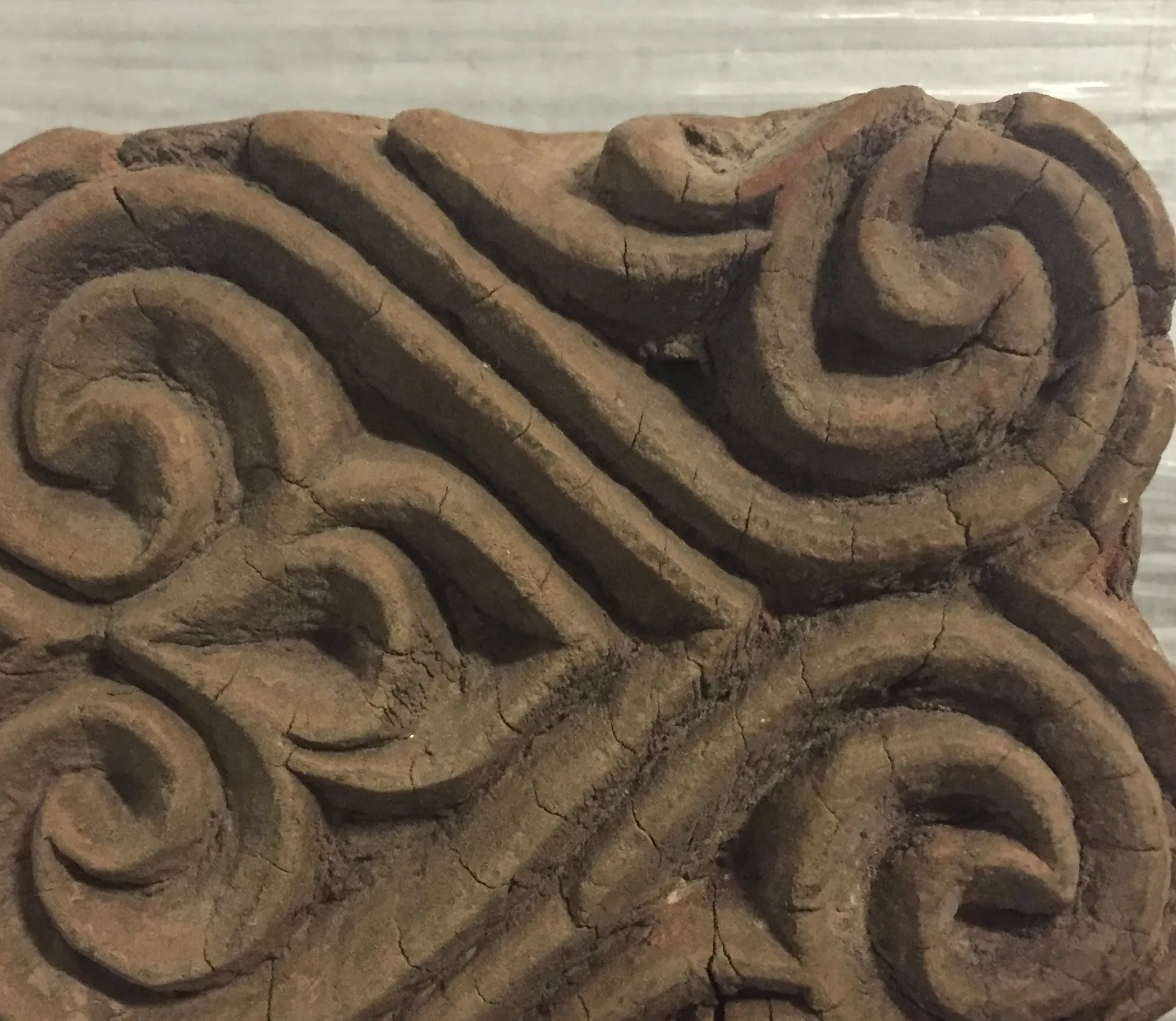
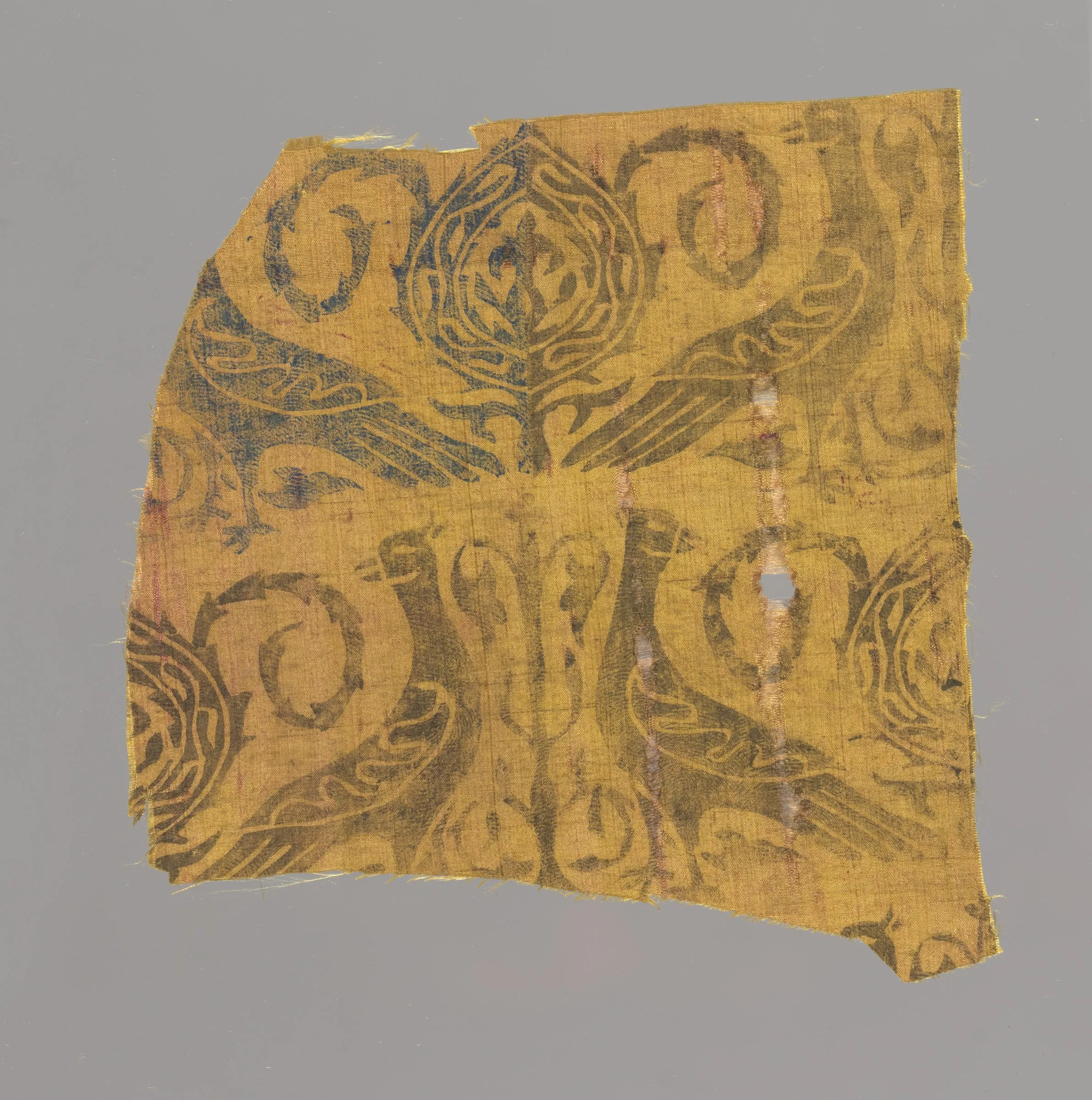
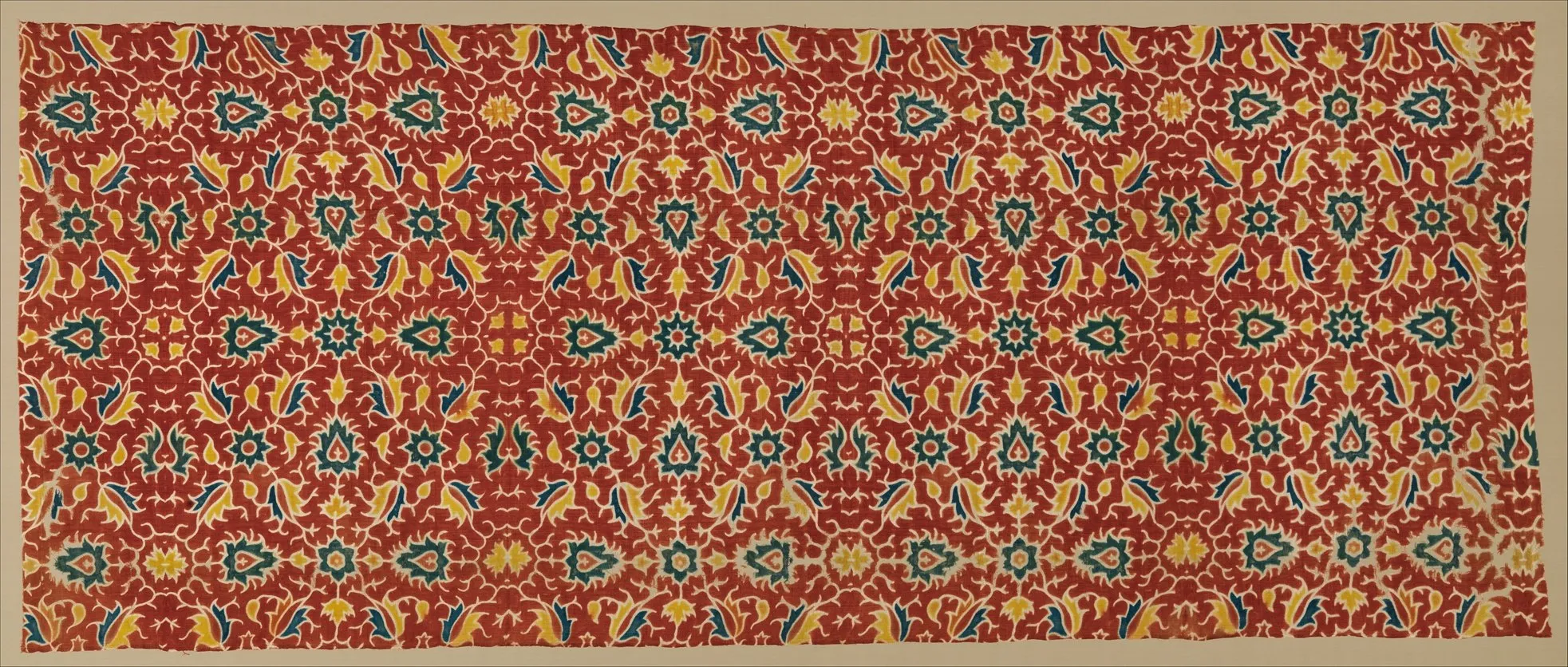
A woodblock prints one colour at a time, so a design in five colours needs five blocks lined up by hand. It’s slow, but it lasted: when Liberty of London commissioned block-printed tussar silk from Thomas Wardle in the late 1870s, the V&A notes that one colour “would need up to 25 impressions with a block”. David Evans & Co. began printing silk at Crayford, Kent, in 1843 with blocks, and the works ran until 2001, according to the V&A.
Yuzen: painting with rice paste
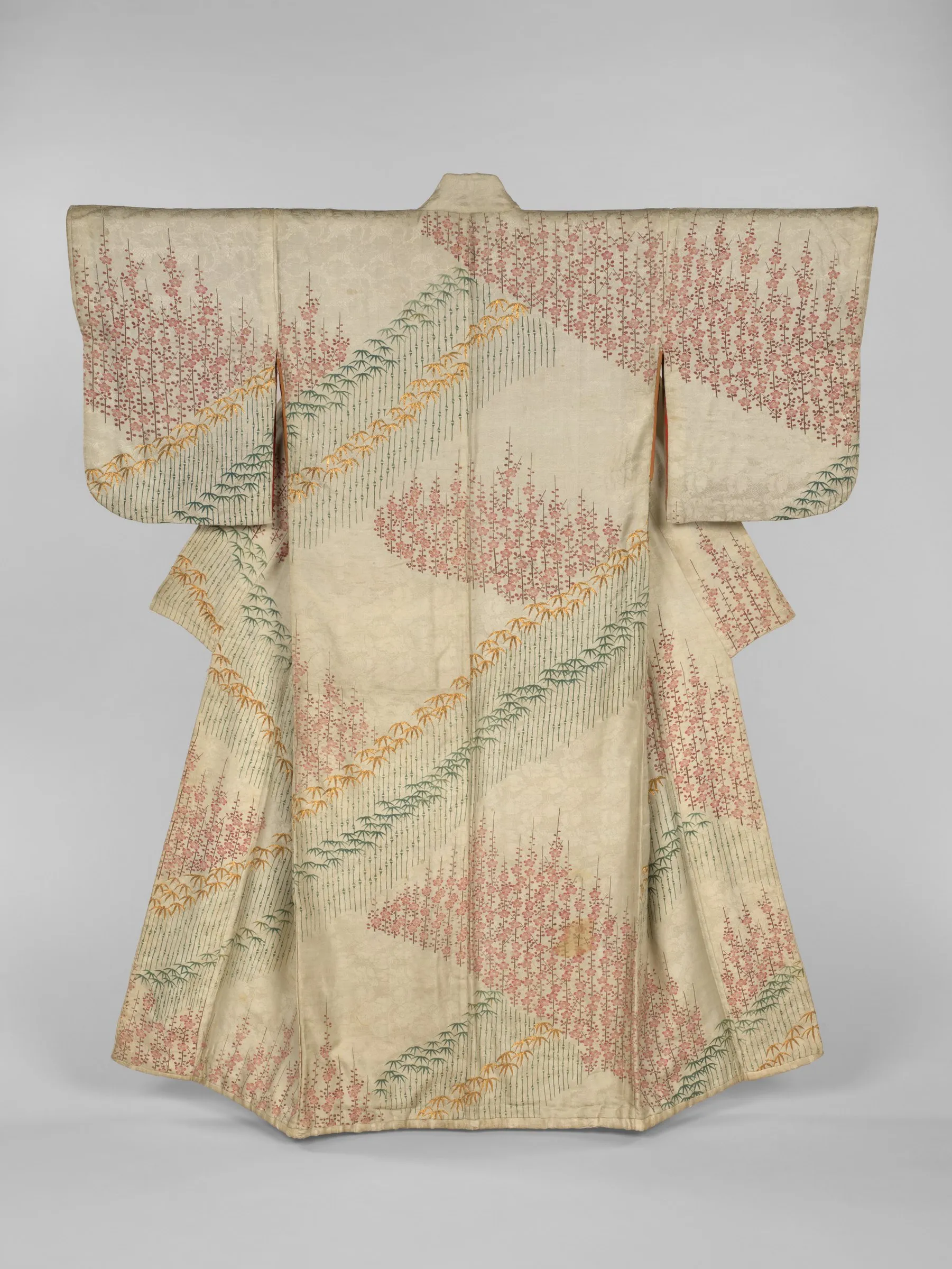
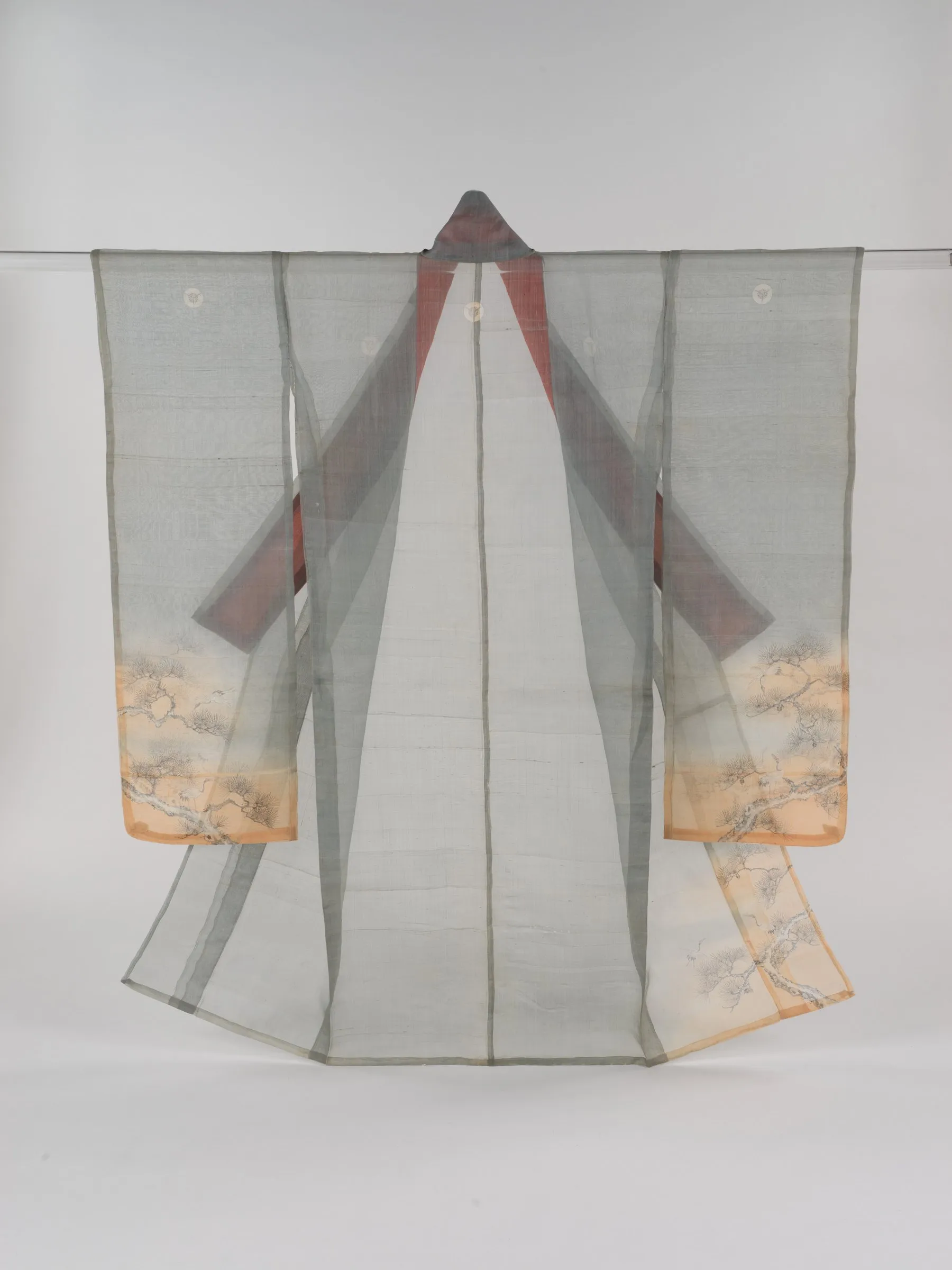
In Kyoto around 1700, yuzen made silk a painter’s surface. Rice paste is piped along drawn outlines to keep the dye out, and colours are brushed inside, so a robe can carry a picture rather than a repeat. It’s named after the fan painter Miyazaki Yūzen, who is “credited with perfecting the technique around 1700”, according to the JAANUS dictionary of Japanese art. Perfecting, not inventing. Kyoto city’s history records say he was active from 1681 to 1704 and that his birth and death dates aren’t known.
The printed silk scarf is about 230 years older than the 1937 story you’ll usually hear.
Engraved plates: the first printed silk handkerchiefs
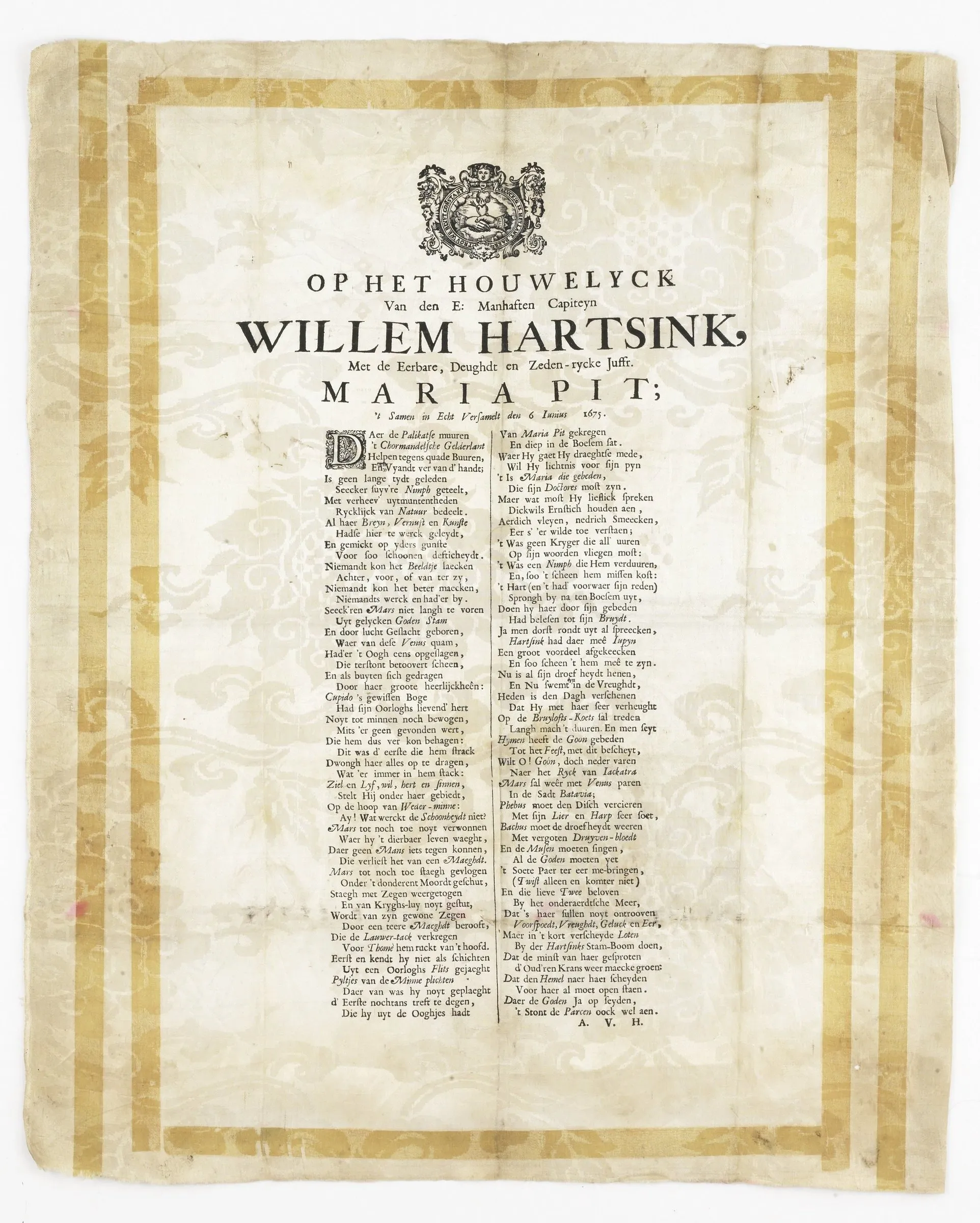
This is where the silk scarf as a thing you buy begins. “Silk handkerchiefs with designs printed from engraved plates were initially produced and sold by map and print sellers,” says the V&A of one marking the Duke of Marlborough’s victories, published in 1707; it adds that “printed handkerchief” was in use by 1713. In 1738 George Vertue’s Oxford Almanack was printed on a silk handkerchief.
That’s earlier than the textbook date. Francis Nixon is credited with the first successful copperplate printing on cloth, near Dublin in 1752, and Christophe Oberkampf’s famous toiles from Jouy-en-Josas came after 1760. But toile de Jouy was printed on cotton and linen, not silk: the Met describes fine “copperplate printed cottons”.
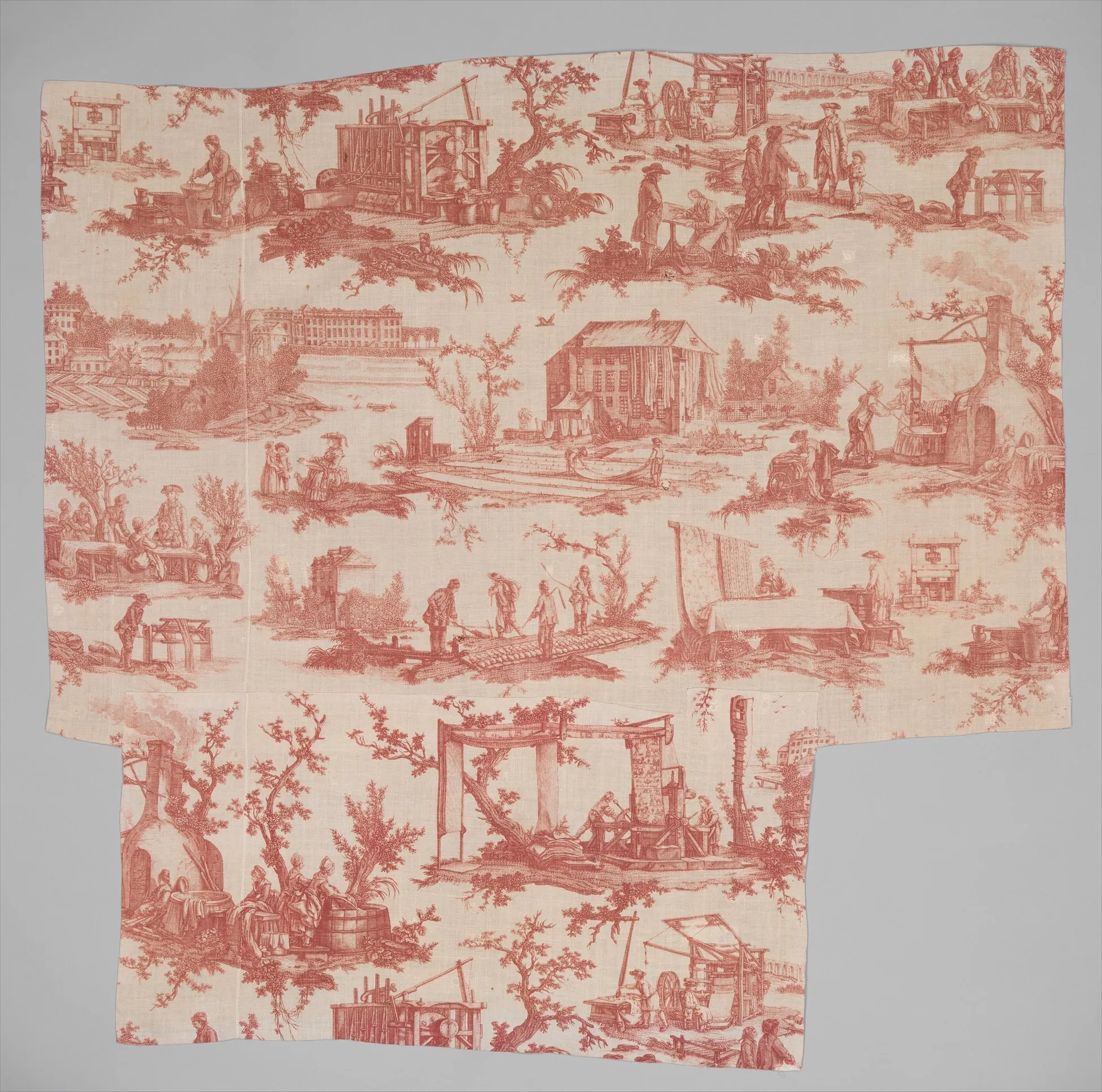
News, souvenirs and maps on silk
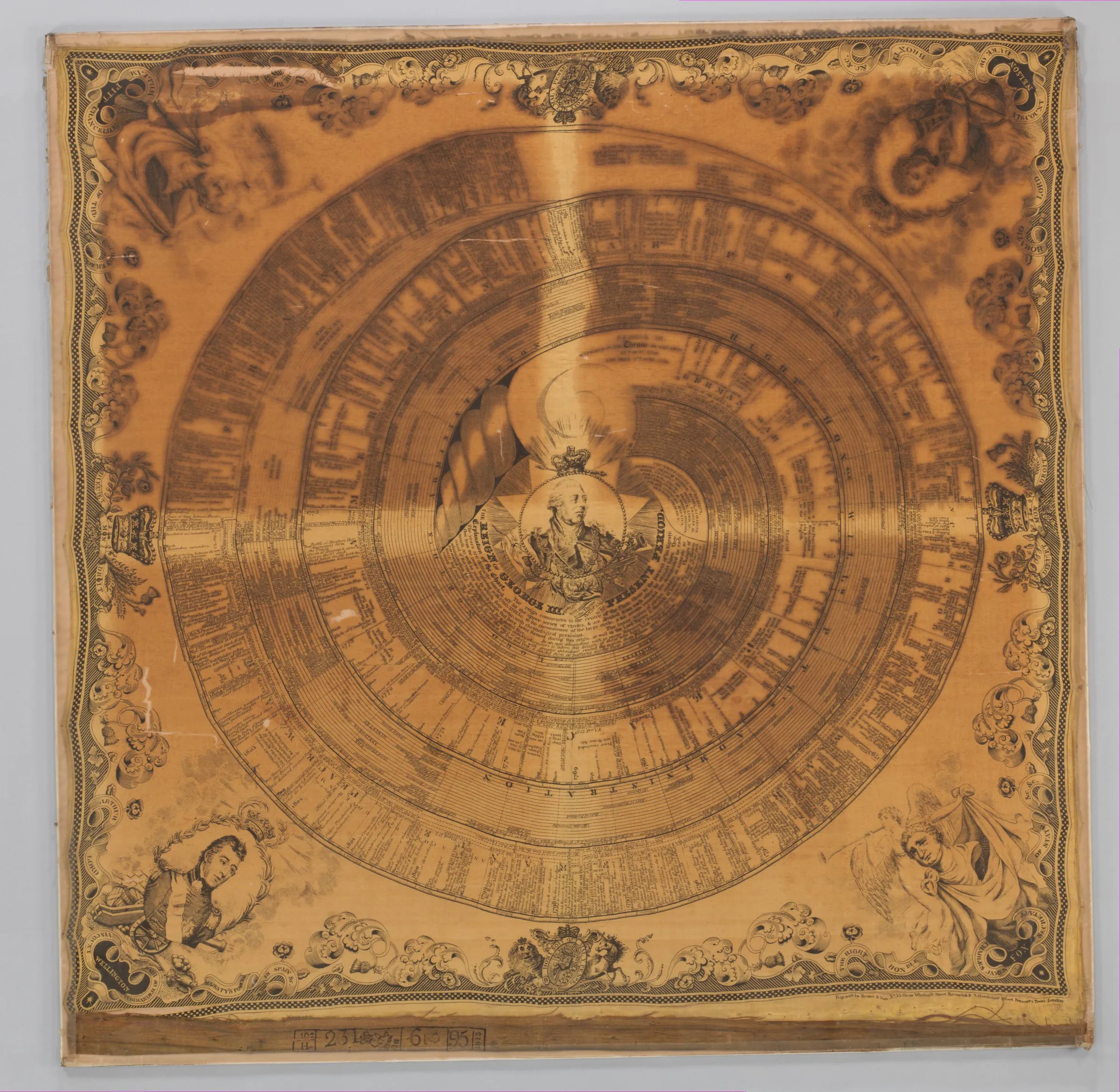
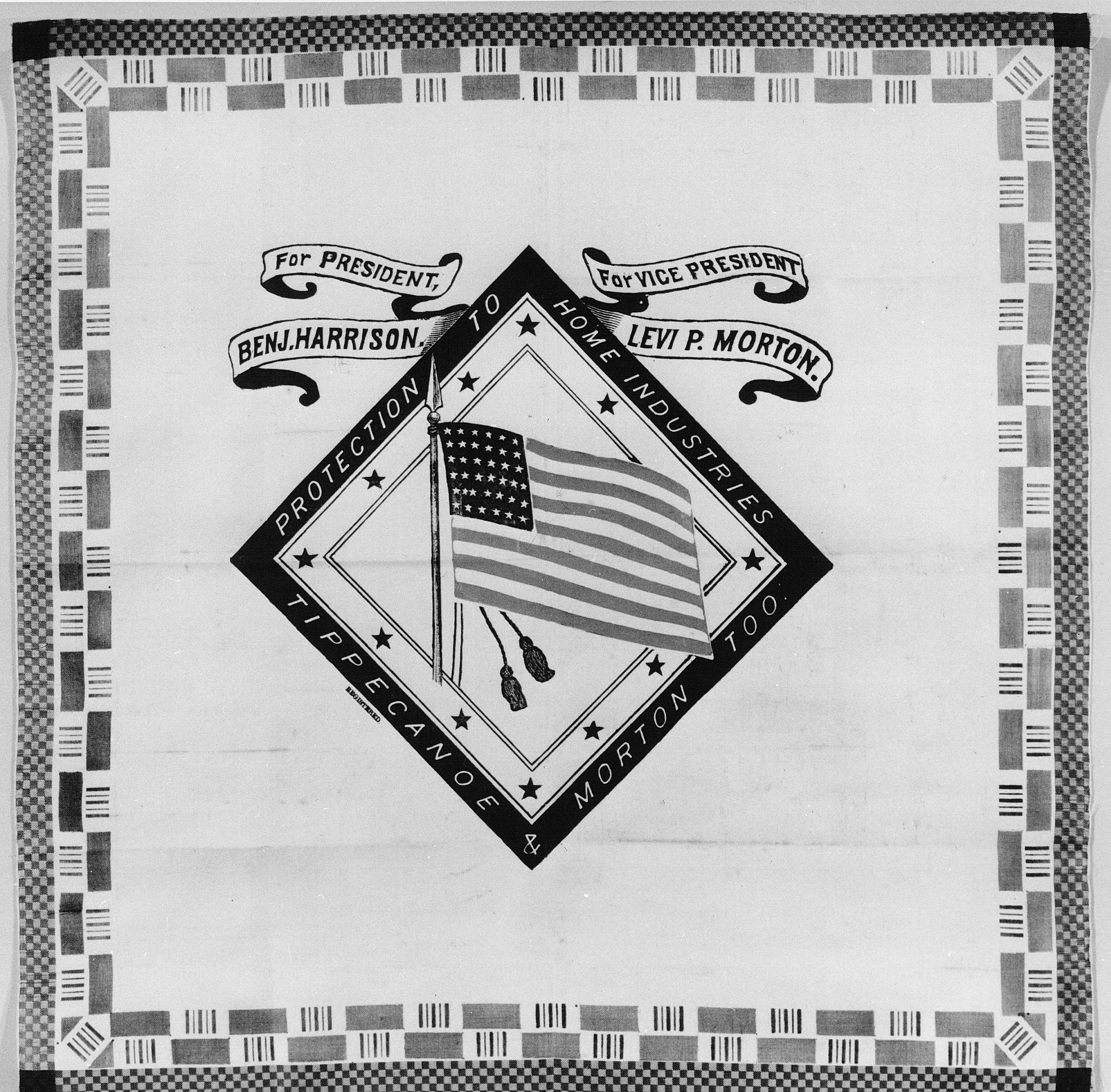
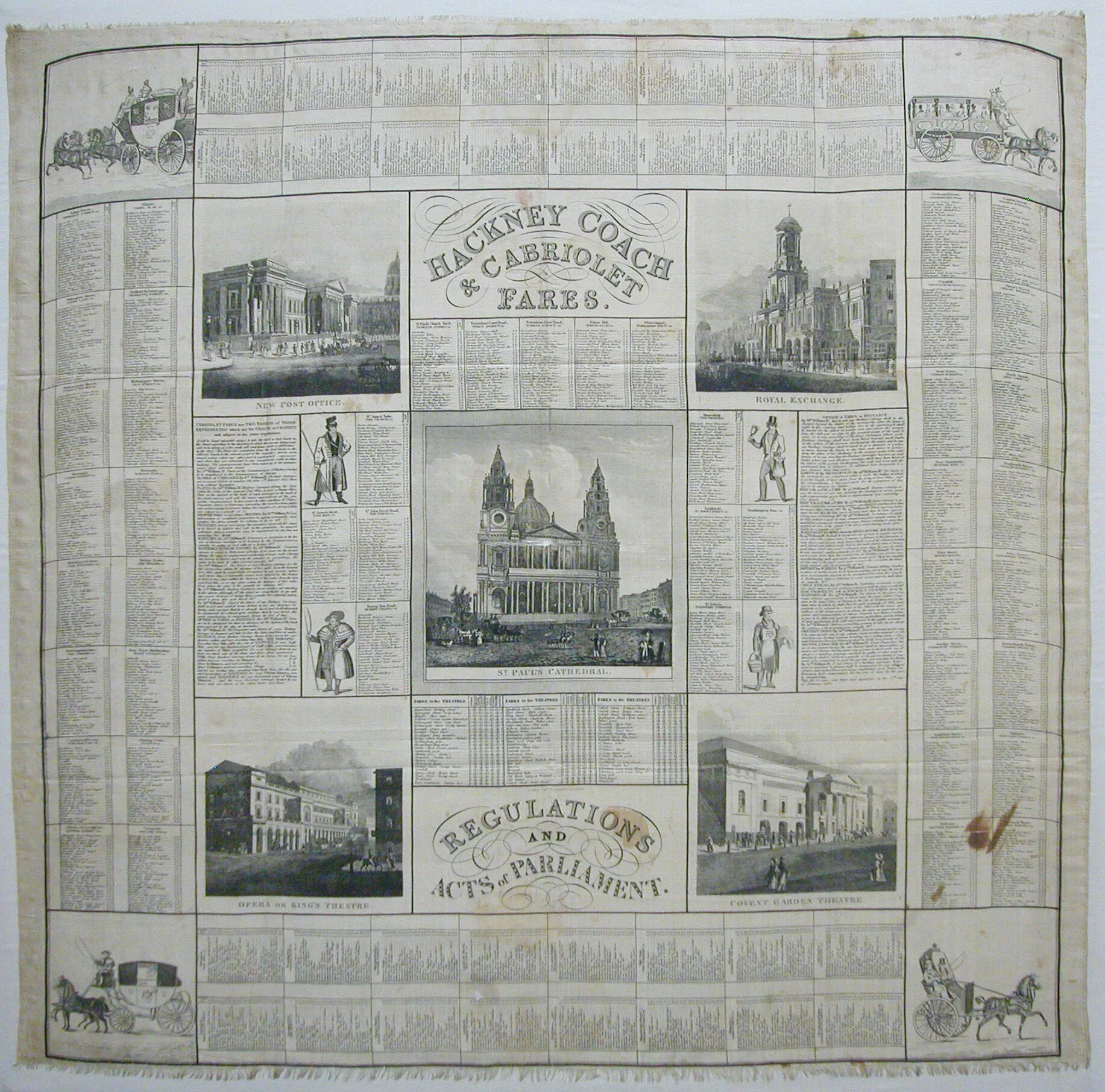
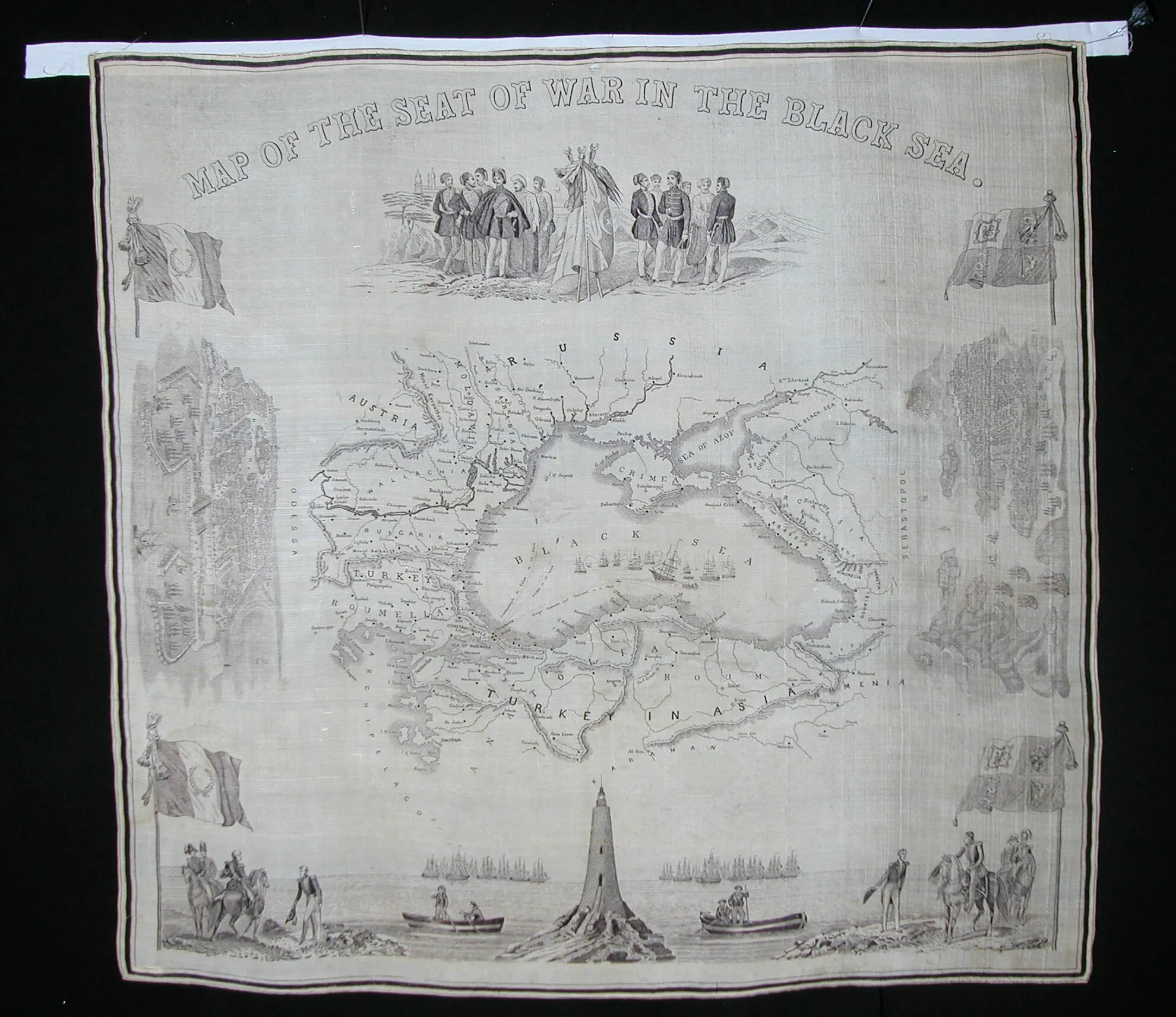
Through the 19th century, a printed silk handkerchief was a way to carry news and keepsakes. The V&A holds silk handkerchiefs for George III’s Golden Jubilee in 1809 and political caricatures around 1820. London’s hackney coach fares were printed on silk in 1832, and a map of the Crimean War around 1856; Americans printed election campaigns on them.
The roller and the factory
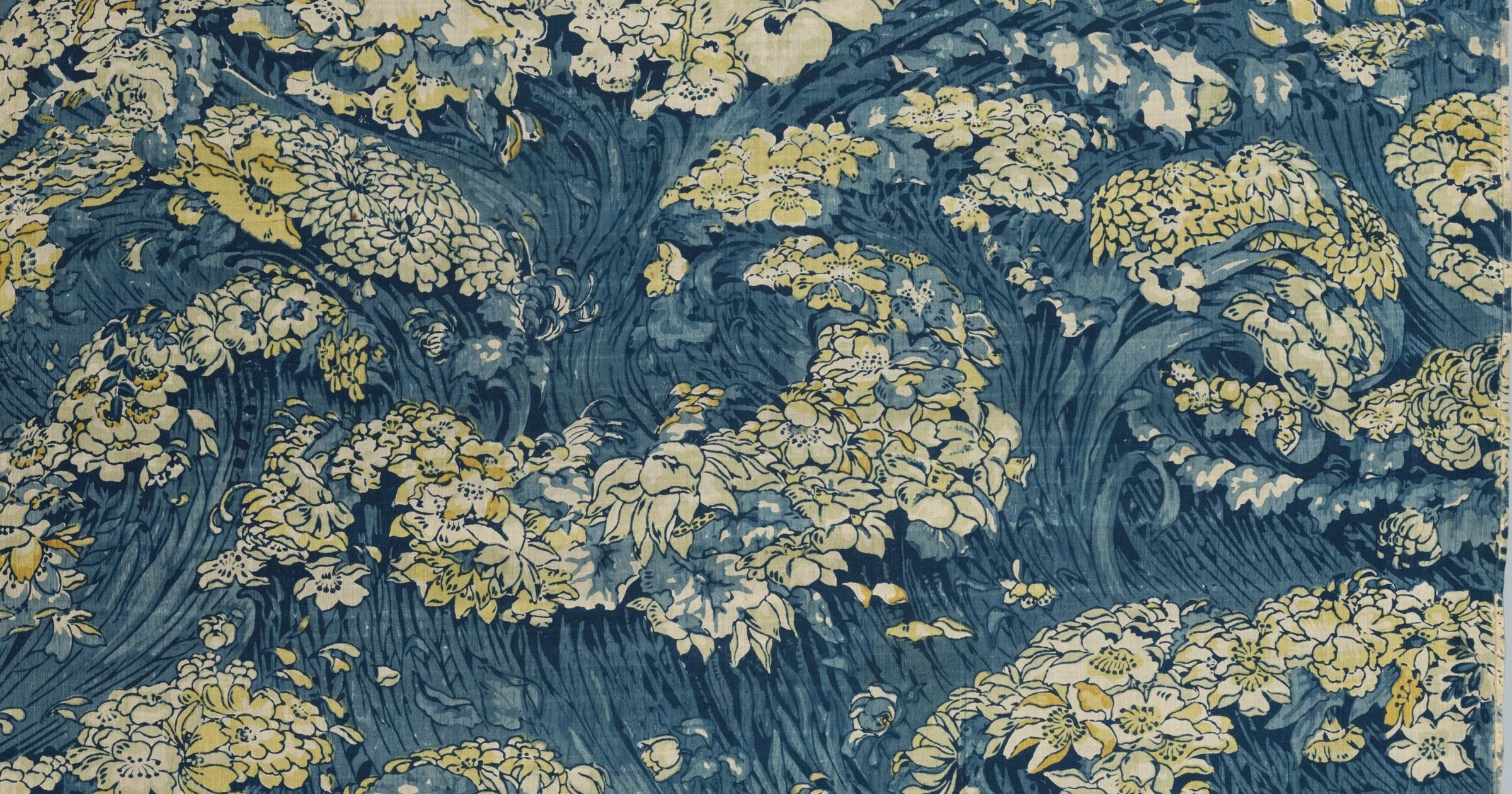
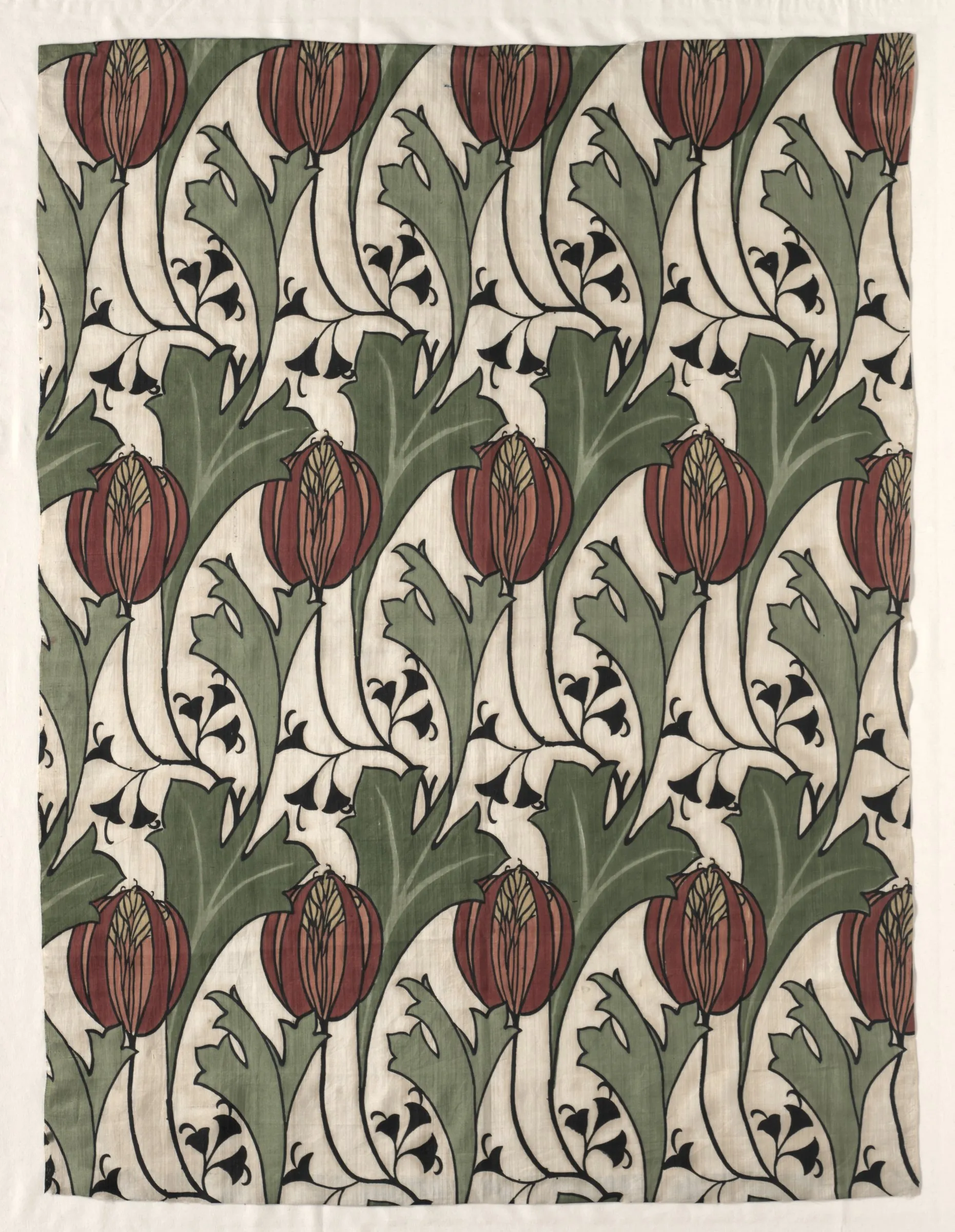
Thomas Bell of Scotland invented roller printing in 1783, each colour coming from an engraved metal roller, according to Britannica. It changed scale: one roller machine “could print as much yardage as twenty hand-block printers”, says the Met, and by 1900 rollers printed 20 colours or more. Rollers were mostly for cotton at first; the clearest roller-printed silks we found date from the 1890s, such as a C.F.A. Voysey design printed in London around 1893.
Lyon and Macclesfield
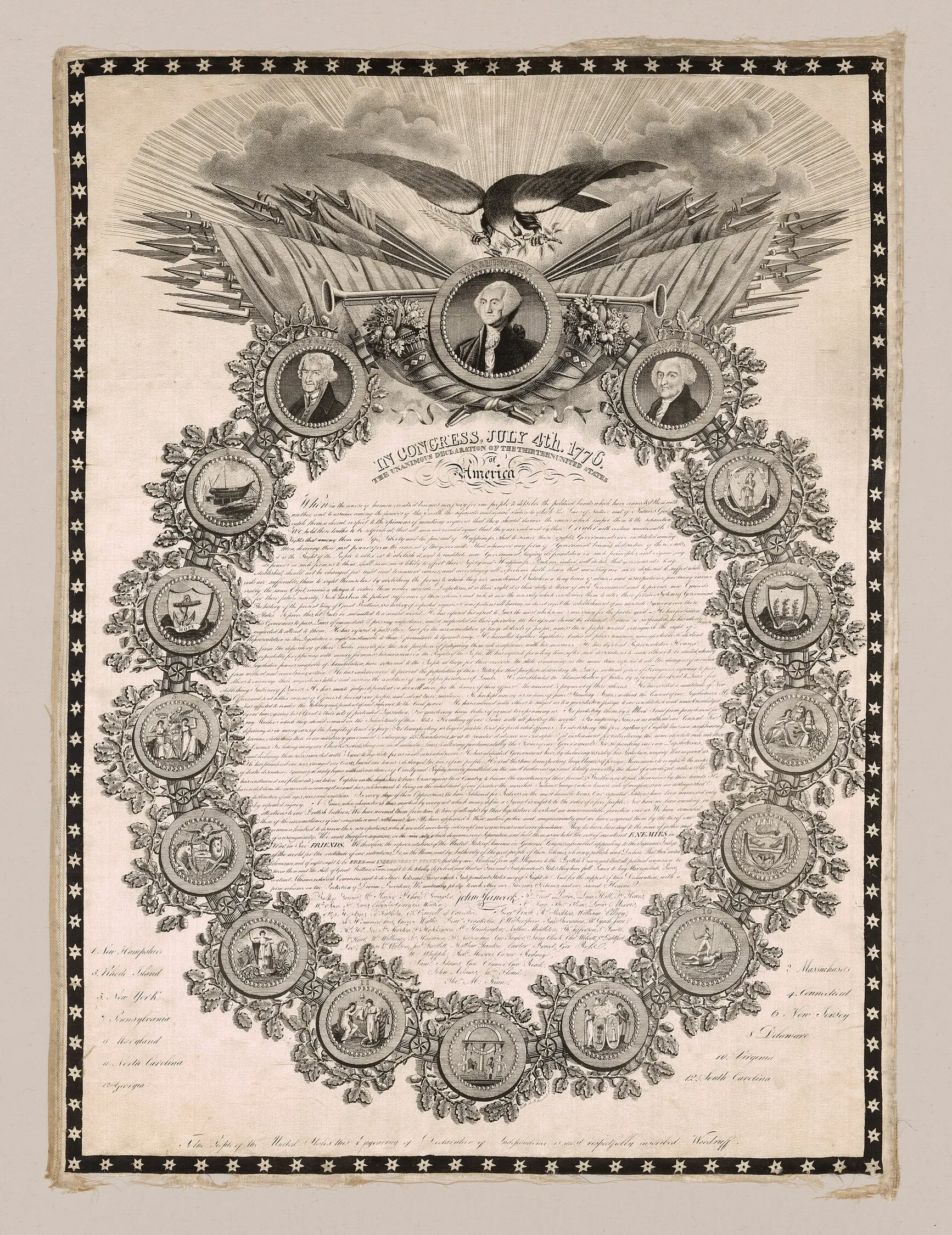
Lyon was famous first for woven silk, but its makers printed too: in 1820 H. Brunet et Cie printed the whole Declaration of Independence on silk for the American market. In England, silk printing grew around Macclesfield. William Smith came to Langley, two miles from the town, around 1820, and an “important silk-printing works” ran there from the 1820s until 1964, according to the V&A and Cheshire’s historic environment record. The Silk Museum in Macclesfield tells that story today.
The printed silk scarf before the square
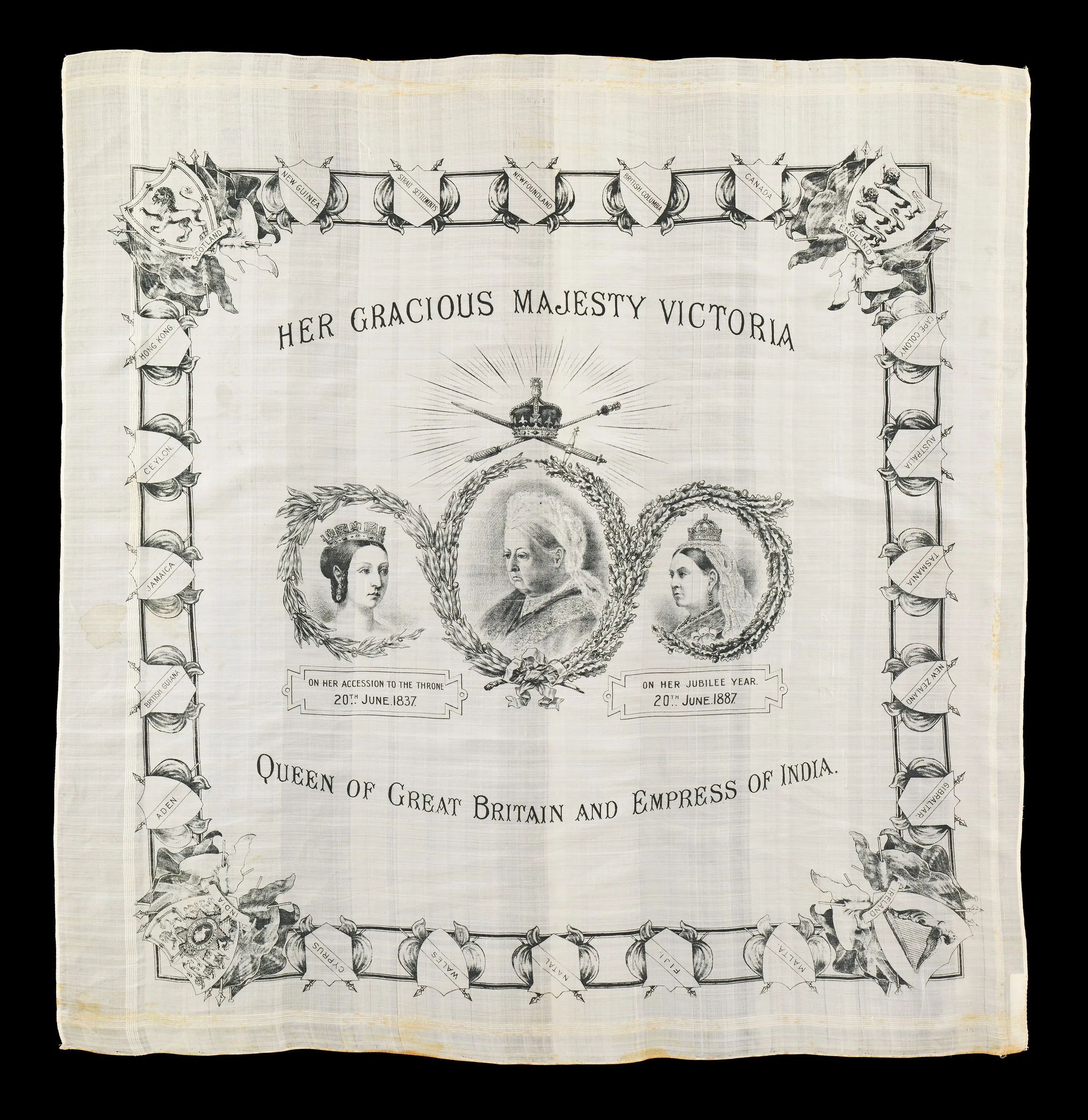
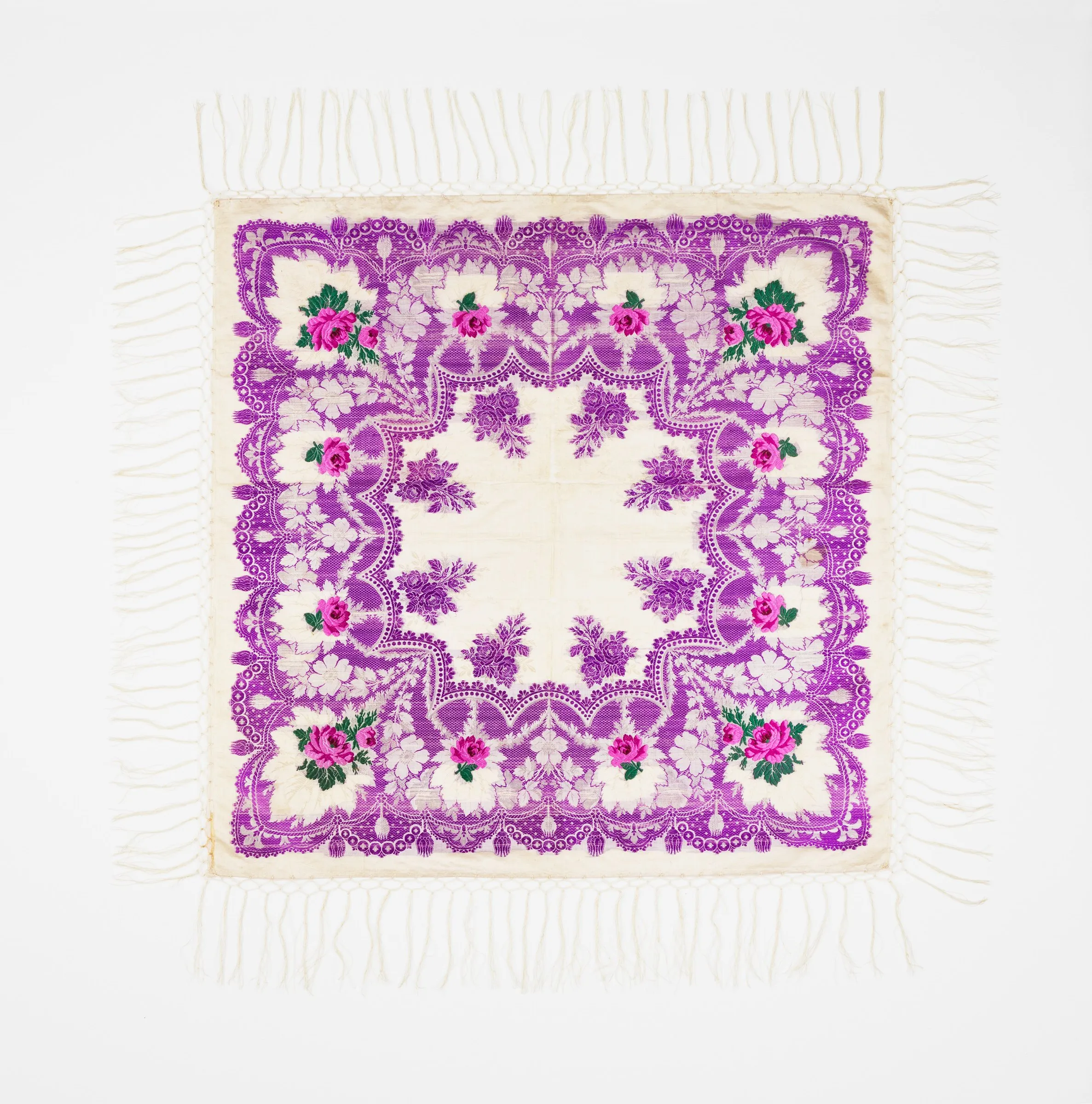
Printed silk shawls and scarves were worn well before the 20th-century square: Cleveland holds a French printed silk turnover shawl from 1835–40, and the Met a printed silk scarf made for Queen Victoria’s Diamond Jubilee in 1897. Sizes varied; there was no standard square.
Screens: the 20th-century scarf
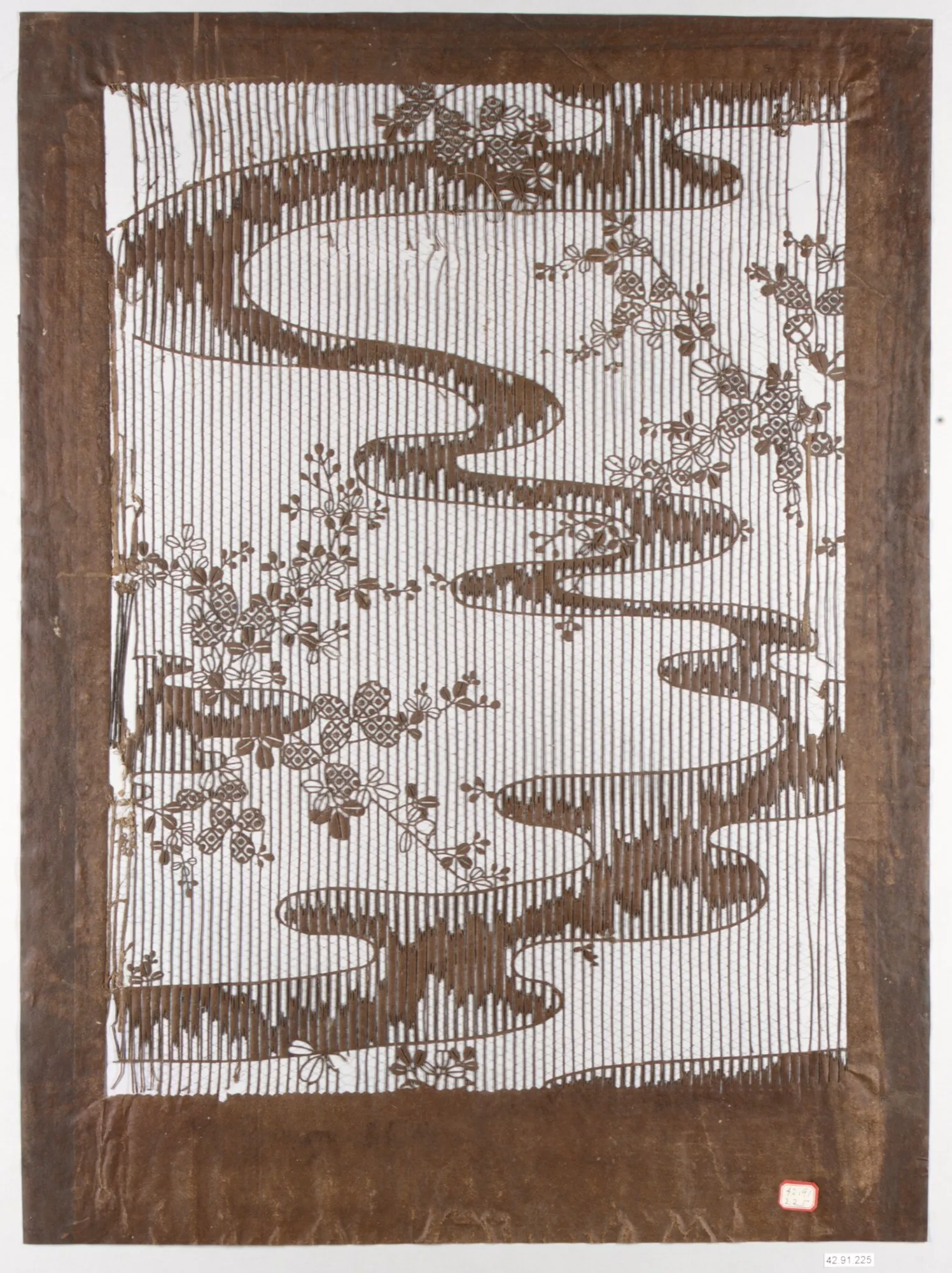
Screen printing pushes dye through a fine mesh, with one screen for each colour. Cooper Hewitt credits the process to Samuel Simon of Manchester, patented in 1907; an earlier American patent by Charles Nelson Jones, in 1887, already had most of its elements, according to a print historian at UWE Bristol. It reached silk scarves quickly. The V&A holds a screen-printed silk shawl from Langley, 1920, and a screen-printed silk scarf from France, around 1925, more than a decade before 1937. By 1935 Lyon’s Bianchini-Férier was screen printing dress silks.
Screens let artists in. The Wiener Werkstätte in Vienna opened a textile department around 1910, and printed silks became “a mainstay”. Raoul Dufy signed with Bianchini-Férier in Lyon on 1 March 1912. In 1923 Sonia Delaunay sold designs to a Lyon silk maker and in 1924 “set up an atelier for printing fabrics and producing clothing and scarves”, says Tate.
In London, Jacqmar’s printed head squares made its name from 1941, and in 1945 Zika Ascher began commissioning painters and sculptors, among them Henry Moore and Henri Matisse, to design silk squares, a brief the Henry Moore Foundation records as “a maximum size of 36 x 36 inches”. By the 1950s, the V&A says, the headscarf was worn by everyone “from filmstars like Marilyn Monroe to housewives”. (The artists’ designs from this period are still under copyright, so we link to the museums rather than show them.) For artist-designed squares on sale today, see our guide to 25 of them.
Old squares weren’t always hand-rolled, either: museum examples from the 1920s to the 1950s have both hand-rolled and machine hems. The V&A’s 1920 shawl is machine-hemmed.
Digital: printing without screens
Inkjet printing came to textiles in 1990, when Seiren in Fukui, Japan, began commercial production with inkjet printers; the first production digital textile printer, Reggiani’s DReAM, was shown in 2003, according to textile researcher Hitoshi Ujiie. By 2009 the V&A was collecting a digitally printed silk scarf, and in 2010 Alexander McQueen’s Plato’s Atlantis put digitally printed silk on the runway.
What changed is the screen. With no screen for each colour, a design can use as many colours as the inks can mix, and a run can be as short as one scarf. “Unlimited colours” isn’t quite right, though: in 1998, four-colour inkjet matched only “about 60 to 65%” of the textile colour range and eight-colour systems about 90%, according to a paper for the Society for Imaging Science and Technology. Printing both sides is newer still; a study from Zhejiang Sci-Tech University found double-sided digital printing on silk gave stronger, more even colour than printing one side.
Artists on silk today
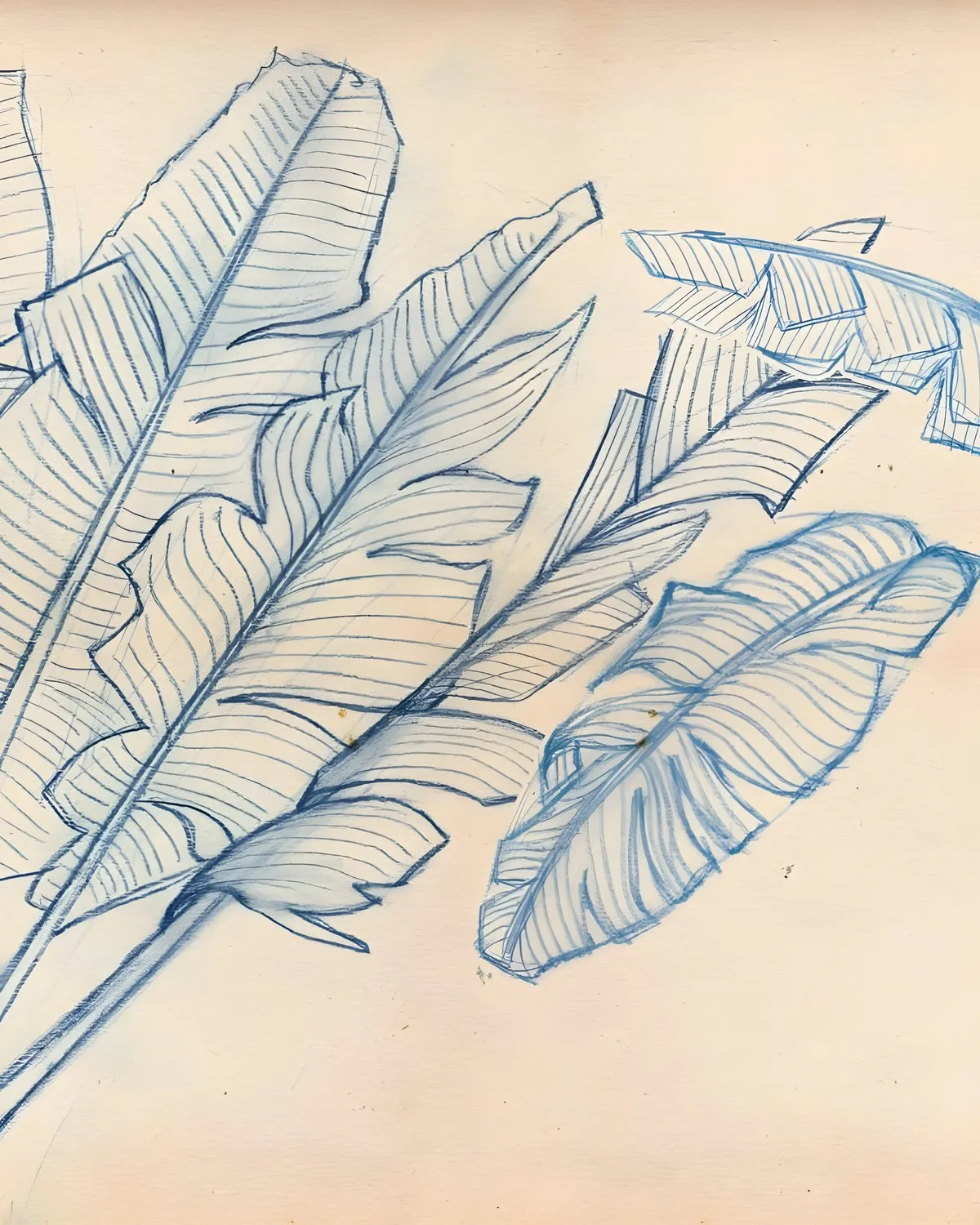
Artists still design for silk squares, as Dufy and Delaunay did. Aubrey Kurlansky, a Bangkok artist, is one of them; he is also one of The Kanso Collective’s co-founders, and we sell his work. Each design starts as his own drawing, photograph or painting, with his signature in the print. Each square is printed on both sides, and its hem is rolled by hand. Every piece is a limited edition, never mass produced: made to order in collaboration with the artist and finished by hand. A 90 cm square costs from $219 (£169) at The Kanso Collective. Three centuries after London’s map sellers, a printed silk square is still a picture you can wear.
FAQ
When was the printed silk scarf invented? There’s no single date or inventor. Silk handkerchiefs printed from engraved plates were sold in London by 1707, according to the V&A, and printed silk shawls and scarves were common through the 19th century. The square fashion scarf took off from the 1930s to the 1950s.
How were silk scarves printed before computers? By woodblock (one block per colour), engraved copper plate (one colour, fine lines), engraved roller (from 1783; 20 or more colours by 1900) and screen (one screen per colour; used on silk scarves by about 1925).
What is yuzen? Japanese freehand paste-resist dyeing on silk. Rice paste is piped along drawn outlines and dyes are brushed inside. It’s named after the Kyoto fan painter Miyazaki Yūzen, active around 1681 to 1704, who is credited with perfecting it rather than inventing it.
When were silk scarves first screen printed? By the early 1920s. The V&A holds a screen-printed silk shawl from 1920 and a screen-printed silk scarf from France from about 1925. Lyon silk houses were screen printing dress silks by 1935.
What’s the difference between screen-printed and digitally printed silk? Screen printing needs one screen for each colour and suits long runs. Digital printing needs no screens, so a design can use as many colours as the inks can mix and a run can be one scarf, though the ink set can’t match every colour.
When did digital printing on silk start? Seiren in Japan began commercial inkjet textile printing in 1990. The first production digital textile printer, Reggiani’s DReAM, was shown in 2003. The V&A collected a digitally printed silk scarf in 2009.
Were old silk scarves always hand-rolled? No. Museum squares from the 1920s to the 1950s have both hand-rolled and machine hems.
Which artists designed printed silks in the 20th century? Designers at the Wiener Werkstätte from about 1910, Raoul Dufy for Bianchini-Férier from 1912, Sonia Delaunay from 1923, and the artists Zika Ascher commissioned from 1945, including Henry Moore and Henri Matisse.
Sources
Museum records and essays, linked in the text: the V&A, The Met, the Art Institute of Chicago, The Cleveland Museum of Art, the Rijksmuseum, Cooper Hewitt, Tate, the Henry Moore Foundation, the Hunan Museum, the Nanyue King Museum and the Tokyo National Museum; JAANUS; Britannica; the Bulletin of SOAS; UWE Bristol; the Society for Imaging Science and Technology; Hitoshi Ujiie; Journal of Textile Research (Zhejiang). Images: public domain or CC0 on each museum’s own record, linked in each caption. All checked 18 October 2026.