Art silk
The History of the Hermès Scarf: Who Drew the Carré?
The Hermès carré began in 1937 with a game of Paris omnibuses. Who drew it, Brides de Gala, the painters, Kermit Oliver, and every version of the story.
Which kind of silk square story are you?
3 questions, 15 seconds.
Question 1 of 3
Which picture would you choose?
Question 2 of 3
Who is it for?
Question 3 of 3
How will it be worn?
Your answer
The horse square
Jockeys, paddocks and bridles turn up on silk squares from the 1950s on. Our gift guide prices horse art and horse silk squares, by budget.
Your answer
The painter's square
Many silk squares start as an artist's drawing or painting, with the artist's name in the print. Twenty-five artist-designed squares, each checked on the seller's own page.
See 25 artist-designed squaresYour answer
The keepsake square
Printed silk has carried maps, news and souvenirs since silk handkerchiefs were sold in London by 1707. How each printing method changed what silk could show.
Read the history of printed silkYour answer
The square on the wall
Museums keep some silk squares framed: stitched to a covered board, never glued, and hung out of the sun. How to frame one, and what size of frame a 90 cm square needs.
How to frame a silk scarfGet 20% off a first order
We'll email you a personal 20% code for your first order, then new designs as they arrive.
One email with your code, then new designs. Unsubscribe any time.
The Hermès scarf, the silk square the house calls a carré, first appeared in 1937, a hundred years after Thierry Hermès opened his workshop in Paris. The first design, Jeu des omnibus et dames blanches, put a board game about Paris omnibuses on silk. Who drew it depends on who’s telling: Hermès credits Robert Dumas, Émile Hermès’s son-in-law, and so do Sotheby’s and the Fondation Napoléon, while the timeline in one magazine names the artist Hugo Grygkar. Since then, by the counts you’ll find, somewhere between 150 and 186 artists have drawn between 1,783 and more than 2,000 designs.
This is the carré’s history told through the people who drew it, and the stories that have grown up around them. Some of those stories don’t agree. Where they differ, we give each version and who tells it, and leave the weighing to you. 2027 is the carré’s 90th year.
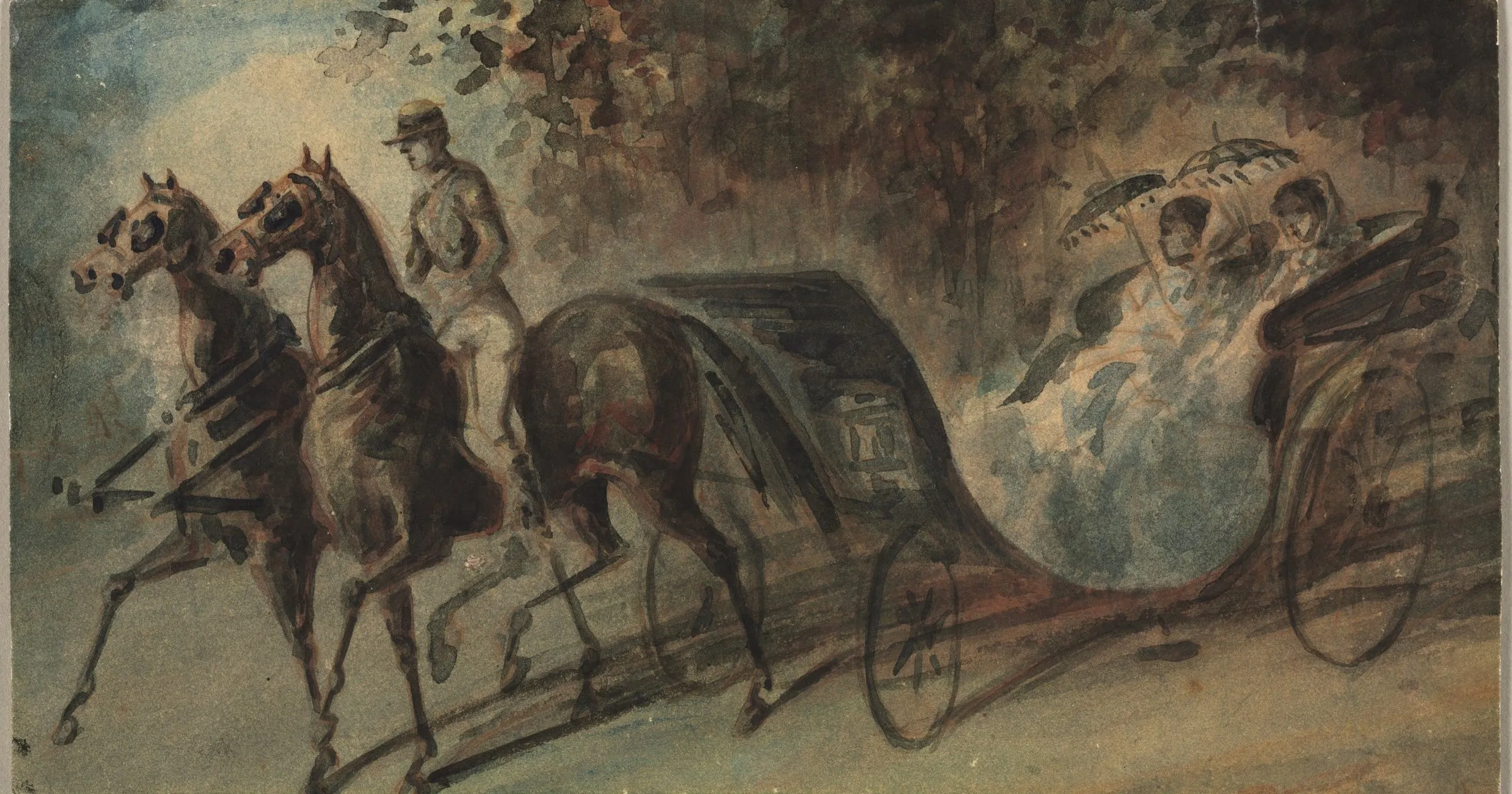
We sell artist-designed silk scarves, not Hermès, and we have no connection with Hermès. Every fact here is credited to whoever tells it, from Hermès’s own pages to auction houses, museums, encyclopedias and magazines, and linked. The pictures are public-domain museum works showing the kinds of subjects the carrés drew on. They aren’t Hermès designs, which are in copyright.
The carré, year by year
| Year | Design or moment | Designer, as credited | Who says so |
|---|---|---|---|
| 1837 | Thierry Hermès opens a harness workshop in Paris | Not a scarf | Hermès |
| 1937 | Jeu des omnibus et dames blanches, the first carré | Robert Dumas, or Hugo Grygkar | Hermès, Sotheby’s, Fondation Napoléon; ICON’s timeline |
| 1942 | A fashion drawing of Hermès gloves, bag and scarf | Roger Rouffiange (illustrator) | Palais Galliera |
| 1946–49 | Lettre à Murat, Victoire A, Victoire B | Not named | Fondation Napoléon |
| 1956 | Paddock | Jean-Louis Clerc | V&A |
| 1957 | Brides de Gala | Hugo Grygkar | ICON; French Wikipedia (the year) |
| 1963 | Napoléon | Philippe Ledoux | Fondation Napoléon |
| 1981 | Cavalcadour | Henri d’Origny | V&A |
| 1986 | Faune et Flore du Texas | Kermit Oliver | Smithsonian NMAAHC |
| 1987 | Feux d’artifices, for the house’s 150th | Michel Duchêne | Hermès |
| 1992 | Les Amériques | Kermit Oliver | Smithsonian NMAAHC |
| 2007 | The omnibus game reissued for the carré’s 70th | Robert Dumas, or Hugo Grygkar | ICON |
| 2008 | Six works by Josef Albers, after his death | Josef Albers | French Wikipedia |
| 2010 | Photo souvenirs au carré, 365 limited editions | Daniel Buren | ICON |
| 2019 | Le Grand Prix du Carré Hermès, a prize for new designers | Open competition | French Wikipedia |
| 2020 | Different designs printed on each side | Not named | French Wikipedia |
1837 to 1937: harness-makers first
Hermès began as a saddler’s workshop, not a fashion house. “The adventure began in Paris in 1837 when the harness-maker Thierry Hermès opened a workshop in rue Basse-du-Rempart,” says the house’s own history. His work won an award at the Universal Exhibition of 1867, and his son Charles-Émile moved the workshops to 24 Faubourg Saint-Honoré, where saddles were made to measure. Hermès dates that move to 1880; the Fondation Napoléon dates it to 1878.
The third generation, Émile-Maurice Hermès (the house’s page calls him Émile), was “an avid collector of works of art, books, objects and curiosities”, and Hermès says the collection is still “a source of inexhaustible inspiration for the house’s creations”. Karine Huguenaud of the Fondation Napoléon lists some of what was in it: work by the painters Swebach-Desfontaines and Carle Vernet, the architects Percier and Fontaine, and the goldsmith Biennais. It was, she writes, “a rich source of inspiration for the scarf designers working at Hermès.”
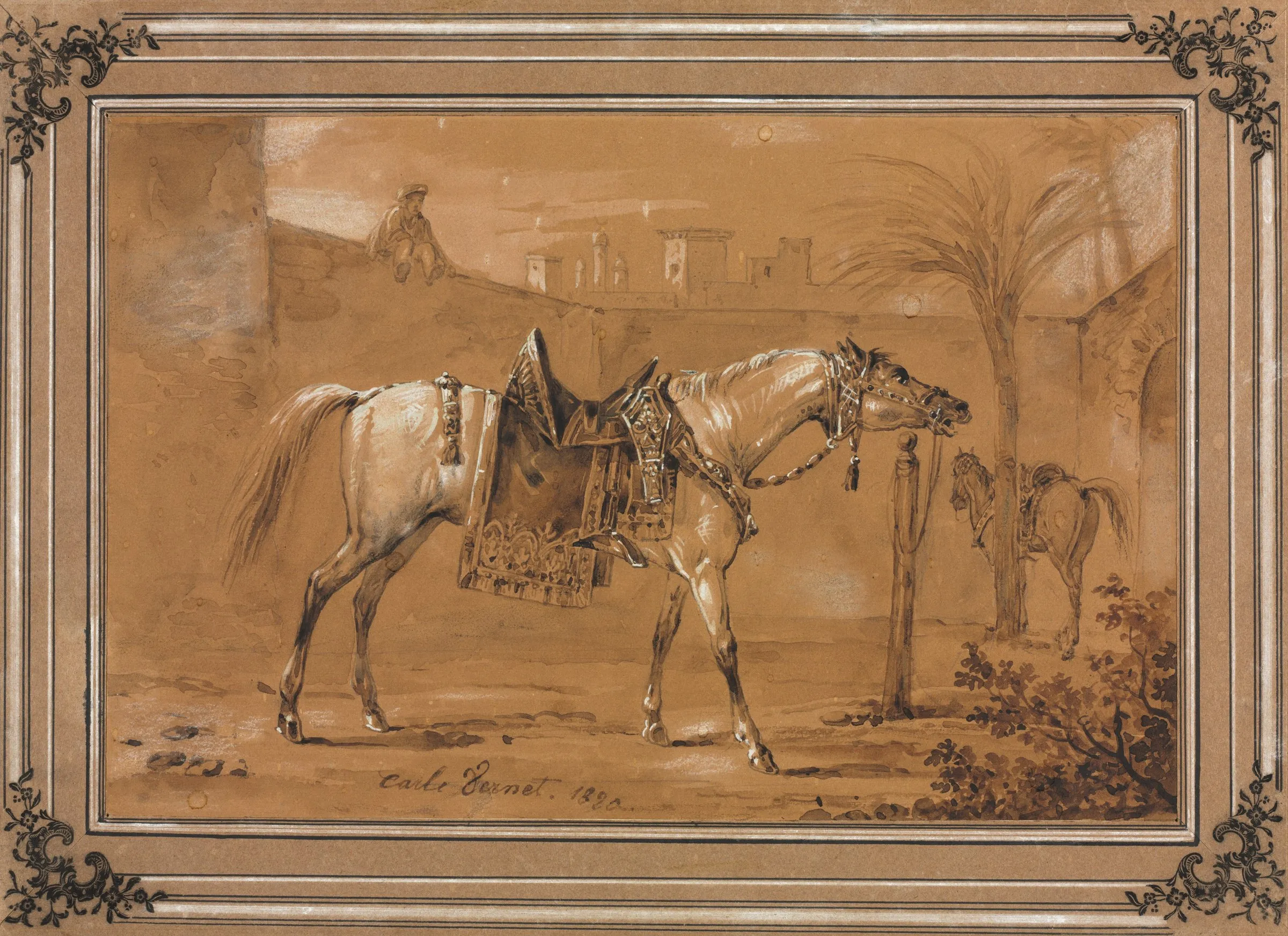
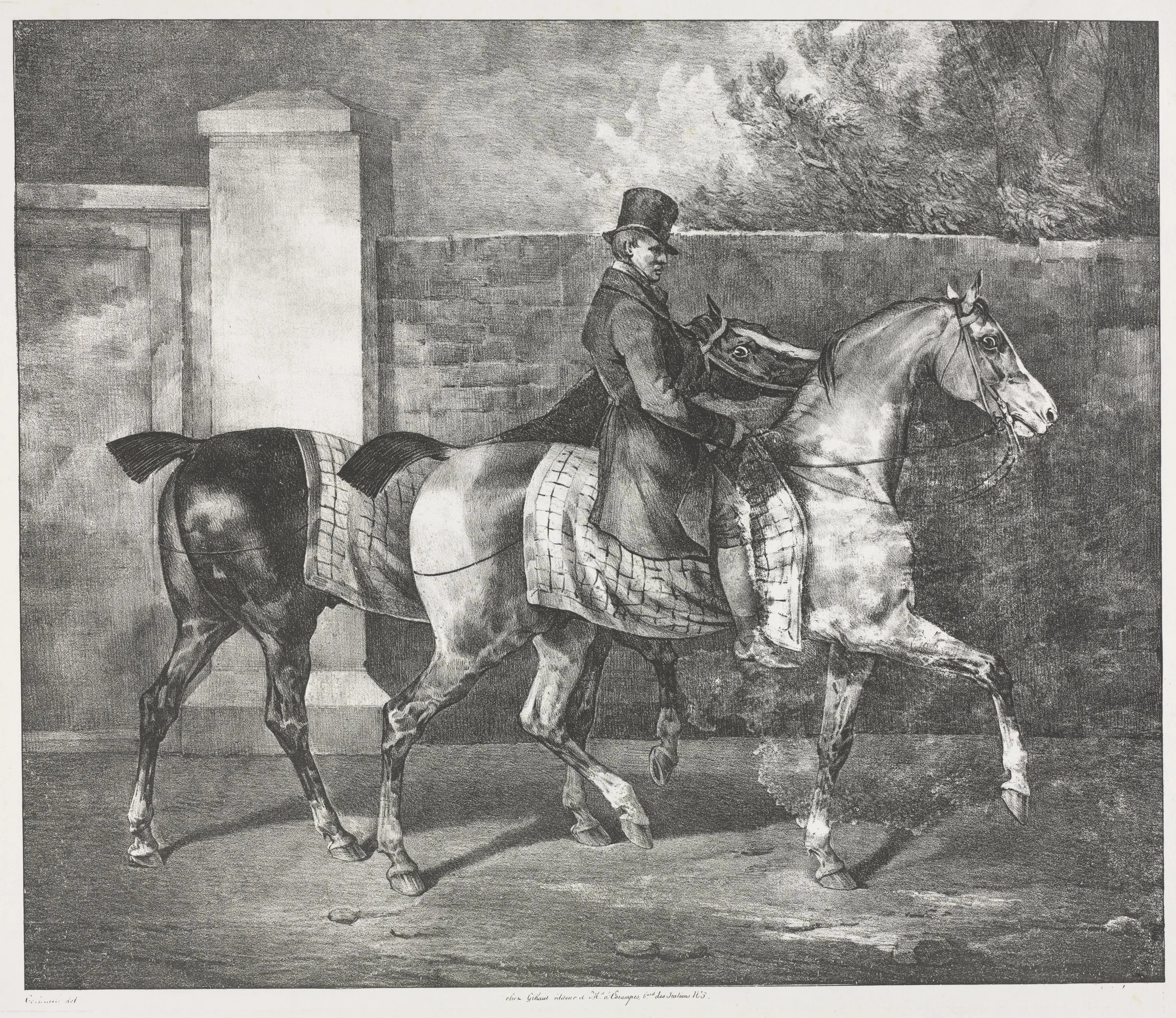
Why a silk square at all? Each source tells it a little differently. French Wikipedia and the magazine ICON say Dumas took the cloth of jockeys’ racing colours, silk twill. ICON adds two older models: the printed handkerchiefs that commemorated Napoleon’s campaigns, and the instruction handkerchiefs printed for soldiers in the First World War. Christie’s says the scarf “was inspired by riding silk” and that Hermès used “dense Chinese silk that was twice as strong as conventional fabric”. Silk handkerchiefs had carried printed pictures for more than two centuries by then; our history of the printed silk scarf traces them back to London in 1707.
1937: a game of omnibuses, and two names
The first carré marked the house’s hundredth year, says the Fondation Napoléon. Its name means “the game of omnibuses and white ladies”, and the white ladies were buses: French Wikipedia’s chronicle of 1828 records the founding of a Paris omnibus company called the Entreprise Générale des Dames Blanches.
What was the scarf drawn from? Four answers:
- a parlour game “very popular during the Romantic period”, of which Émile-Maurice Hermès “owned a copy” (the Fondation Napoléon, 2010)
- “a woodblock engraving” (Sotheby’s, 2026)
- “une sorte de jeu de l’oie”, a kind of game of the goose, made in homage to the first public transport line in Paris (French Wikipedia)
- the new public transport network of Paris, with a motto on the silk that ICON translates as “A good player never gets angry” (ICON, 2017)
They may all describe the same thing: a printed game board, engraved on wood, about the city’s omnibuses.
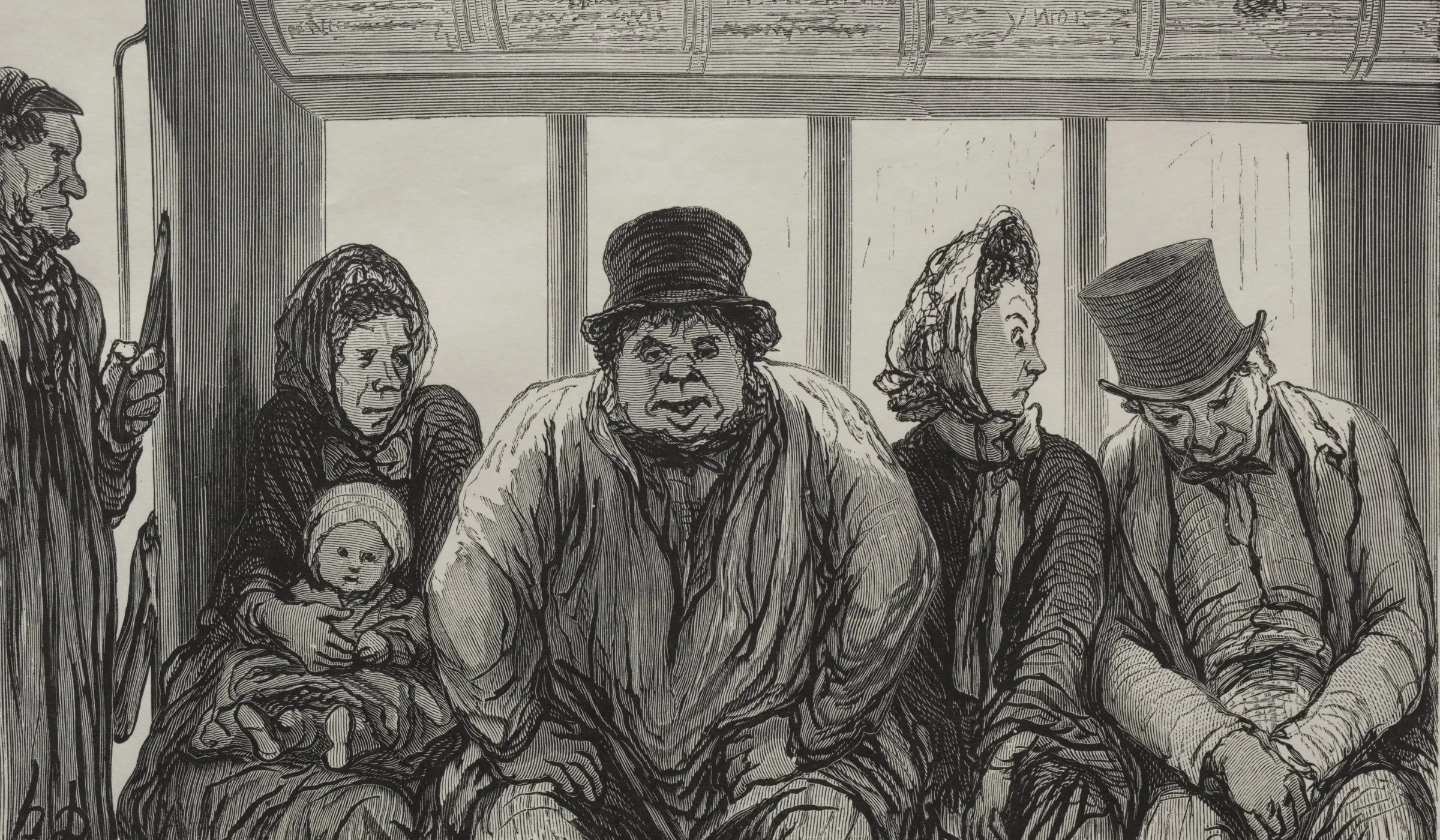
Then the name. Hermès’s timeline calls the omnibus game “the first of a long series created by Robert Dumas, Émile Hermès’ son-in-law”, and says Dumas “was responsible for many of the house’s major successes, including the first silk scarf, the Kelly bag and the Chaîne d’ancre bracelet”. Sotheby’s and the Fondation Napoléon both say “designed by Robert Dumas”. Christie’s says he “introduced” it, and French Wikipedia says the idea was his.
ICON’s 2017 article holds both names. Its text says “Robert Dumas designed the first carré scarf in history.” The timeline at the foot of the same page says “1937: Hugo Grygkar designs the first Hermès Carrè.”
One page, two names: the article credits Robert Dumas, and its own timeline credits Hugo Grygkar.
Both could be true. “Created by” can mean the man who had the idea, and “designs” can mean the hand that drew it. Or one telling has slipped. Even Dumas’s role in 1937 is told two ways: Hermès says he became head of the business in 1951, and French Wikipedia calls him its director when the carré was born. None of the accounts we read quotes the 1937 drawing itself, a signature or a house record, so we’ll leave it there: two names, and a game of omnibuses. Hermès reissued it in 2007 for the carré’s 70th, according to ICON.
Brides de Gala, the gala bridle (1957)
Brides de gala are gala bridles; the V&A translates the phrase as “formal bridle”. ICON calls the carré of that name “the most famous design” and credits it to Hugo Grygkar in 1957. French Wikipedia calls it the best-seller, “dating originally from 1957 and reissued since in more than 70 colours” (our translation). Sotheby’s names it, with Les Cavaliers d’Or, as a motif collectors look for.
The bridle turns up in odd places. The V&A holds a 44 cm square from about 1980 with a bride de gala inside a red bridle that was “not produced for retail distribution”: it was printed with an invitation to the reopening of the Hermès shop in Geneva (V&A, T.633-2000). Horses stayed, from Paddock in 1956 to Cavalcadour in 1981; for horses on silk today, our gifts for horse lovers has horse squares from several makers.
The painters: Napoleon, the paddock and the game bag
By the 1950s the names on the carrés belonged to painters and illustrators, and museums still catalogue the squares by artist. “The scarves are designed by a range of highly talented artists,” says the V&A, whose Paddock (1956) is by Jean-Louis Clerc: a “deep blue ground with painterly design showing fashionably dressed men and women, horses and jockeys milling about a paddock”, 90 × 90 cm, with a hand-rolled hem.
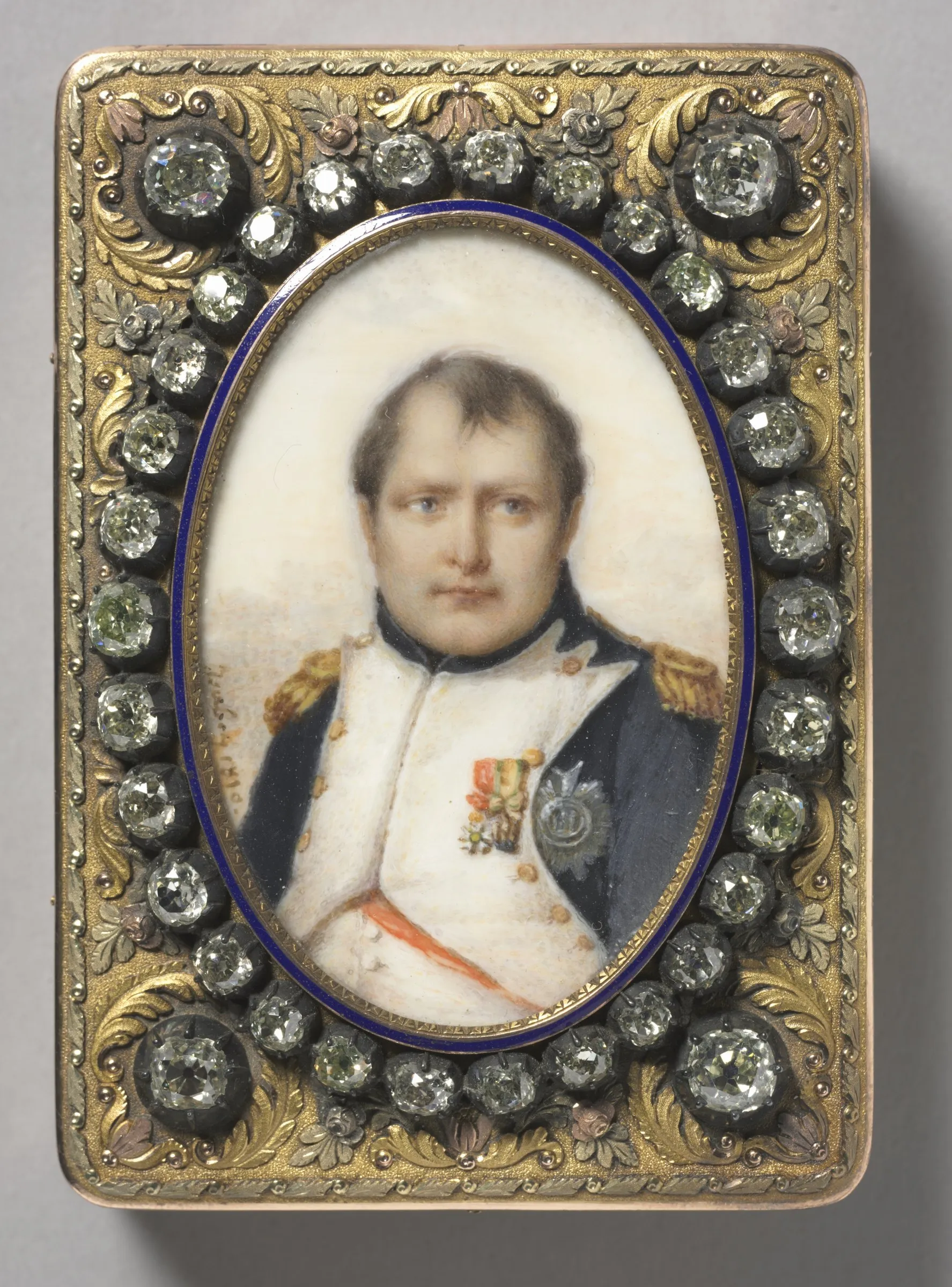
Philippe Ledoux’s Napoléon (1963) is the subject of a whole essay by the Fondation Napoléon. On a ground of golden bees he set flags and eagles, a First Consul’s coat, swords, a bicorne hat and five medallions after famous paintings, by David, Gros, Gautherot and Horace Vernet among them. The Fondation counts “over one-hundred scarves” between 1937 and the 1980s that show some influence of Napoleon’s First Empire. Ledoux drew horses too: the Modemuseum Hasselt holds his carré of jockey caps, stirrups and three jockeys racing inside a frame of reins.
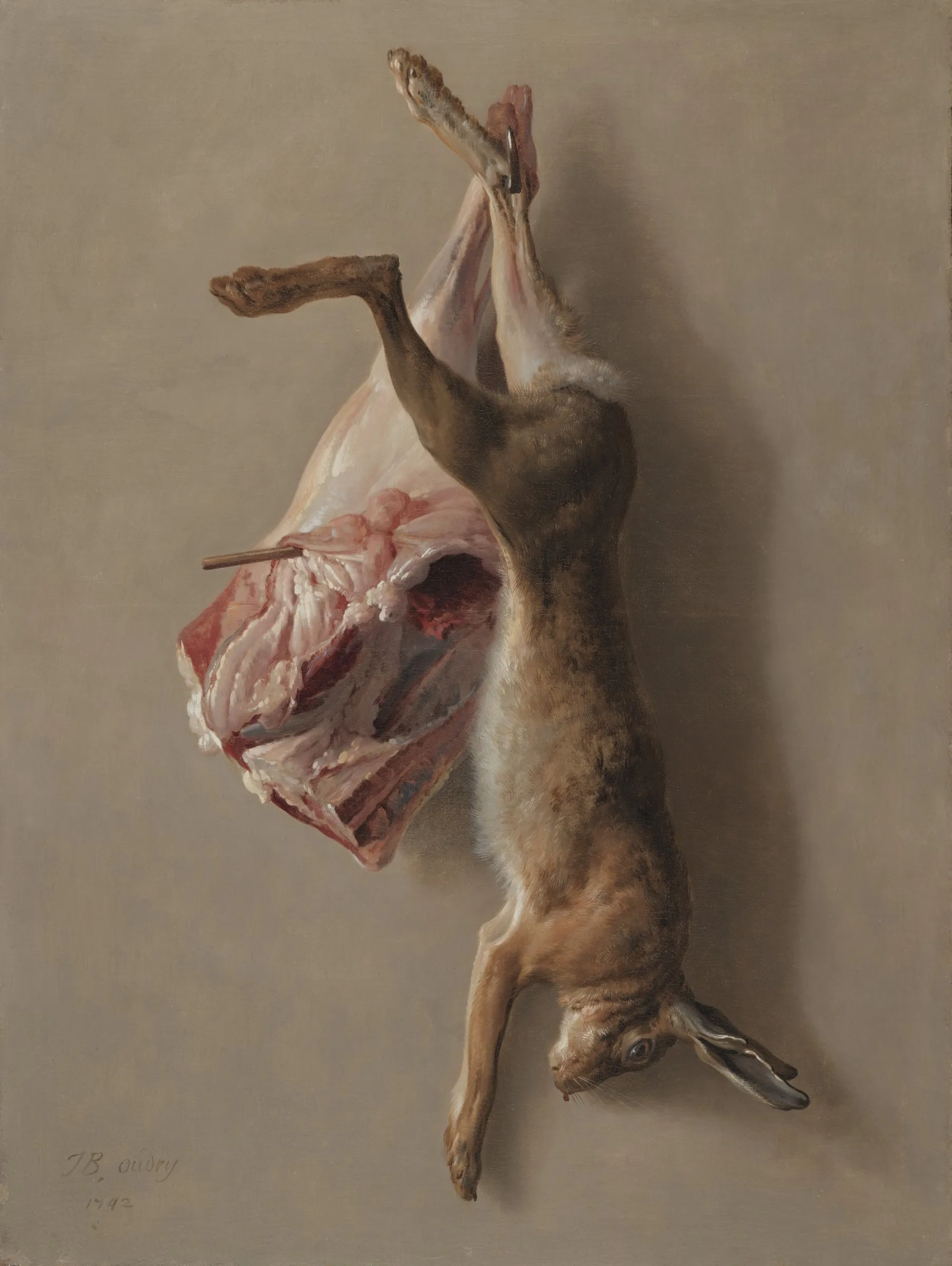
Henri de Linarès drew Gibiers, game. The Modemuseum Hasselt’s green copy shows shot game in the centre, and its record notes that “Hermès-Paris” and “H. De Linarès” are both printed on the border: the artist’s name is part of the print. Henri d’Origny’s Cavalcadour (1981), “intertwined horse harness and bridles” in the V&A’s words, appears in the museum on a 2014 cashmere shawl, printed in Lyon and then embroidered by hand in Mumbai over 500 hours. MoMu in Antwerp holds a d’Origny carré of irises, poppies and lilies.
Other names wait in museum stores: J. Abadie’s Clic Clac, riding whips, kept in its orange box at MoMu; J. Metz’s straps and buckles in Hasselt; a 1986 square by Cathy Latham at the Musée des Arts Décoratifs in Paris. Michel Duchêne drew Feux d’artifices, fireworks, for the house’s 150th in 1987.
Later names reach well beyond illustration. French Wikipedia mentions the graphic artist Cassandre and the cartoonist Sempé, six works by Josef Albers in 2008, and two collections by Rei Kawakubo at the end of 2012; ICON dates a Kawakubo edition to 2016, and adds Daniel Buren (2010), the street artist Kongo (2011) and Hiroshi Sugimoto (2018). Sotheby’s sale pages in November 2026 list carrés by their artists: Claire Fanjul, Dimitri Rybaltchenko, Katie Scott, Christiane Vauzelles.
Kermit Oliver: Texas on silk
The carré’s best-known American story starts with a question. In 1980, English Wikipedia says, Hermès asked Lawrence Marcus of Neiman Marcus whether he knew “of an American artist who could create a design for a scarf with a Southwestern theme”. Marcus named Kermit Oliver, a painter born in 1943 in Refugio, Texas, where his father worked as a cowboy on a cattle ranch.
Oliver also sorted mail for the US Postal Service for most of his working life, in Houston and then, after moving to Waco in 1984, for thirty years more. He retired from the post office in 2013. Wikipedia counts 17 Hermès designs over 32 years, and the Bryan Museum in Galveston showed all 17 together in 2025.
Three are in the Smithsonian’s National Museum of African American History and Culture. Two are 1986 colourways of his Texas wildlife carré: a wild turkey inside a wreath of cactus pads, with an armadillo, a jaguar, a hare and a bear. One record titles it Faune et Flore du Texas, the other Flore et Faune du Texas. The third, Les Amériques, was “commissioned by Hermès and first issued in 1992” for the 500th anniversary of Columbus’s voyage. The museum reads the design closely, including what it calls “a stereotypical image of a Maya person”, and keeps the square framed; unframed, it measures 36 inches.
Is he the only American to have drawn a carré? Texas Standard (2021), Sotheby’s (2026) and Wikipedia all say so. Sotheby’s adds that his Madison Avenue carré was issued in 2000 “to commemorate the 10th anniversary of Hermès’ Madison Avenue boutique” and reissued in 2010; Hermès’s own timeline dates the opening of its Maison on Madison Avenue to 2000.
Hermès has taken designs from unknowns as well as painters, French Wikipedia says: a Texan postal worker’s drawing of a Native American, Pani La Shar Pawnee, “became very popular”, and a Sudanese schoolboy designed Smiles in Third Millenary, then five more.
How a drawing becomes a carré, by each account
Hermès itself says only that “all of our silk items (notably, ties and scarves) are woven and printed at our factories in the region of Lyon, the birthplace of silk” (Hermès FAQ). The fuller accounts come from others, and their numbers differ:
| Sotheby’s | French Wikipedia | ICON | Christie’s | |
|---|---|---|---|---|
| Time | “up to 750 hours” | 500 to 800 hours, up to 2,000 for the most complex; up to two years from sketch to shop | about two years from design to last stitch | “months to design and produce” |
| Colours | “up to 46” | up to 40 separations, one per colour | “close to 27” on average | Not given |
| Silk | “approximately 450,000 meters of silk thread” | about 450 km, about 300 cocoons | Not given | Not given |
| Hems | rolled “typically by artisans in Lyon” | rolled at the Gandit workshops, Bourgoin-Jallieu | Not given | Not given |
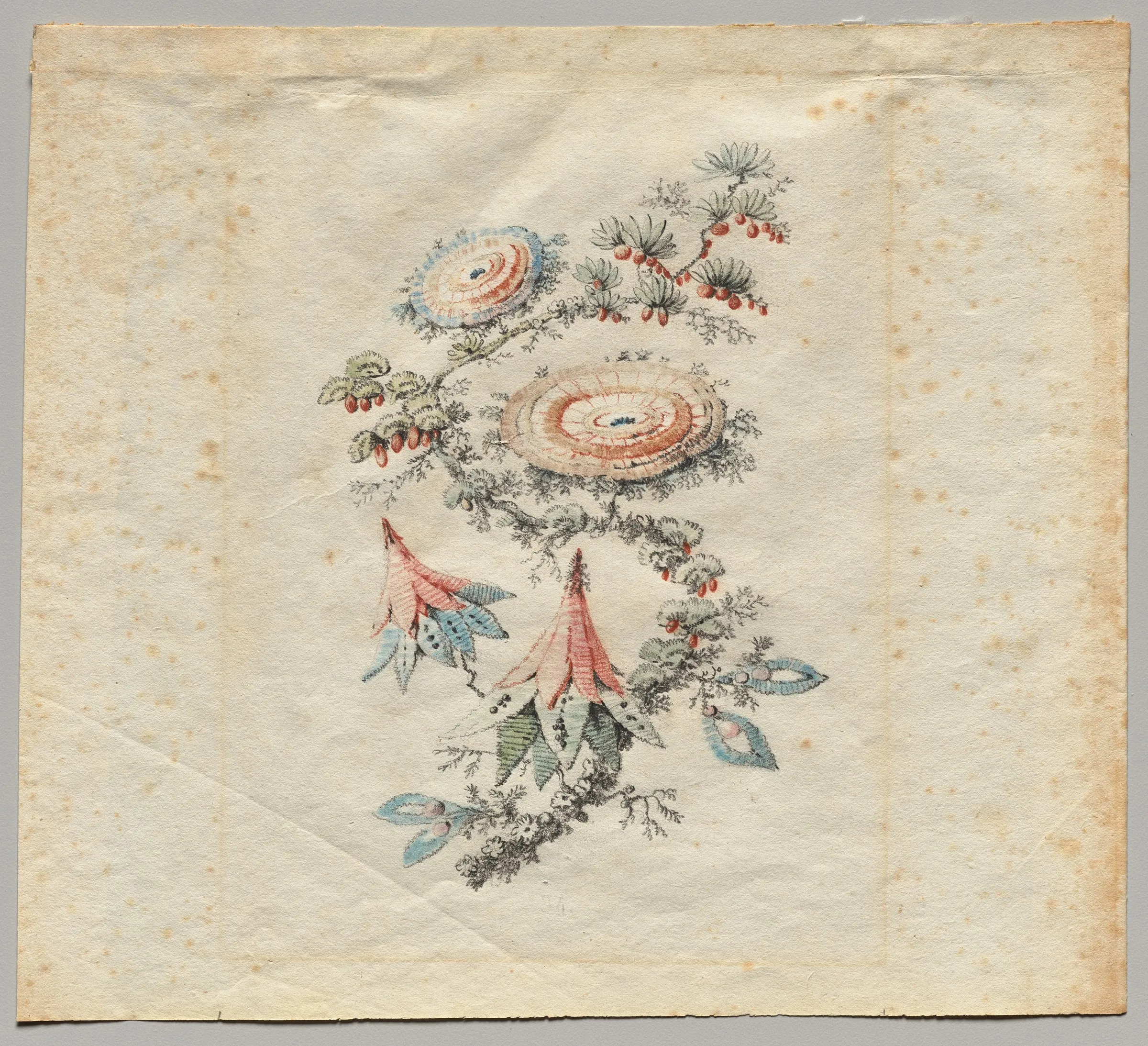
French Wikipedia gives the steps. The approved drawing goes to Lyon, where it’s traced colour by colour onto transparent sheets on light tables, up to 40 of them. Colourists mix the dyes in a lab nicknamed “la cuisine des couleurs”, the colour kitchen, from a chart of 75,000 shades. Each colour is printed through its own gauze frame onto silk laid along a 150-metre table. The silk is steamed, washed, rinsed and cut. Then about thirty roulotteuses at the Gandit workshops in Bourgoin-Jallieu, in the Isère, roll each edge by hand and sew it with silk thread.
That’s screen printing, which reached silk scarves in the 1920s, and a hand-rolled hem. Since 2020, French Wikipedia adds, Hermès has printed some carrés with a different design on each side, on a machine that took five years to develop.
And the “90”? Museums measure their carrés at 87.5 to 91.4 cm: the V&A’s Paddock is 90 × 90 cm, and the NMAAHC’s three Oliver squares are 90 × 90, 90 × 87.5 and 91.4 × 91.4. Hermès’s US site lists today’s carré 90 at 34.8 inches, or 88.4 cm (our Hermès price research). A 90 cm square folds on the bias into a band of about 125 cm, long enough for most knots.
The most famous designs, and who says so
- Brides de Gala (1957, Hugo Grygkar): “the most famous design” (ICON); the best-seller, in more than 70 colours (French Wikipedia).
- Jeu des omnibus et dames blanches (1937, Robert Dumas or Hugo Grygkar): the first, reissued in 2007 (ICON).
- Napoléon (1963, Philippe Ledoux): the subject of a Fondation Napoléon essay.
- Les Cavaliers d’Or: named beside Brides de Gala by Sotheby’s as a motif collectors seek.
- Astrologie: Jacqueline Kennedy Onassis’s favourite, says French Wikipedia.
- Madison Avenue (2000, Kermit Oliver): “so beloved it was reissued in 2010” (Sotheby’s).
- Paddock (1956, Jean-Louis Clerc) and Cavalcadour (1981, Henri d’Origny): both in the V&A’s records.
- Jardins secrets and Sieste au Paradis: up to 2,000 hours of work each, French Wikipedia says.
The most sought-after carrés, French Wikipedia adds, are the designs of the 1940s. For every design by year of first edition, the independent archive Scarf Sage lists them from 1937 to 2025.
The stories you’ll hear, and where they come from
“Robert Dumas drew the first carré.” “No, Hugo Grygkar did.” Hermès, Sotheby’s, Christie’s and the Fondation Napoléon name Dumas; ICON’s timeline names Grygkar, and its own text names Dumas. See above.
“Thierry Hermès created the scarf.” You may read this. Hermès’s history gives his dates as 1801 to 1878, 59 years before the first carré.
“Grace Kelly broke her arm and made a sling of her carré.” ICON puts it in 1956: a broken arm, and a party on Aristotle Onassis’s yacht. Sotheby’s text says she “injured her arm in 1957”. The AP photograph Sotheby’s prints beside it is captioned 27 August 1959, two days after a wasp sting. Christie’s says “the late 1950s”.
“Only one American has ever designed a carré.” Texas Standard, Sotheby’s and English Wikipedia all say it of Kermit Oliver.
“Over 2,000 designs by 150 artists.” That’s ICON’s timeline; French Wikipedia says more than 2,000 designs, and Sotheby’s and Christie’s say over 150 artists. Scarf Sage, “every Hermès scarf design we know of”, counts 1,783 designs and 5,081 colourways by 186 designers (checked 4 November 2026). The gap may be in what’s counted: a design, a reissue, a colourway.
“Up to 46 colours.” Sotheby’s says up to 46; ICON says close to 27 on average. A maximum and an average can both be right.
“Rolled by hand in Lyon.” Sotheby’s says Lyon. French Wikipedia names the Gandit workshops at Bourgoin-Jallieu, in the Isère. Hermès says “the region of Lyon”, which may cover both.
“Chinese silk” or “jockeys’ twill”? Sotheby’s and Christie’s say the first carrés were Chinese silk; French Wikipedia and ICON say jockeys’ twill. A twill can be woven from Chinese silk, so this one may be two halves of one answer.
FAQ
When was the first Hermès scarf made? In 1937, for the house’s hundredth year. The first design was Jeu des omnibus et dames blanches, a board game about Paris omnibuses.
Who designed the first Hermès scarf? Hermès credits Robert Dumas, Émile Hermès’s son-in-law, and so do Sotheby’s, Christie’s and the Fondation Napoléon. The timeline in ICON’s 2017 article credits the artist Hugo Grygkar. None of the accounts we read quotes the original drawing.
Who designs Hermès scarves? Artists, illustrators and painters, credited by name: Henri de Linarès, Philippe Ledoux, Jean-Louis Clerc, Henri d’Origny, Kermit Oliver and, more recently, Claire Fanjul and Dimitri Rybaltchenko among many others. Counts run from over 150 artists (Sotheby’s, Christie’s) to 186 designers (Scarf Sage).
What is the most famous Hermès scarf? Brides de Gala, from 1957, credited to Hugo Grygkar. ICON calls it the most famous design, and French Wikipedia says it’s the best-seller, reissued in more than 70 colours.
What does “Brides de Gala” mean? Gala bridles. The V&A translates bride de gala as “formal bridle”.
What is the rarest Hermès scarf? No source we read names one. French Wikipedia says some designs were made in editions of only a few pieces, and the V&A holds a small Hermès square printed as an invitation to the reopening of the Geneva shop, “not produced for retail distribution”.
Is there a list of every Hermès scarf design? The fullest we found is Scarf Sage, an independent archive: 1,783 designs and 5,081 colourways by 186 designers, searchable by year and designer.
How are Hermès scarves made? Hermès says its silk scarves are woven and printed in the region of Lyon. By French Wikipedia’s account, each colour gets its own screen, up to 40, and the hems are rolled by hand at Bourgoin-Jallieu. Accounts of the time range from 500 to 800 hours, up to 2,000 for the most complex designs.
Who is Kermit Oliver? A Texas painter, born in 1943, who also worked as a postal mail sorter. He drew 17 Hermès designs over 32 years, from 1980, says English Wikipedia. Three are in the Smithsonian’s National Museum of African American History and Culture.
How big is a Hermès 90 scarf? Hermès’s US site lists the carré 90 at 34.8 inches, which is 88.4 cm. Museums measure older carrés at 87.5 to 91.4 cm.
Artists still draw silk squares today, for big houses and small studios alike; we’ve gathered 25 of them, with the artists’ names, in our guide to artist-designed silk scarves.
Sources
Hermès’s own pages (Six generations of artisans, Manufacture FAQ); Sotheby’s (Aurélie Vassy, 10 March 2026); Christie’s (1 March 2026); the Fondation Napoléon (Karine Huguenaud, 2010); ICON (2017, updated 2026); French Wikipedia (Carré Hermès, 1828 en France); English Wikipedia (Kermit Oliver); Texas Standard (2021); Scarf Sage (totals from its home page). Museum records, linked in the text: the V&A, the Smithsonian’s NMAAHC, the Modemuseum Hasselt, MoMu Antwerp, the Musée des Arts Décoratifs and the Palais Galliera (the last four through Europeana). Images: CC0 on The Cleveland Museum of Art’s own records, linked in each caption. All checked 4 November 2026.