A story in one thread
How silk is made from silkworm to scarf
Silk begins as a caterpillar smaller than a grain of rice and ends, many hands later, as a square of silk around your neck. Follow it all the way. For most of the journey it's one long story and one very, very long thread.
Scroll to begin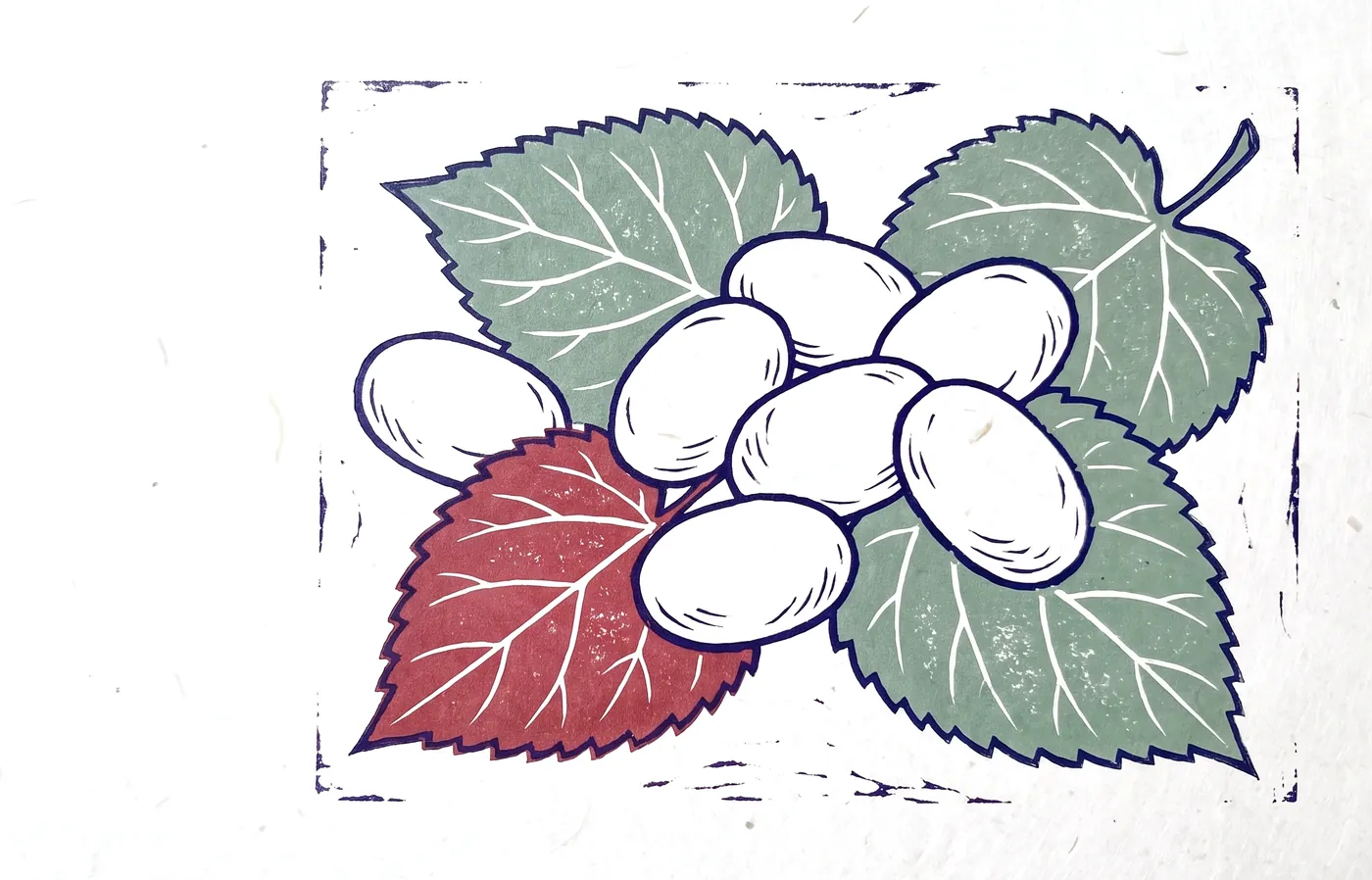
The moth & the mulberry
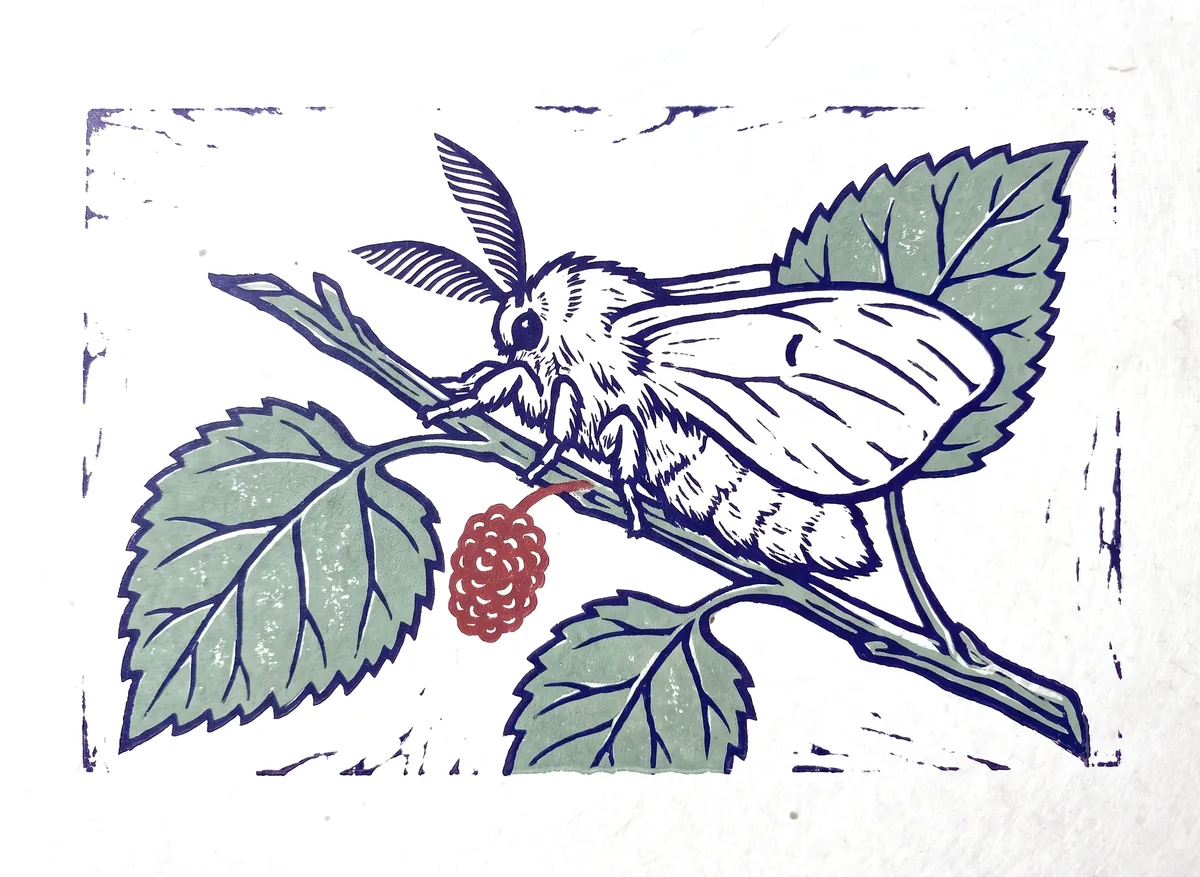
Almost all the world's silk comes from one insect: the domestic silk moth, Bombyx mori.
After thousands of years living alongside people, it has changed a great deal. The moth can't really fly. It isn't found in the wild anywhere. And its caterpillar, the silkworm, eats just one thing: the leaves of the mulberry tree.
People in China were making silk long before writing history down. The oldest silk fabric found so far, from Henan province, dates from about 3630 BC.
- 1insect makes almost all silk
- 0wild populations
- 1food: mulberry
- 5,600years of silk fabric
Eat, sleep, shed, repeat
It begins as a tiny egg. Out comes a hairy black caterpillar just 2 to 3 mm long: smaller than a grain of rice.
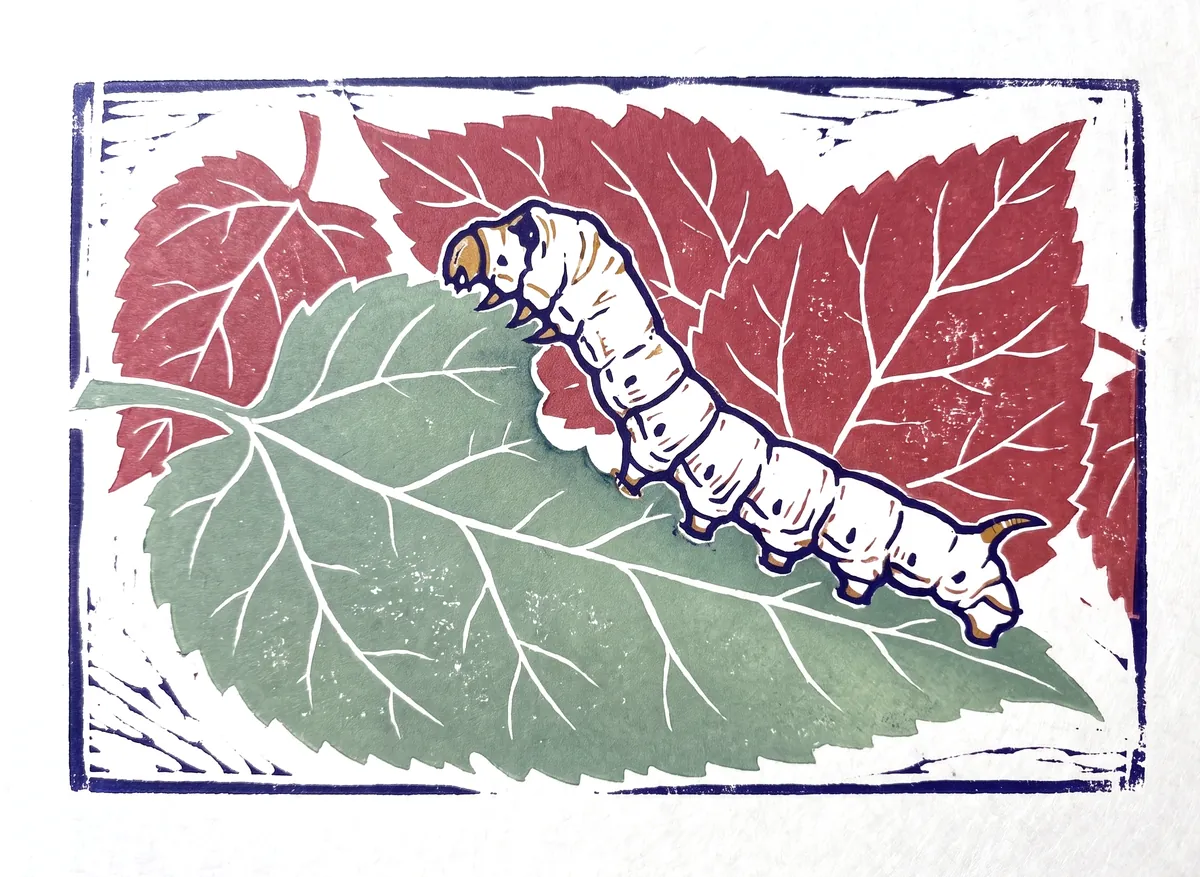
Then it eats mulberry leaves, almost without stopping. Four times it pauses, sleeps and sheds its skin. That makes five stages of growth, in less than four weeks.
In the fifth and last stage it eats about 80% of all the food of its life. By the end it weighs about 10,000 times what it did when it hatched, and it's about 25 times as long.
To picture that: a 3.5 kg newborn growing 10,000 times heavier would weigh 35 tonnes. That's more than six large elephants.
An adult Asian elephant weighs up to about 5.4 tonnes.
Spinning a cocoon
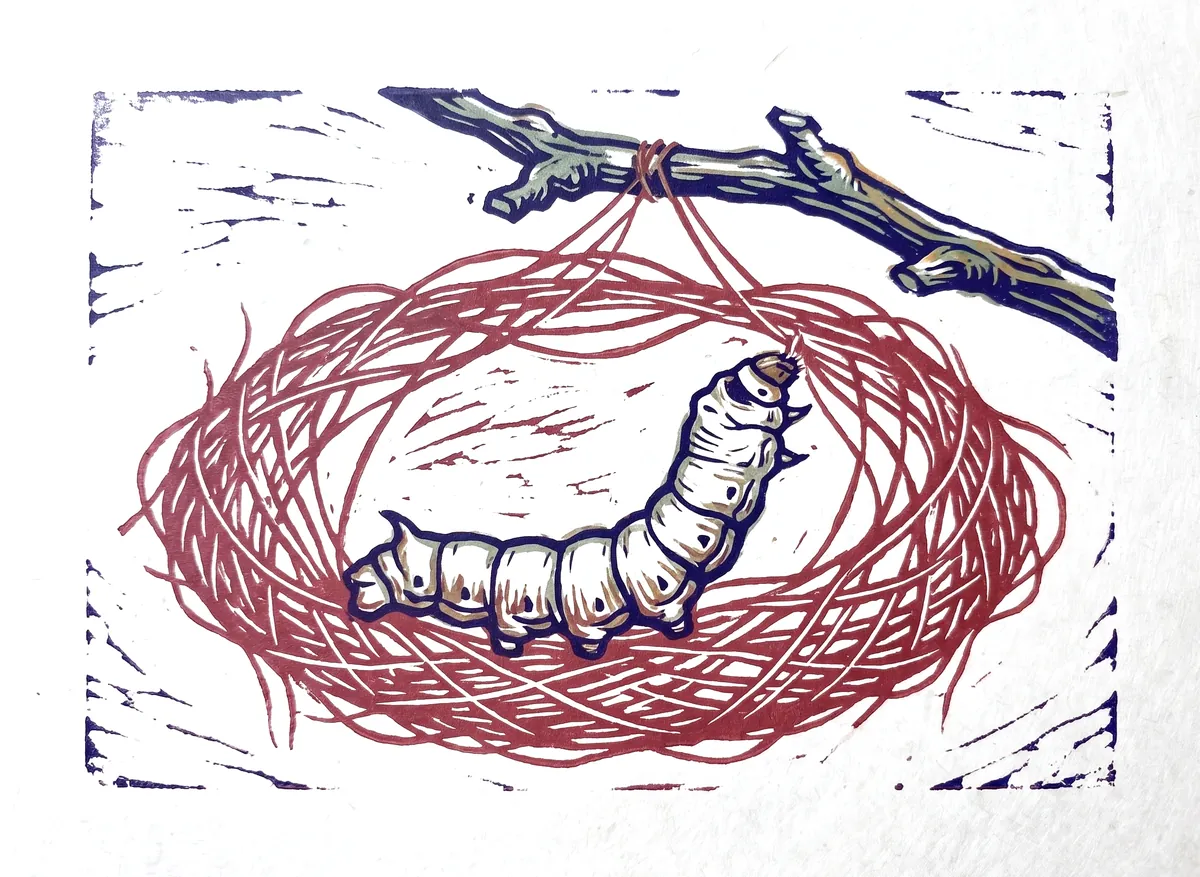
Fully grown, the silkworm stops eating, finds a sheltered corner and begins to spin.
Silk comes from two glands in its head. It swings its head in a figure of eight, laying the filament around itself, layer upon layer.
It keeps going for two to three days, without a break, until it's sealed inside.
And here's the astonishing part: the whole cocoon is one single, unbroken thread.
So how long is one thread?
Somewhere between 600 and 1,500 metres, depending on the silkworm. Watch it climb.
Past the Eiffel Tower, 330 m…
…past the Empire State Building, 443 m to the tip of its spire…
…past the Burj Khalifa, 828 m, with plenty to spare. All from one cocoon you could hold between two fingers.
And yet it's only 15 to 20 thousandths of a millimetre across. A kilometre of it would weigh about a third of a gram.
Silk & its glue
Look closer and the thread is really two. Each filament is a pair of strands of a protein called fibroin, glued together and coated by a second protein, sericin.
Fibroin is the silk. Sericin is the gum: it holds the cocoon together while the moth-to-be sleeps inside. Later the gum is washed away, which leaves the soft, lustrous fibroin behind.
Reeling it back off
To unwind the thread, the cocoons go into hot water, which softens the gum so the filament comes away.
Before that, most cocoons are heated so the moth never comes out. A moth leaving its cocoon breaks the thread into short lengths. Some are left to hatch, to lay the eggs of the next generation.
One filament is far too fine to weave on its own, so the reeler draws the ends of several cocoons together into a single thread of raw silk.
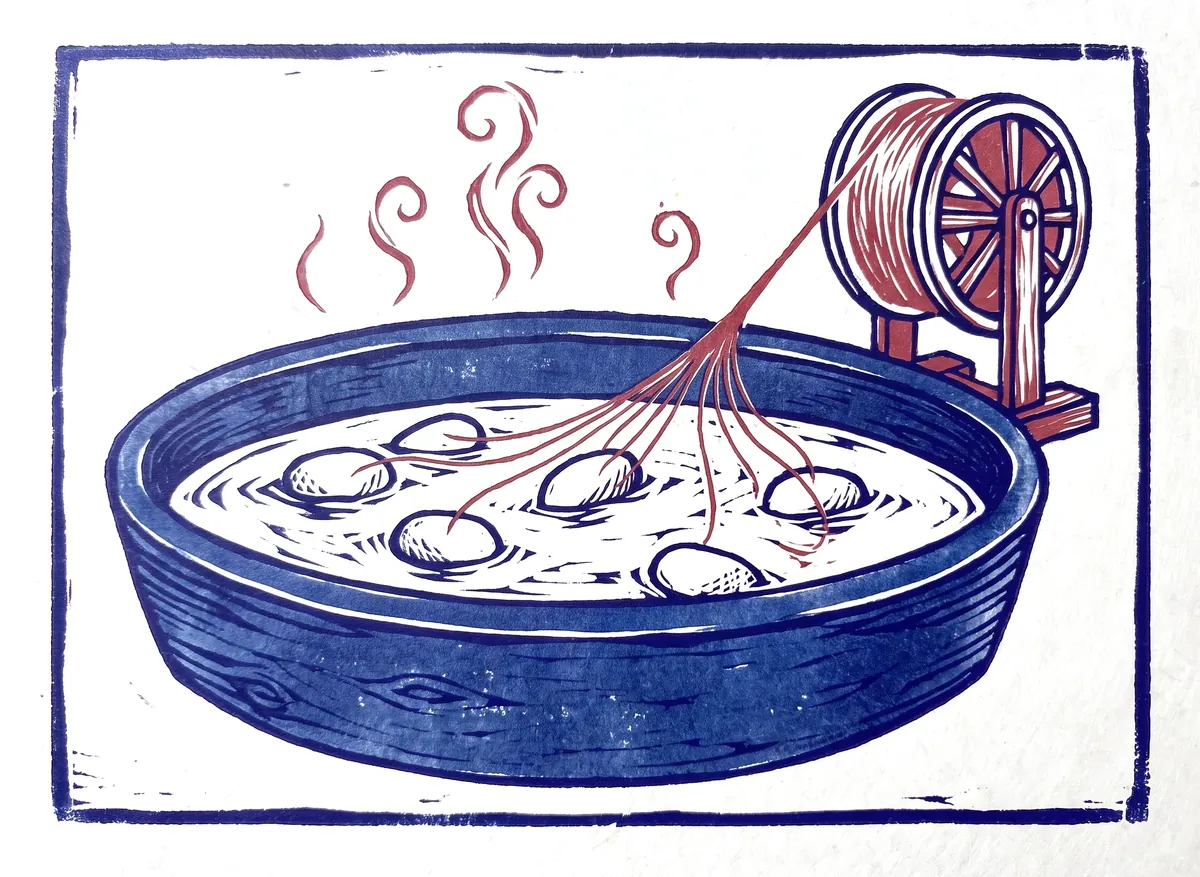
One cocoon filament is about 3 denier (grams per 9 km). Nine together make a 27-denier thread, one of the usual sizes for raw silk.
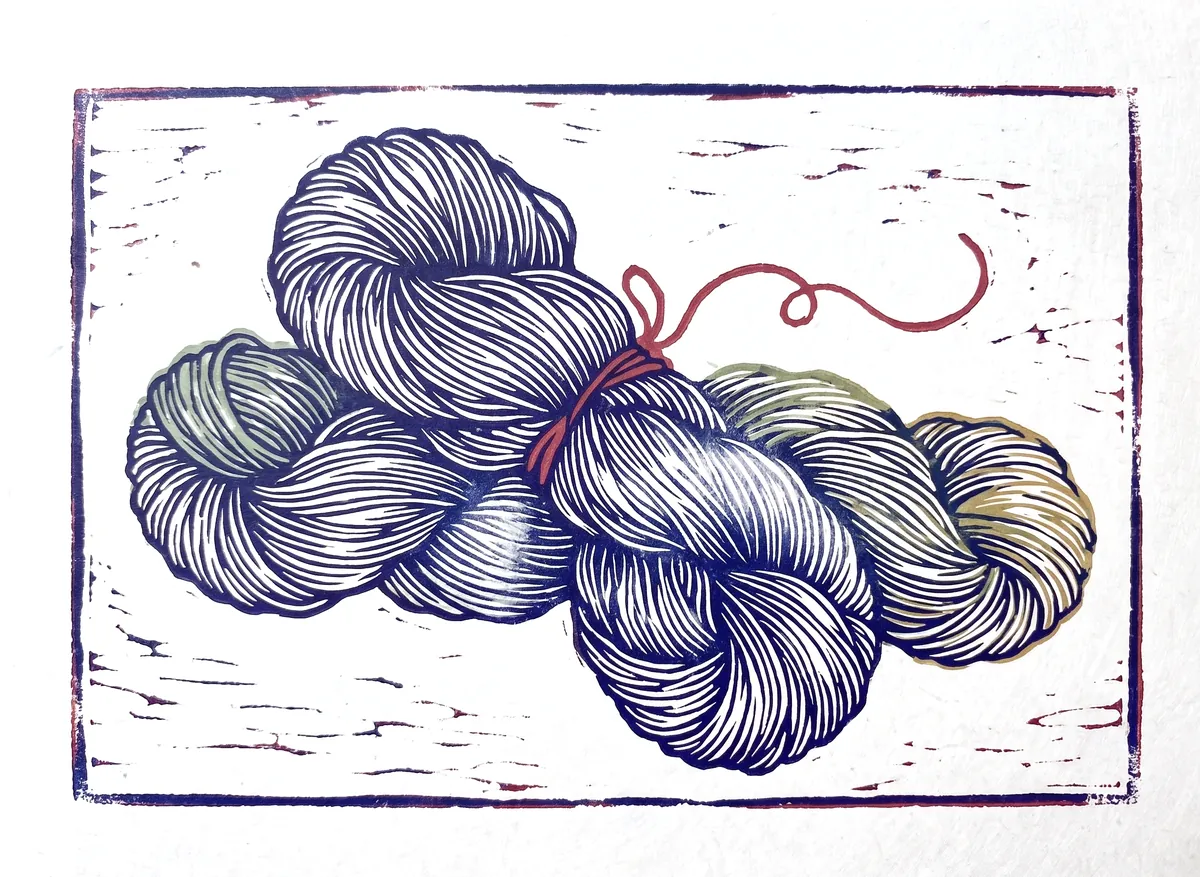
Raw silk is wound into skeins, sorted by quality, and sent to the weavers.
How many cocoons make a scarf?
Let's work it out for one of our 90 cm squares in 18 momme silk twill. Keep scrolling and watch the square fill.
Momme is silk's weight per area. One momme is 4.34 grams per square metre, so 18 momme is about 78 g/m².
A 90 cm square is 0.81 m², so it holds about 63 g of silk: roughly the weight of a hen's egg.
That's silk with its gum washed off. Put the gum back (19–28% of raw silk) and it took about 78 to 88 g of raw silk.
A fresh cocoon weighs about 2 g and gives 12–20% of that as raw silk: roughly 2 to 4.6 cocoons per gram. So a scarf takes about 250 cocoons, somewhere between 150 and 600 depending on the silkworms.
Show the working
| 18 momme × 4.34 g/m² | 78.1 g/m² |
| × 0.9 m × 0.9 m = 0.81 m² of silk | 63 g |
| The finished silk has lost its gum. Sericin is 19–28% of raw silk, so raw silk needed = 63 ÷ 0.81 to 63 ÷ 0.72 | 78–88 g |
| Today's hybrid cocoons weigh 1.8–2.5 g fresh and give 12–20% of their weight as raw silk: 0.22–0.50 g each, or 2.0–4.6 cocoons per gram | 2.0–4.6 per g |
| Range: 78 g × 2.0 to 88 g × 4.6 | about 150–400 |
| Middle case: about 83 g of raw silk at about 2.9 cocoons per gram (a 2.0 g cocoon giving 17%) | about 240 |
| With breeds that give less silk (one older estimate is 4,000–7,000 cocoons per kilo of silk), up to 88 g × 7 | about 600 |
That's before anything is trimmed away at the loom or in finishing, so the real number is a little higher. Call it about 250, and somewhere between 150 and 600.
Another way to count. A cocoon filament is about 3 denier, roughly 2.3 once the gum is gone. At 2.3 denier, 63 g of silk is about 250 km of filament: about six marathons, end to end.
At roughly a kilometre of thread per cocoon, that's about 250 cocoons again.
Weaving the twill
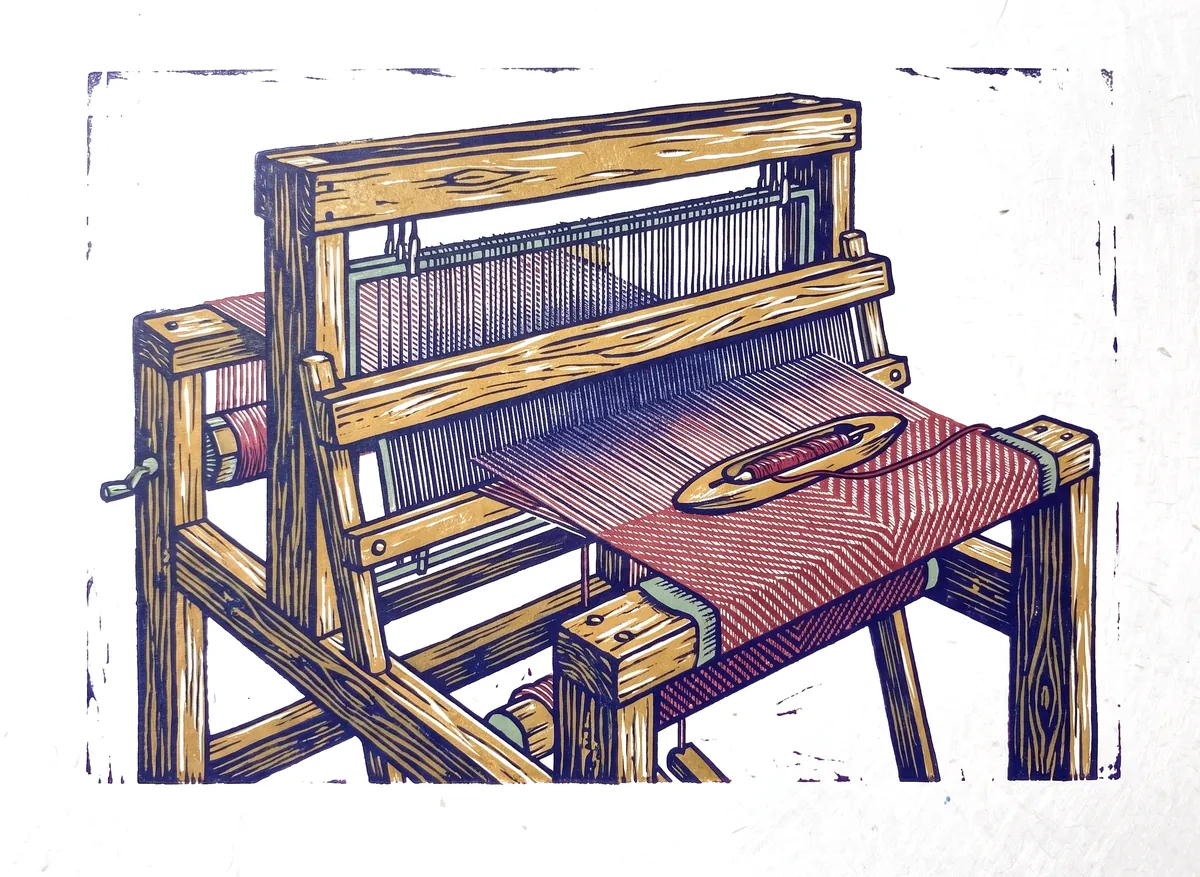
Our silk is woven in China, as twill. In a twill, each crosswise thread passes over one lengthwise thread and under two or more, and every row starts one thread further along. The steps line up into fine diagonal ridges.
Twill drapes well, has a smooth back, and its close, even surface takes a fine print. That's why it's the classic cloth for silk squares.
Zoom in until the threads appear, then look for the diagonal. Switch to plain weave to compare.
Momme, weighed
Momme began as a Japanese weight. For silk it means weight per area: 1 momme is 4.34 grams per square metre.
Slide to weigh a 90 cm square at different mommes. Momme is weight, not quality: a higher number simply means more silk in the same square.
63 g
18 momme is 78 g/m². A 90 cm square weighs about 63 g, as much as about 13 sheets of office paper. This is the weight of our silk.
Printed on both sides
The design comes from the artist's studio in Bangkok. The woven silk stays in China, where the design is printed onto it and the piece is finished.
Our squares are printed on both sides, so the design is there wherever a fold or a knot falls. Most printed squares show a paler back. The artist's signature is part of the printed design.
Front. The little mark at the bottom right stands for the artist's printed signature.
The hand-rolled hem
Last comes the edge. The raw edge of the silk is rolled over on itself, tightly, into a hem just a few millimetres across.
It's held with tiny stitches, by hand. The roll stays soft, round and slightly plump, where a machine hem lies flat.
On a 90 cm square that's 360 cm of edge, rolled and stitched by hand all the way round.
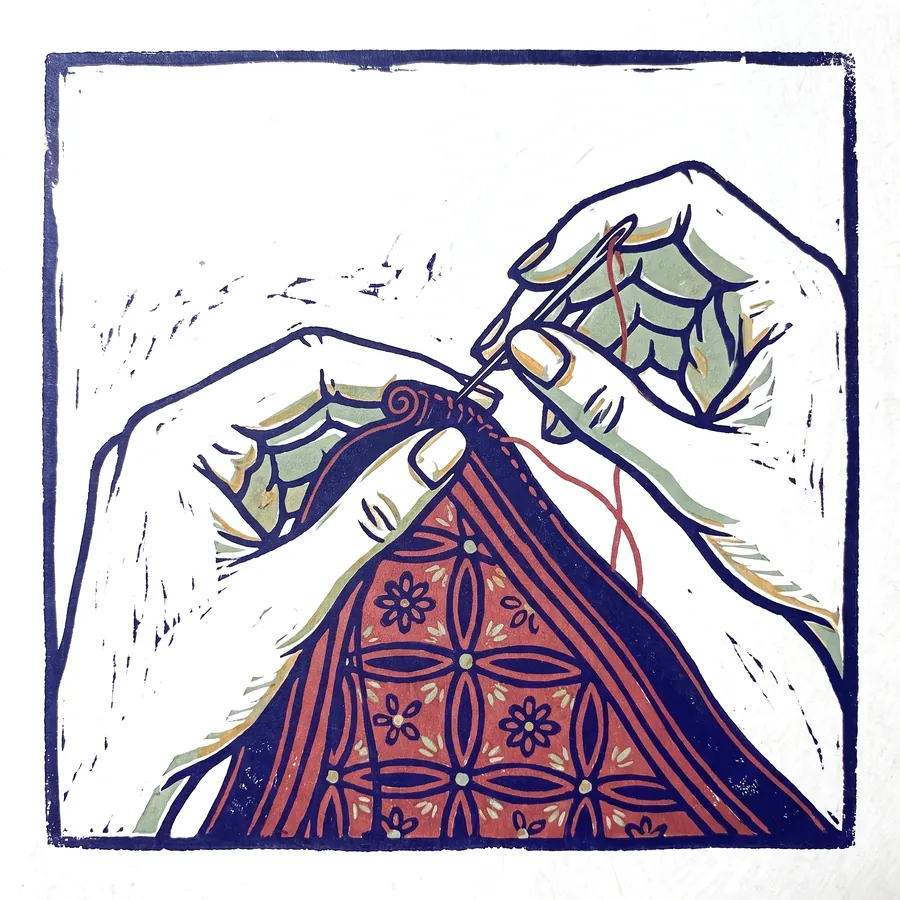
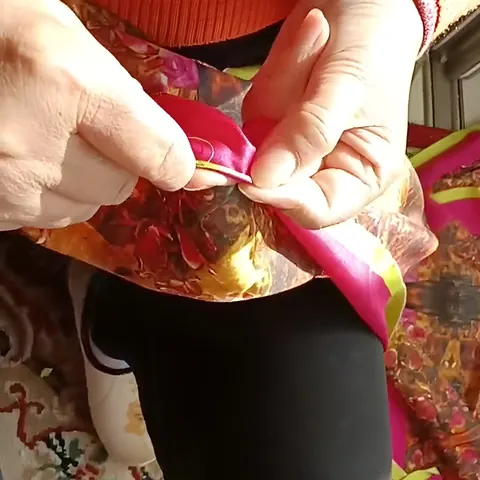
From egg to hem, silk passes through a great many hands. Every one of them shows.
Looking after silk

Dry clean only
Every one of our silk pieces is dry clean only. Take it to a dry cleaner you trust.
Keep it out of strong sun
Light fades colours, and too much sunlight weakens silk.
Store it flat or loosely rolled
With acid-free tissue between the folds, so it doesn't hold sharp creases.
Put it away clean
Insects go for silk that's been left dirty, so have it cleaned before you store it for a season.
Unwind a cocoon
0 m unwound
One silkworm, one thread, about a kilometre. Around 250 of them, in one square of silk.
The Kanso Collective sells wearable art and slow fashion, direct from the makers we work with.
See our silk squaresSources and notes
- FAO, Silk reeling and testing manual, cocoon chapter: filament 600–1,500 m long (80% reelable), 15–20 microns across; sericin 19–28% and fibroin 72–81% of the shell; hybrid cocoons 1.8–2.5 g fresh; raw silk 12–20% of fresh cocoon weight; 60–100 cocoons to a litre.
- FAO, reeling chapter: several cocoon filaments are reeled together into one thread; hot water dissolves the sericin and helps the cocoon unwind. Factory chapter: a silk percentage of 17 for bivoltine cocoons.
- Japan Tourism Agency, "The Growth Process of Silkworms" (Fujioka): hatchlings 2–3 mm, four moults and five stages, fifth-stage larvae about 10,000 times their hatch weight and 25 times their size, 80% of lifetime food eaten in the fifth stage, two days of nonstop spinning, moths that can't fly or eat.
- JIRCAS, Japan Agricultural Research Quarterly 31(2): a cocoon filament is about 3 denier; raw silk of 27 denier (also 14, 21 and 33) is produced.
- International Sericultural Commission, mulberry silk: Bombyx mori feeds only on mulberry leaves.
- Wikipedia, Bombyx mori (can't fly, doesn't exist in the wild, five instars, 4,000–7,000 cocoons per kilo of silk), Sericulture (figure-of-eight spinning, two to three days), Silk (oldest silk fabric about 3630 BC, Henan; pupae killed before moths emerge, which would tear the thread into short lengths; sunlight weakens silk; insects attack dirty silk).
- Momme: QUDT unit registry (4.340 g/m²); Japan's Measurement Act order (momme as 3.75 g, for pearls).
- Twill: Getty Art & Architecture Thesaurus, MFA Boston CAMEO.
- Elephants: Smithsonian's National Zoo (adult Asian elephants 2,750–5,420 kg).
- Storage: Winterthur (light damages textiles); The Henry Ford's textile care guide (flat storage, acid-free unbuffered tissue).
- Our arithmetic: grams in a square (momme × 4.34 × area), office paper at 80 g/m² (an A4 sheet is 0.0625 m², 5 g), a filament length of 9,000 m ÷ denier per gram, and a marathon of 42.195 km. The silk squares' facts (18 momme silk twill woven in China, printed on both sides, hand-rolled hems) are ours. The woodblock-style illustrations were made for this page; the hem photograph is from the workshop.
Checked 19 October 2026.