Art silk
Textile Wall Art: How to Choose, Hang and Look After It
Tapestry, quilts, kantha or printed silk: choose the wall first. 11 of the 16 top guides to hanging fabric suggest methods museums rule out.
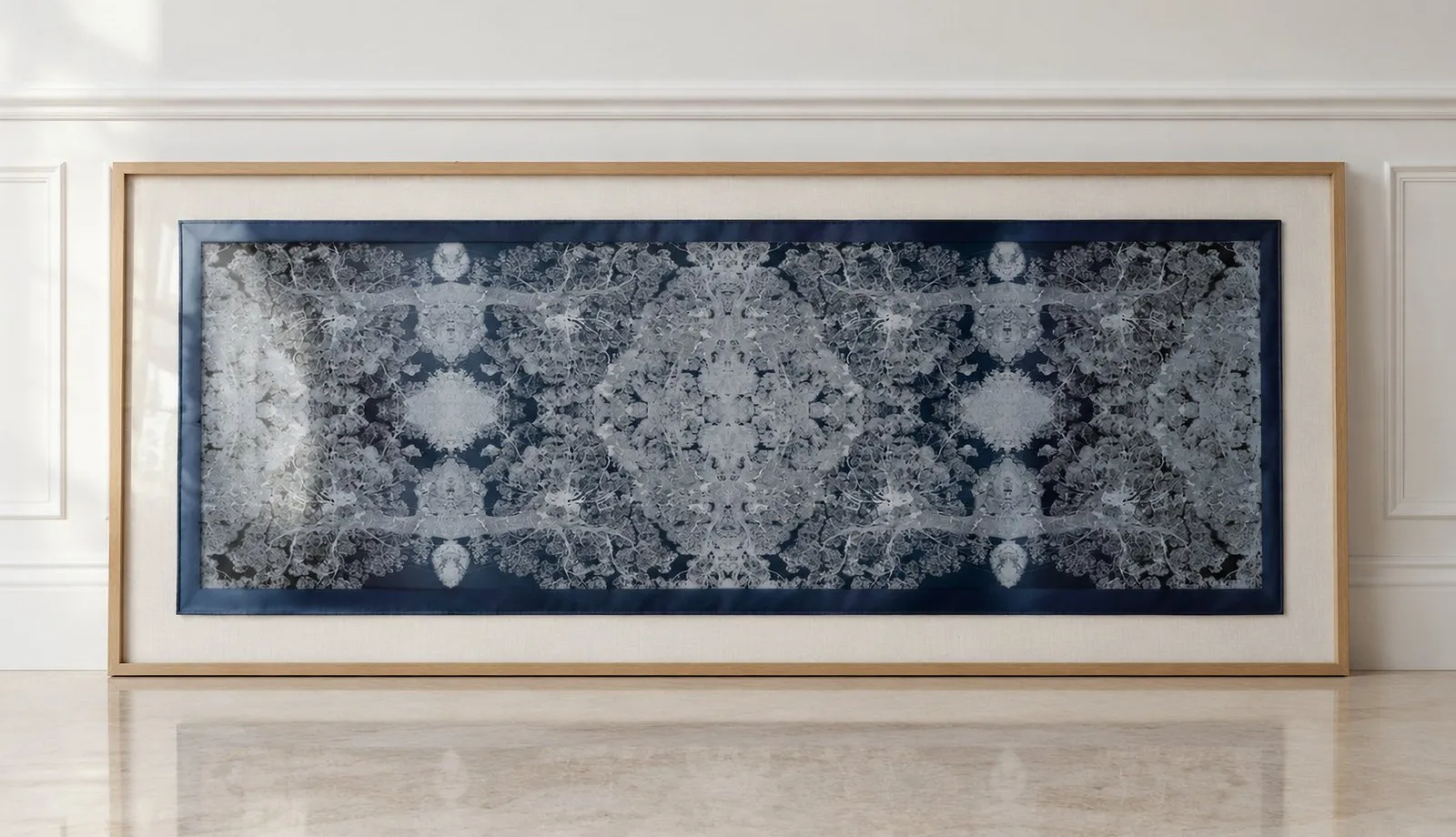
Which textile suits your wall?
3 questions, 15 seconds.
Question 1 of 3
Does direct sun reach the wall at any time of day?
Question 2 of 3
Where will it go?
Question 3 of 3
What would you like to spend on the textile itself?
Your answer
Choose another wall for the textile
Direct sun fades every textile, and silk is the natural fibre light damages most. Museums are told never to show textiles in direct sunlight, and UV-filtering glass only slows the fading a little. Put textile art on a wall the sun never crosses, and keep the sunny wall for something that isn't fabric. Our framing guide has the fading figures.
Read the light ruleYour answer
A 90 cm silk square to frame
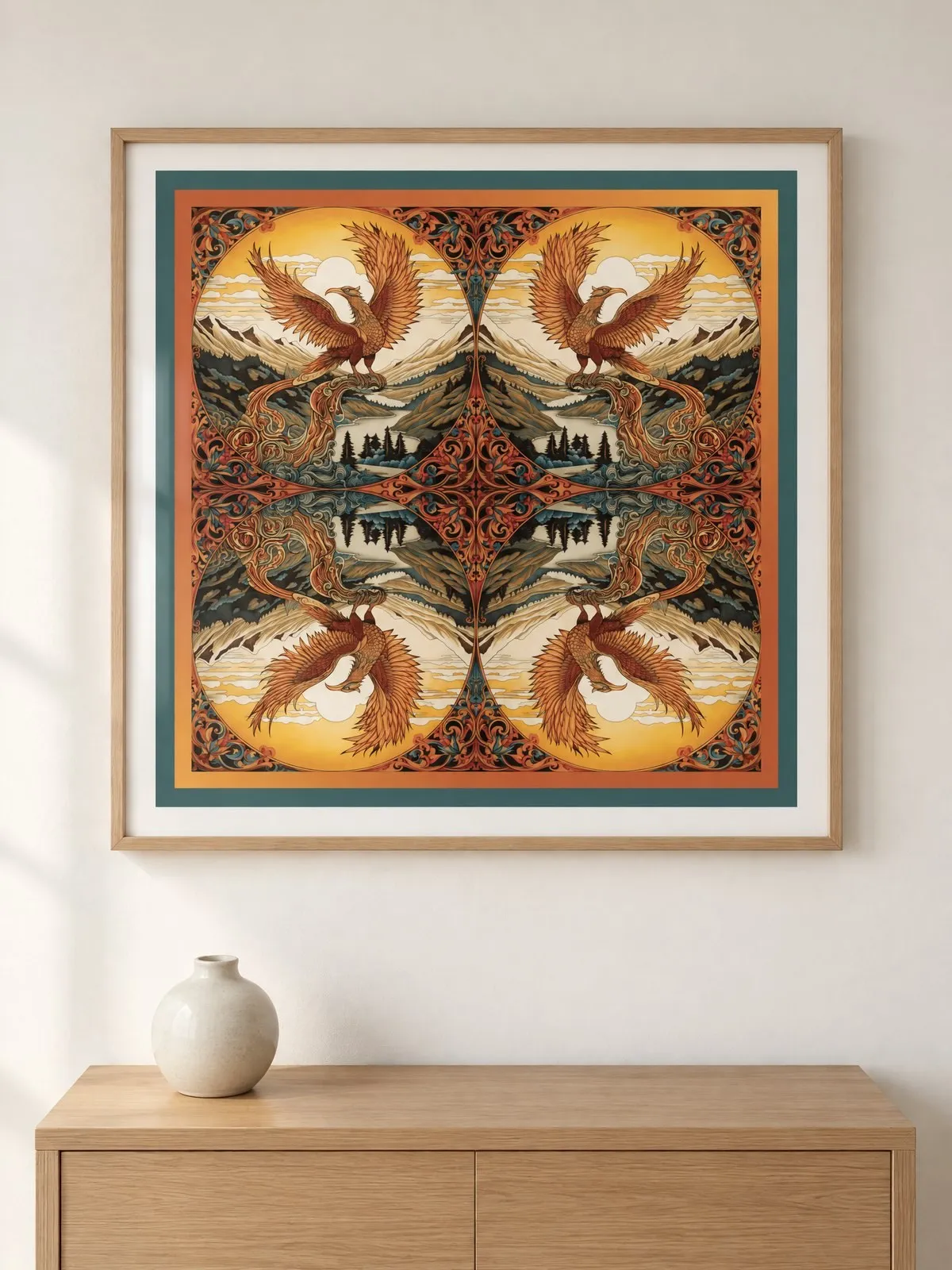
Above a sofa, bed or sideboard about 150 cm wide, a 90 cm square stitched to a board fills a frame about 100 cm (40 in) square: two-thirds of the furniture's width. Aubrey Kurlansky's squares are from $219 (£169), each a limited edition, made to order and finished by hand. See them shown framed; frames aren't included.
See the squares shown framedYour answer
A silk pocket square to frame
A 42 cm silk pocket square frames on a board about 48 to 52 cm square, small enough to do at home and to fit beside a desk or doorway. Aubrey Kurlansky's pocket squares are $59 (£55), each a limited edition, made to order and finished by hand. Frames aren't included.
See the pocket squares shown framedYour answer
A long silk scarf as a tall panel
A 65 × 180 cm long scarf, stitched to a board and framed to measure, makes a tall panel for a hallway, landing or narrow wall, and a wall away from the windows is the kindest place for silk. Aubrey Kurlansky's long scarves are from $255 (£199), each a limited edition, made to order and finished by hand. Frames aren't included.
See the long scarves shown framedGet 20% off a first order
We'll email you a personal 20% code for your first order, then new designs as they arrive.
One email with your code, then new designs. Unsubscribe any time.
Textile wall art is fabric made, or chosen, to hang on a wall and be looked at: a woven tapestry or wall hanging, a quilt or kantha, a framed embroidery, or a printed silk square. Choose the wall before you choose the piece. Light fades every textile, and silk fastest, so silk and bright dyes belong on a wall the sun never reaches. Hang heavy pieces from their whole top edge, on a sewn sleeve and rod or on hook-and-loop tape and a wooden batten, and frame thin, flat ones on a stitched mount.
Among the sellers on the first page of Google for “textile wall art” and two related searches, prices on 29 October 2026 ran from $35 for a printed polyester hanging at Society6 to $17,040 for a handwoven tapestry sold through Wescover; the middle of the 37 pieces we recorded in US dollars was $479.
We read the 16 written guides in Google’s top 10 for hanging fabric, tapestries and quilts on 29 October 2026, and checked every method they recommend against museum conservation guidance. Eleven of the 16 recommend at least one method that conservators rule out: pins or nails through the fabric, clips on its edge, or adhesive on the textile. Who’s writing makes the difference. Ten of the 11 guides to tapestries and fabric do it, seven of them from shops selling tapestries, rugs or hanging hardware. Four of the five quilting guides teach the sewn sleeve that museums use. Only 2 of the 16 mention light at all.
Below: what counts as textile wall art, how light and size should steer your choice, the two hanging methods museums use, what the sellers charge, and where a printed silk square fits.
Light decides what lasts on a wall. The way you hang it decides whether it keeps its shape.
The short answer
The Kanso Collective sells Aubrey Kurlansky’s silk squares, and he is one of its co-founders. Every other price is from the seller’s own site, checked 29 October 2026.
| Kind | What it is | How to hang it | Light | Examples (prices on 29 October 2026) |
|---|---|---|---|---|
| Tapestry | A picture woven into the cloth, usually in wool | Sewn sleeve and rod, or hook-and-loop on a batten | Old dyes fade; the back stays brighter | Handwoven: Ulrika L on Wescover, $17,040. Printed polyester: Society6, $35 to $90 |
| Woven or macramé hanging | Woven or knotted wool, cotton or jute, often on a dowel | Its own dowel, or a sewn sleeve | Natural fibres fade and yellow | West Elm (Sunwoven), from $150; The Citizenry, $299 to $3,099; Teddy & Wool, $750 to $9,500 |
| Quilt or kantha | Layers of cloth stitched together | Sewn sleeve and rod | Cotton dyes fade in sun | West Elm wall quilt, $275; Room & Board vintage kantha, framed, $699 and $1,399 |
| Framed textile | Embroidery, weaving or printed cloth on a board, behind glazing | A picture hook, once it’s stitched to its board | Glazing slows fading only a little | West Elm, $279; mindtheg printed linen, $257 to $772; Lulu and Georgia, $399 to $2,199 |
| Printed silk square | An artist’s design printed on a square of silk | Stitched to a board and framed | Silk fades fastest of the natural fibres | Aubrey Kurlansky, The Kanso Collective: from $219 for 90 cm, frame not included |
Sources for the hanging and light columns: the Canadian Conservation Institute (CCI), The Textile Museum at George Washington University and the US National Park Service, quoted below.
What counts as textile wall art?
Anything made of fibre that you hang to look at. Five kinds cover most of what’s sold, and they differ in how they’re made, how much they weigh and how they take light.
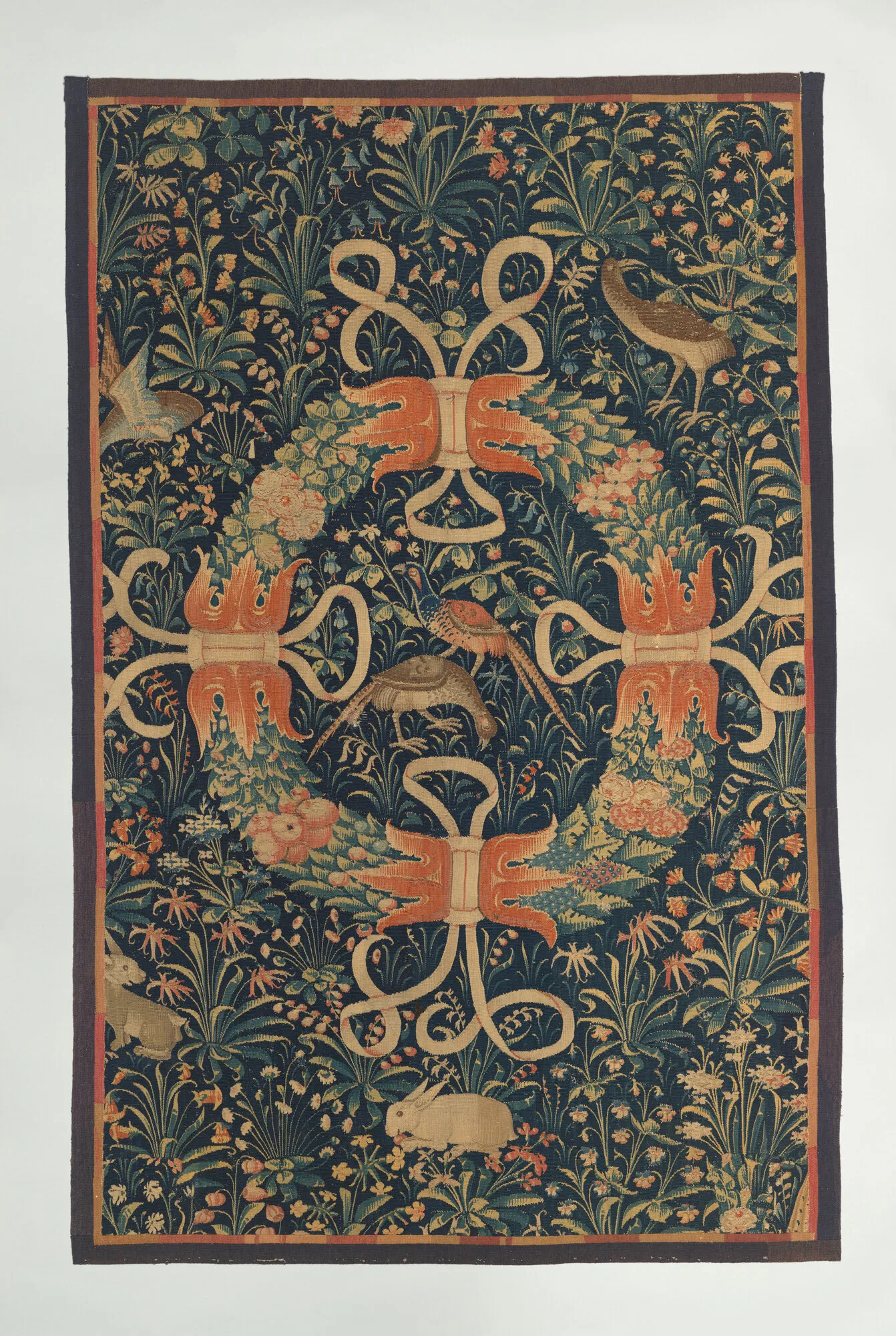
Tapestry and woven hangings
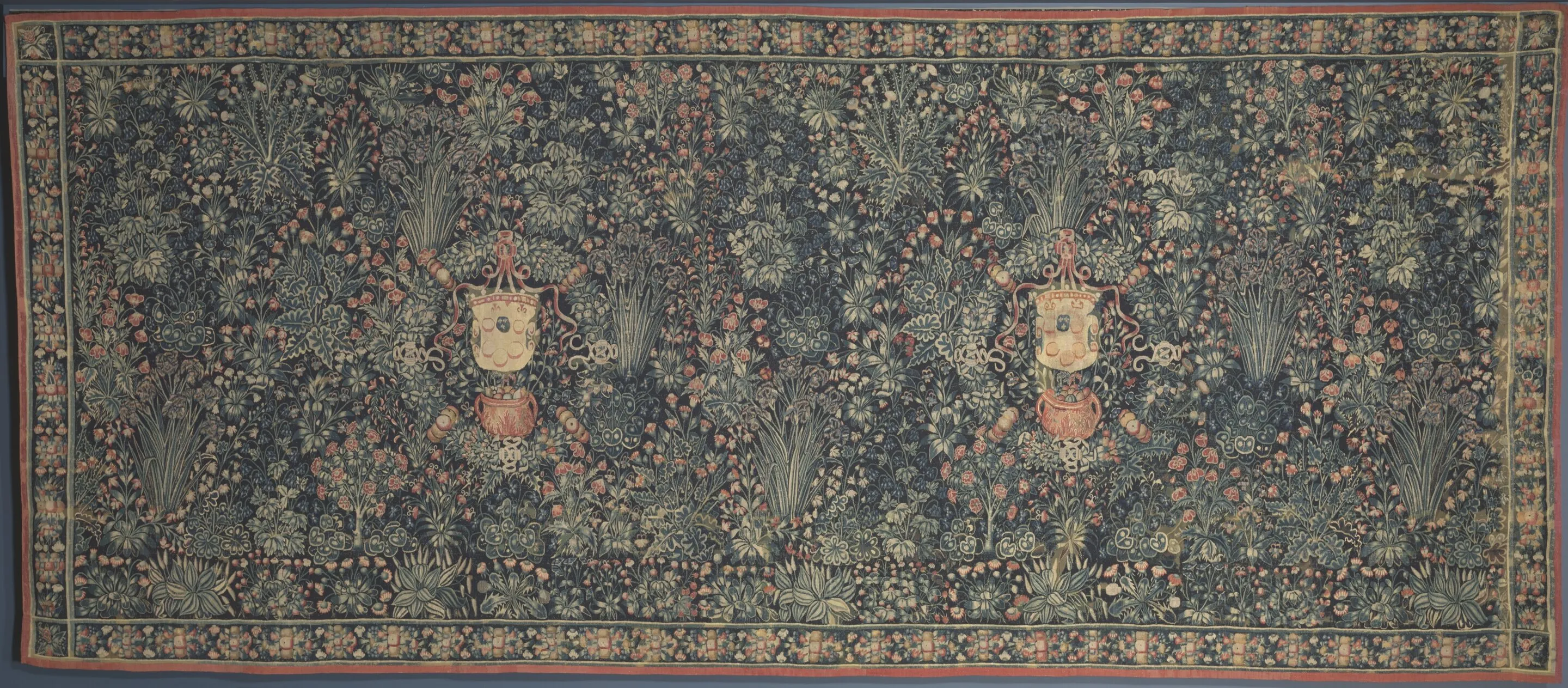
“A tapestry is created by weaving coloured weft threads through plain warp threads,” in the words of the V&A. The picture and the cloth are made at the same time, traditionally in wool. The same page has the best argument for this whole guide: “In older tapestries, the original colours are often more intense on the back, which would have been protected from exposure to light.”
Plenty of wall hangings sold as tapestries aren’t tapestry weave. The Gloria F. Ross Center for Tapestry Studies calls that “a casual use of the word”, and notes that “Jacquard textiles are not handwoven nor do they use true tapestry weave.” Others are printed: Society6’s wall hangings, from $35, are “Woven from textured polyester yarn”, and the shop says its “Items are printed in the USA”. Olive & Iris sells a “Vintage Hand Embroidered Tapestry”, which is embroidery. Read how a piece is made, not what it’s called.
Modern woven hangings come from a different tradition. When the Museum of Modern Art showed Wall Hangings in 1969, its wall label said the weavers were “in no way concerned with the pictorial aspects of weaving, but are involved with extending the formal possibilities of the craft.”
Quilts and kantha
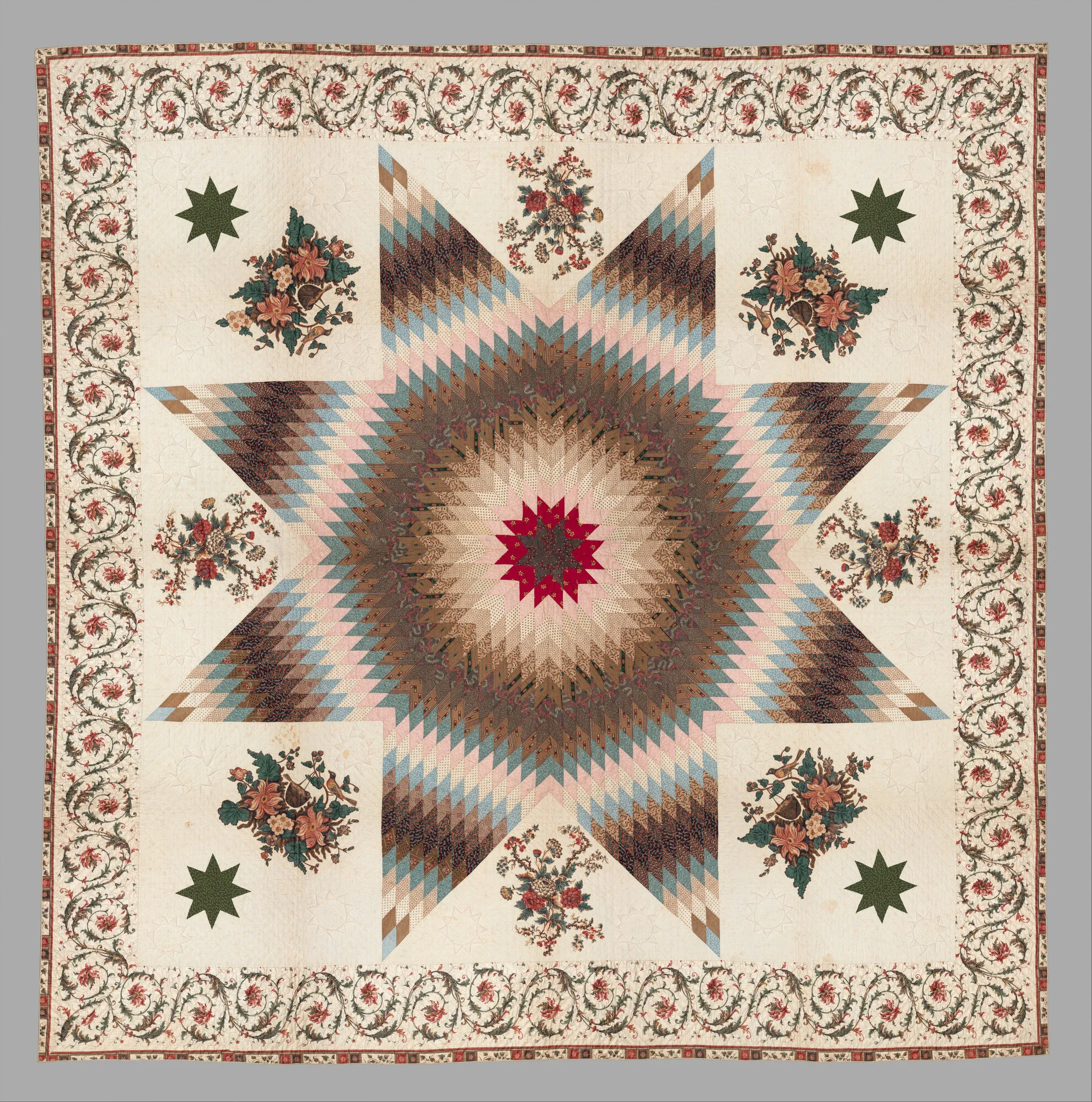
The show “Widely credited with helping bring art world attention to quilts”, in the International Quilt Museum’s words, was the Whitney Museum’s Abstract Design in American Quilts in 1971, which “featured graphic pieced quilts hanging on the walls” built for abstract painting.
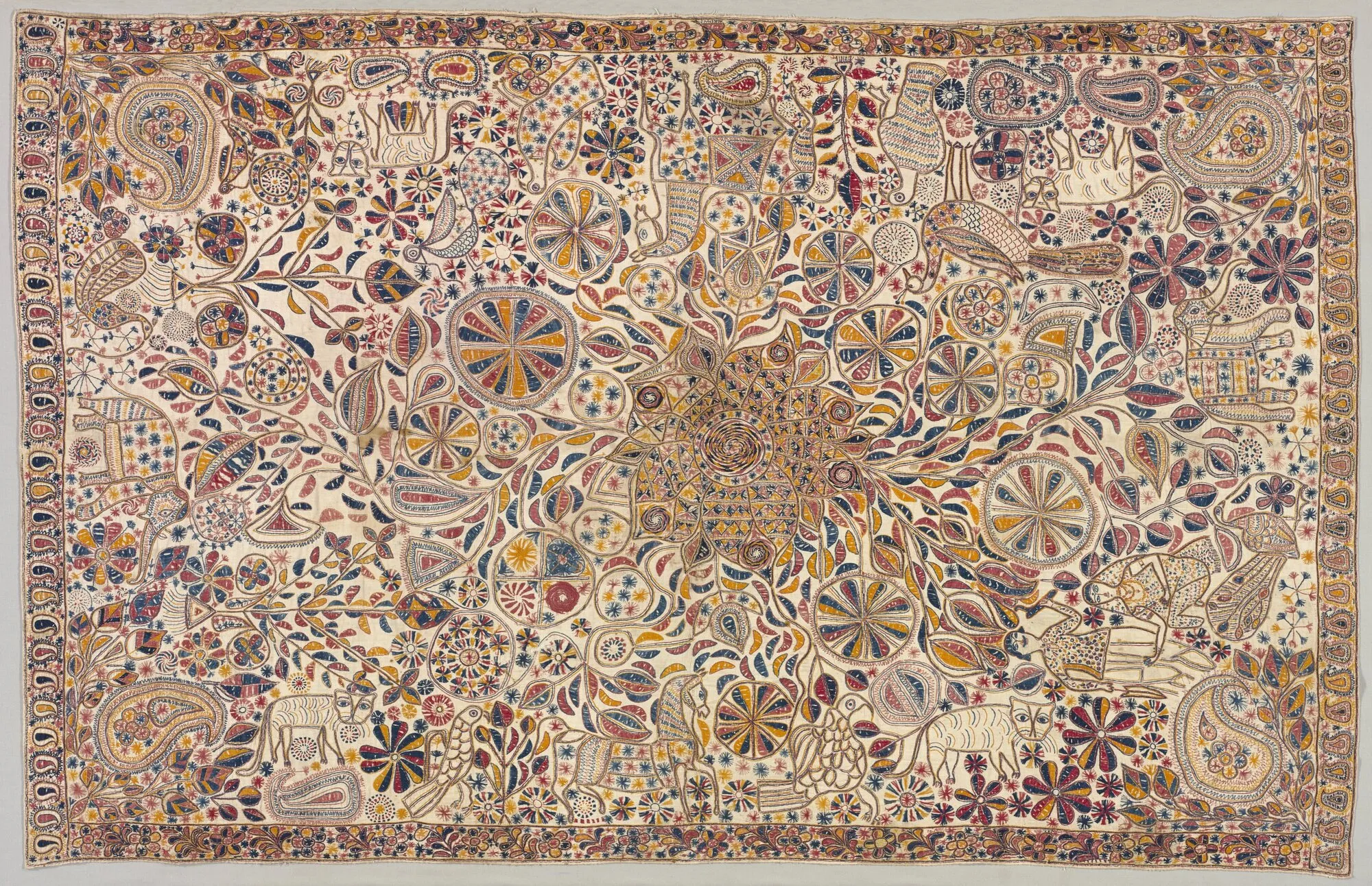
Kantha is the Bengali version of layered, stitched cloth. The V&A describes “embroidery from West Bengal and Bangladesh” that “is traditionally made of recycled cotton saris and dhotis that have worn out”, in layers “stitched together by designs in simple running stitch”. Today, the V&A adds, “New fabrics are often used, and the word kantha has come to describe the stitching style rather than the object itself.” So a new kantha wall hanging can be new cloth in kantha stitch; a vintage one is the older, layered thing.
Framed textiles
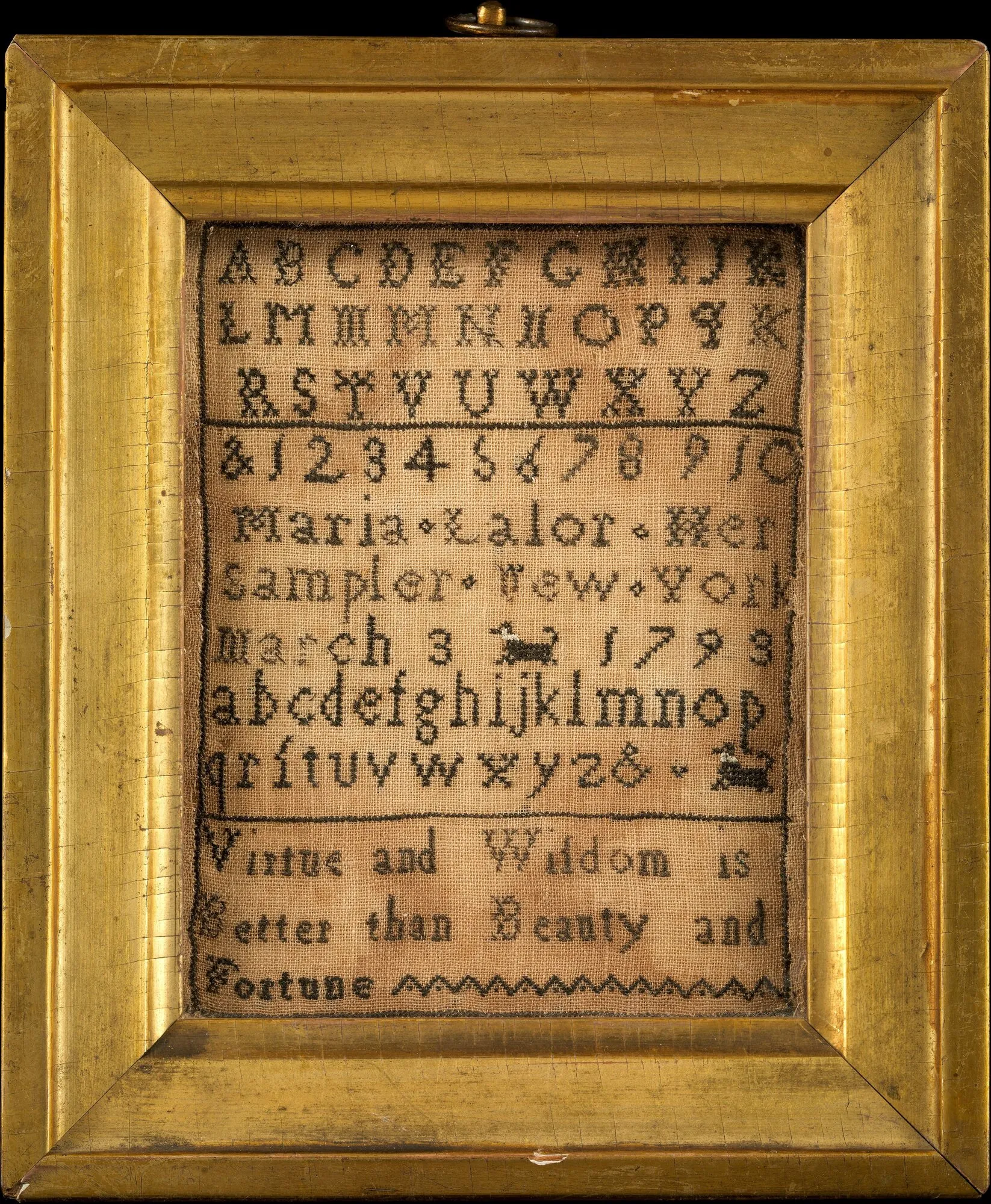
Framing a textile is old. From the early 18th century, English samplers became “something that could be displayed on the wall in the style of a painting or a print”, the V&A says. The CCI’s framing note adds that “Most embroideries, pieces of lace, and even small quilts can be safely framed”, as long as they’re stitched to a fabric-covered board first. Home-decor shops sell them ready to hang: Room & Board frames vintage kantha “composed of secondhand saris”, and Lulu and Georgia frames “An original, hand-embroidered textile crafted by Otomi artists in Mexico”.
Printed silk squares
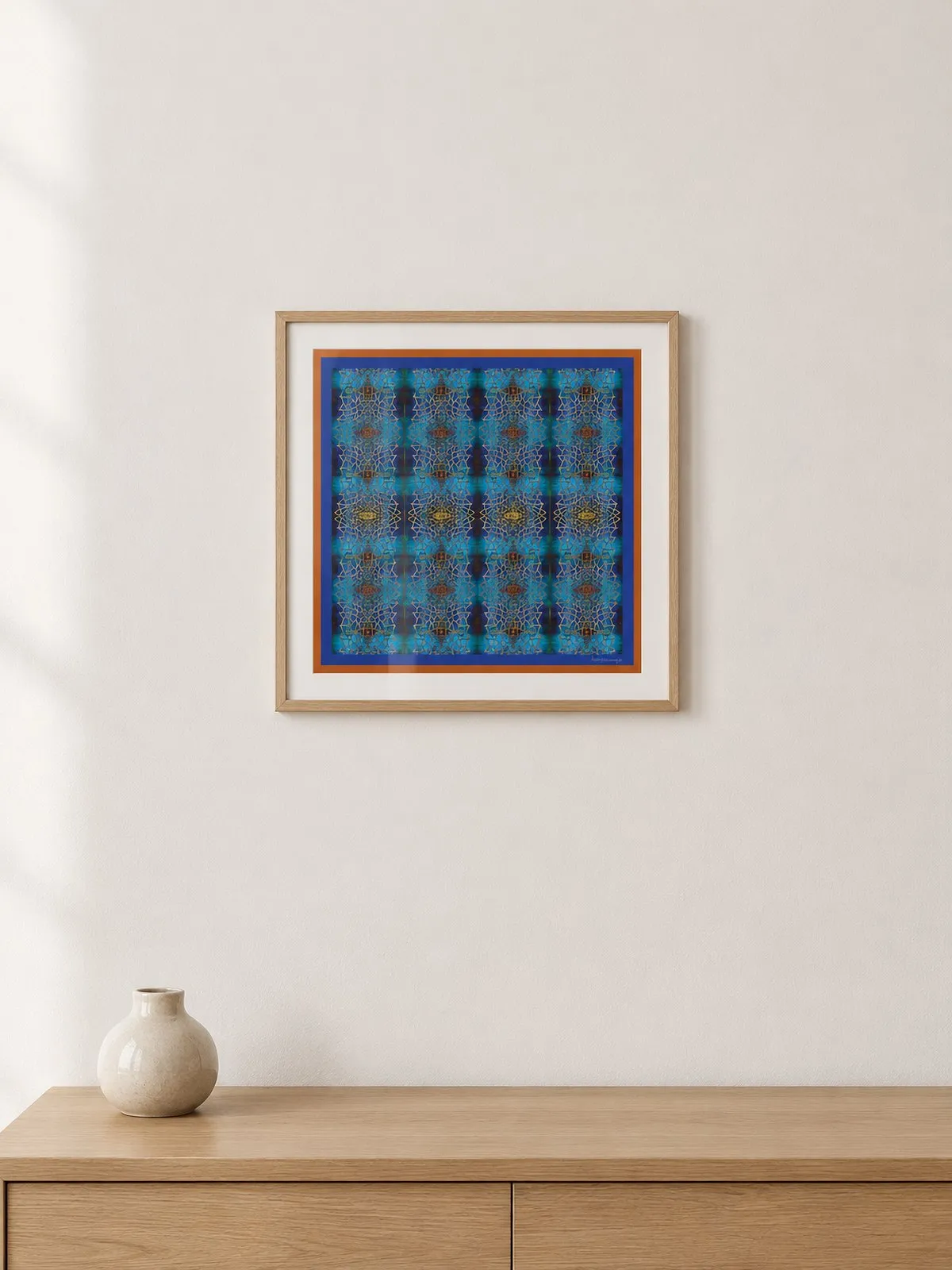
An artist’s printed silk square has been shown framed since at least 1947. When the London firm Ascher showed the squares it had commissioned from artists including Henri Matisse, first in Paris and then in London, “the headscarves were displayed on easels and in frames”, according to the Whitworth. The V&A holds Matisse’s Echarpe and Henry Moore’s Family Groups; its record of the Moore says Ascher asked artists for designs “for a 90 centimetre silk or rayon square”.
It’s the most delicate kind on this list: thin, light, and made of the fibre that light damages most. That’s why it’s framed rather than hung, and why the wall matters most of all. More on artist-designed silk scarves and the history of the printed silk scarf.
Choose the wall first
Every textile fades in light, the damage adds up, and it can’t be undone. “Light damage is both cumulative and irreversible,” the CCI says, and “Of the natural fibres, flax is the most resistant to light damage (visible and UV), and silk is the most vulnerable.” Dyes matter as much as fibre: “Most natural dyes and a great many synthetic dyes, especially the early ones, are highly sensitive and easily faded or altered by light.”
The CCI’s fading table shows how much the wall decides:
| Where it hangs | Light | Just-noticeable fade, sensitive colours | Same, with UV filtered out |
|---|---|---|---|
| By a window, or under a study lamp | 5,000 lux | 4 days to 1 month | 5 days to 2 months |
| A museum textile gallery | 50 lux | 1 to 10 years | 1.5 to 20 years |
UV-filtering glass helps, but less light helps far more. For light-sensitive colours, the CCI’s light guide says “UV usually contributes less than half of the fading and often only one tenth”. Cutting the light from 5,000 to 50 lux “will prolong the enjoyment of colours by a factor of 100”. A home won’t be as dim as a museum, but the choice of wall gets you most of the way.
How to pick the wall:
- Watch it for a day. The CCI’s advice is to “observe where the sun shines at different times of the day and avoid those locations in the room”. A wall that catches an hour of afternoon sun counts.
- Keep it away from windows. “Keep light-sensitive objects away from windows,” says Museums Galleries Scotland. A hallway or landing with no window of its own is the kind of wall to look for.
- Avoid heat and damp. Not above a radiator, fireplace or vent, and not on an outside wall: “Outside walls can be damp and often fluctuate greatly in terms of temperature,” the CCI notes in its quilt care guide.
- Light it evenly. A picture light aimed at the top edge does a hanging textile no favours: “If you light the top more than the bottom, you will weaken the very area which supports the weight of the rest of the textile,” the Smithsonian warns.
- Give it rests. For quilts at home, the University of Nebraska’s extension guide says to “Take the quilt down periodically (at least every six months) to rest the yarns and fibers.” Museums do the same with their own textiles.
How big, and how high
These are conventions from framers and furniture shops, not rules, and they disagree a little:
| Question | The usual answer | Who says so |
|---|---|---|
| How wide? | About two-thirds of the sofa, bed or sideboard below | Pottery Barn; Minted says two-thirds to three-quarters |
| Above a bed? | 40 to 45 inches wide over a queen, 54 to 60 over a king | Minted |
| How high? | The centre about 57 to 60 inches (145 to 152 cm) from the floor | 57: Framebridge and Minted; 60: Pottery Barn and Crate & Barrel |
| Gap above furniture? | 3 to 10 inches (8 to 25 cm) | Pottery Barn 4 to 6; Framebridge 7 to 10; Crate & Barrel 3 to 8 |
| Colour? | Take it from the room: the sofa, cushions or lampshades | Minted |
Big textiles bend the height rule. Framebridge says “Really large artwork? It may need to come down a bit”, and for a long quilt or tapestry the floor sets the limit: the National Park Service says to “Hang large textiles at least twelve inches above the floor”.
For silk, the frame is the size that counts, not the scarf. A 90 cm square stitched to its board needs a frame about 100 cm (40 in) square, which by the two-thirds rule suits a sofa or sideboard about 150 cm (59 in) wide. The frame for a 42 cm pocket square is about 48 to 52 cm, right for a desk or the gap beside a door. A 65 × 180 cm long scarf needs a custom frame about 71 to 75 × 186 to 190 cm, a tall panel for a hallway or stairwell. Our framing guide has every size.
How to hang fabric on a wall without damaging it
Spread the weight across the whole top edge, and never put metal or glue into the cloth. Museums use two ways to do that for textiles strong enough to hang: a sewn sleeve with a rod through it, and hook-and-loop tape sewn to a cotton strip that’s stitched to the textile. Thin or fragile textiles, silk included, are framed on a stitched mount instead.
Here’s how the methods in the 16 top-ranking guides compare with what conservators say:
| Method | Guides suggesting it (of 16) | What conservators say | Use it? |
|---|---|---|---|
| Sewn sleeve with a rod through it | 11 | “a fabric sleeve may be hand-stitched to the reverse of the quilt along the top edge. A sealed dowel is inserted through the sleeve” (CCI) | Yes |
| Hook-and-loop sewn to cotton tape, hook side on a wooden batten | 0 | “the technique of choice for most conservators” (Textile Museum), for “sturdy blankets, quilts and rugs” | Yes, not for silk |
| Stitched to a fabric-covered board and framed | 2 | “Textiles should be mounted onto a fabric-covered solid support before they are framed” (CCI) | Yes, for thin and small pieces |
| Pins, tacks, nails or staples through the fabric | 10 | “Tacks, staples, or nails can also cause distortion, as well as tears and staining from metal corrosion, and therefore must not be used” (CCI) | No |
| Clips on the edge | 6 | A sleeve protects “the fabric and stitching from the stress that nails, pins, or clips would cause” (San Jose Museum of Quilts & Textiles) | No |
| Adhesive strips, tape or stick-on hook-and-loop on the textile | 5 | “Do not use the adhesive-backed tapes” (National Park Service) | No |
| Hook-and-loop sewn straight onto the textile | 1 | “Velcro is too stiff to be stitched directly onto a textile without causing stress” (CCI) | No |
| A glued or iron-on rod pocket | 2 | Glues are among materials that “should never be placed in direct contact with textile artifacts” (CCI) | No |
| Rings sewn along the top | 1 | “a non-uniform support that distorts the textile” (CCI) | No |
| Stretched round a frame and stapled | 1 | “The textile itself should never be stretched around the edges of the strainer” (Textile Museum) | No |
| Tabs, grommets, corner pockets, clamp bars | 2 to 5 each | No conservation source covers them either way |
The sleeve was the most common advice, in 11 guides. Pins or nails through the fabric came next, in 10. No guide described the hook-and-loop method the way conservators do it; the one guide that sews hook-and-loop on, Nazmiyal’s, sews it straight to the tapestry, which the CCI advises against. A restoration company’s guide, under a “Conservation Specialist” byline, told readers to “Push the nail through the fabric near the top of one corner.” Light barely came up: 2 guides mentioned it, and PBteen’s suggests you “Secure the wall hanging with pushpins over the window for an illuminated look.”
The sewn sleeve, for quilts, kantha and tapestries
- Check it can hang. The CCI says to “Avoid hanging quilts that are in poor condition”; a torn or fragile piece goes to a textile conservator first.
- Make a sleeve of washed cotton across the full width. The San Jose Museum of Quilts & Textiles makes it 4 inches wide when finished and places it about 2 inches below the top edge. Nebraska’s guide makes it “a double layer of fabric so that the rod or slat will not touch the quilt”.
- Hand-stitch it with “large stitches (l/4 inch or longer)” (Nebraska), and on the top edge “a herringbone stitch, which is both strong and flexible” (San Jose). Fold a small tuck along its length before sewing the bottom edge; San Jose says it “allows a little room for the slat”.
- Use a sealed rod or slat. The CCI says to seal wooden dowels “with several coats of acrylic latex paint to prevent direct contact with the object”, then support the rod at each end on brackets.
- Hang it along the warp. “A textile should be hung in the warp direction whenever possible. Do not hang along the bias” (National Park Service).
Hook-and-loop on a batten, for heavy tapestries and rugs
This is the CCI’s Velcro support system, written for “tapestries, wall hangings, rugs, quilts, and other large, flat textiles that are in good condition and can bear their own weight”.
- Sew the soft side to a strip, not to the textile. “The soft (loop) tape should be machine-sewn to a strip of upholstery webbing, and the webbing hand-sewn to the back of the textile” (National Park Service). The CCI allows “a prewashed, undyed, cotton tape” as the strip.
- Position it “about 1–1.5 cm below the top edge of the textile”, with the hook-and-loop cut “2 cm shorter in length than the width of the top edge”.
- Hand-sew the strip on, “Starting at the centre and working out to the sides”, with “a running stitch or herringbone stitch with the occasional backstitch”. For very heavy pieces the CCI adds a second strip across the centre back.
- Staple the hook side to a sealed batten: “Seal the wood using acrylic latex paint”, then attach the hook tape “using stainless steel staples at 1 cm intervals”. Fix the batten to the wall and press the textile on.
Don’t use it for silk. The Textile Museum says the method “is not appropriate for thin or fragile textiles, such as silk, or for textiles with heavy surface embellishments like beads”, and the CCI says it “is not suitable for very thin textiles”.
Silk and thin textiles: frame them
A silk square, a scarf, lace or a small embroidery is too light and thin to hang from its edge. Stitch it to an acid-free board covered in washed cotton and frame it behind UV-filtering acrylic held off the silk by a spacer. Never wrap it round a canvas or stretcher: the National Park Service says to “never … turn part of the textile over the edge of the stretcher”. Our guide to framing a silk scarf has the method step by step, the frame sizes and what framers charge.
What textile wall art costs
From $35 to $17,040, with the middle at $479. We recorded 50 pieces from 14 sellers on 29 October 2026, each price from the seller’s own pages: the shops on the first page of US results for “textile wall art”, “fabric wall art” and “fabric wall hanging”, and four UK sellers. The middle price was $479 for the 37 priced in dollars and £225 for the 13 in pounds. Per square metre of textile, the middle was $953, across the 35 dollar-priced pieces whose pages give both dimensions.
The product pages back the rest of this guide. Of the 24 framed pieces, 17 say what they’re glazed with, and one claims UV protection: The Citizenry’s Mihki, whose page says “Clear acrylic glazing protects the piece from UV damage”. Only 2 of the 50 pages tell you to keep the piece out of the sun: Lulu and Georgia’s Otomi (“Keep out of direct sunlight.”) and The Citizenry’s Vista. 23 of the 50 name the maker or artist.
| Seller | What it sells | Prices we recorded | One example |
|---|---|---|---|
| West Elm | Framed textiles, woven hangings, a wall quilt | $150 to $479 | Framed Neutral Textile Wall Art, 76 × 76 cm, behind glass, $279 |
| mindtheg | Printed linen, framed | $257 to $772 | Estuary, 90 × 90 cm, $772 |
| Teddy & Wool | Macramé and fibre art by Rianne Aarts | $750 to $9,500 | Kelsey, 140 × 85 cm, $995 |
| The Citizenry | Handwoven hangings by named artisan groups | $299 to $3,099 | Bel, jute, by the Weavers of Haryana, 122 × 91 cm, $299 |
| Room & Board | Framed vintage kantha | $699 and $1,399 | Vintage Kantha Textile, Large, 66 × 201 cm, $1,399 |
| Lulu and Georgia | Framed textiles | $399 to $2,199 | Otomi Textile Wall Art, 102 × 102 cm, $2,199 |
| Olive & Iris | Vintage hand-embroidered pieces | $75 to $230 | Tika, 41 × 104 cm, $230 |
| Society6 | Printed polyester hangings, artist designs | $35 to $90 | Bengal Maya Floral by Holli Zollinger, 59 × 40 cm, $45 |
| Wescover | Independent makers’ marketplace | $175 to $17,040 | Noontide, handwoven tapestry by Ulrika L, 169 × 117 cm, $17,040 |
| That Rebel House (UK) | Vintage kilims, some framed | £180 to £315 | Ava, vintage flat-weave kilim, 103 × 139 cm, £315 |
| Loom Designs (UK) | Textiles in acrylic box frames | £187.50 to £1,950 | Silk Anor I Suzani, 152 × 102 cm, £1,850 |
| Upcycled Upholstery (UK) | Hand-illustrated linen off-cuts | £29.95 to £39.95 | A3 print, 30 × 42 cm, £39.95 |
| Bags of Love (UK) | Your own photo printed on fabric | from £35.95 | Four sizes, made to order |
By budget, in the US:
- Under $100: printed hangings at Society6, small vintage embroideries at Olive & Iris, or a 42 cm silk pocket square to frame ($59).
- $100 to $500: West Elm’s framed textiles and woven hangings, The Citizenry’s jute Bel, mindtheg’s smaller framed linen prints, or a 90 cm silk square (from $219) before framing.
- $500 to $2,000: framed vintage kantha at Room & Board, Rianne Aarts’s smaller fibre pieces at Teddy & Wool ($750 to $1,800 in our sample), and The Citizenry’s handwoven pieces.
- Over $2,000: Lulu and Georgia’s Otomi embroidery, The Citizenry’s Abaco, and one-of-a-kind pieces like Teddy & Wool’s Drifting Tide ($9,500) or Ulrika L’s Noontide.
In the UK: from under £40 for Upcycled Upholstery’s linen off-cuts or a Bags of Love print of your own photo, £180 to £315 for vintage kilims and framed vintage weaving at That Rebel House, and £187.50 to £1,950 for Loom Designs’ framed textiles.
Where a printed silk square fits
The Kanso Collective sells Aubrey Kurlansky’s silk, and he is one of its co-founders.
An artist’s silk square costs less than most textile wall art, and the frame is extra. Aubrey Kurlansky’s 90 cm squares are from $219 (£169), less than 29 of the 37 pieces we priced in dollars. Our framing guide compares what frame kits and framers charge.
What that buys is an original design by a named artist: Aubrey is a Bangkok artist who spent years designing interiors for luxury hotels in Singapore and Bangkok. The squares are 18 momme silk twill, printed on both sides, with hand-rolled hems, and the artist’s signature is printed in each design. Every piece is a limited edition, never mass produced: made to order in collaboration with the artist and finished by hand, and delivered worldwide in 2 to 3 weeks. Because a stitched mount can be undone, you can take the square down and wear it.
His 42 cm pocket squares are $59 (£55), for a frame about 50 cm square, and his 65 × 180 cm long scarves are from $255 (£199), for a tall panel. It isn’t the pick for a sunny wall, for a piece you need within the week, or for a famous label.
See every design shown framed; frames aren’t included, as The Kanso Collective sells the silk, not frames.
Looking after textile wall art
- Light first. The wall you chose matters more than anything else on this list. The sun’s path changes through the year, so look at the wall again when the seasons turn.
- Rest it. Take hanging textiles down every few months, or swap two: “alternating between two quilts is ideal,” says the San Jose Museum of Quilts & Textiles. Store them flat, or rolled, away from light.
- Keep it off the wall. “To prevent moisture buildup behind a textile, place a spacer between the wall and the textile or frame,” the Smithsonian advises. New Zealand’s national museum, Te Papa, lines hanging textiles with “washed calico, which will protect them from the wall and stop dust settling on the textile’s back.”
- Frame what you can’t rest. A frame keeps off dust and hands, which the CCI counts among its benefits, but it doesn’t stop fading.
- Hang it clean. “If a textile is soiled or in poor condition, it should not be mounted,” says the CCI’s mounting note. Have it cleaned first, the right way for its fibre: Aubrey Kurlansky’s silk pieces are dry clean only.
How we checked
The audit started from the top 10 Google results (US, desktop, 29 October 2026) for “how to hang fabric on wall”, “how to hang a tapestry” and “how to hang a quilt on the wall”: 30 results. Setting aside 13 videos, social posts and forum threads, and merging one guide that ranked for two searches, left 16 written guides. For each, we recorded every hanging method it recommends or offers, then looked up what museum conservation sources say about each method, quoting them.
A method counts as ruled out only where a conservation source says so in plain words; four methods no source covers (tabs, grommets, corner pockets, full-width clamp bars) aren’t counted either way. One quilting guide’s count rests on a passing line that for a mini quilt “you can get away with” clips or safety pins; without it the total is 10 of 16.
Seller prices come from each seller’s own pages or its shop’s own product data on the same day, read through a US connection for US prices; where a page and its data disagreed, or a price couldn’t be tied to a size, we left it out. We didn’t include general marketplaces such as Etsy, eBay and Amazon.
| Guide (search, rank) | Publisher | Methods museums support | Methods museums rule out |
|---|---|---|---|
| Apartment Therapy (fabric, 2) | Design magazine | Pins or nails, clips, adhesive on the textile, glued rod pocket | |
| Decorative Collective (fabric, 4) | Antiques marketplace | Sleeve | Pins or nails, adhesive on the textile, stretched on a frame |
| Hallmark Channel (fabric, 6; tapestry, 10) | TV network | Sleeve | Pins or nails, glued rod pocket, rings |
| Picture Hang Solutions (fabric, 8) | Picture-hanging hardware | Sleeve | Pins or nails |
| The Ancient Home (tapestry, 2) | Sells tapestries | Sleeve | Clips |
| PBteen (tapestry, 3) | Sells tapestries | Sleeve | Pins or nails, clips, adhesive and stick-on hook-and-loop |
| Rebecca Mezoff (tapestry, 4) | Tapestry weaver | Stitched mount | |
| Prism Specialties (tapestry, 5) | Restoration company | Pins or nails, adhesive and stick-on hook-and-loop | |
| Joon Loloi (tapestry, 6) | Sells rugs | Pins or nails, clips | |
| Nazmiyal (tapestry, 7) | Antique rug dealer | Sleeve, stitched mount | Hook-and-loop sewn straight on, clips, pins or nails |
| Charlotte Home Furnishings (tapestry, 8) | Sells tapestries | Sleeve | Pins or nails, adhesive on the textile |
| Jacquelynne Steves (quilt, 2) | Quilt pattern designer | Sleeve | Clips or safety pins, for mini quilts |
| American Quilter’s Society (quilt, 3) | Quilting organisation | Sleeve | |
| Quilter’s Candy (quilt, 4) | Quilting site | ||
| Missouri Star (quilt, 6) | Quilting supplies | Sleeve | |
| All People Quilt (quilt, 9) | Quilting magazine | Sleeve |
Limits: one day’s results, from one location, read once. Conservation guidance is written for museum objects; we apply it to textiles you’d want to keep, and say where a source is about quilts or flags rather than all textiles.
FAQ
What is textile wall art? Fabric hung on a wall to be looked at: a woven tapestry, a woven or knotted wall hanging, a quilt, a kantha, a framed embroidery or textile, or a printed silk square. The kinds differ in weight and in how fast light fades them, and that decides how each should be hung and where.
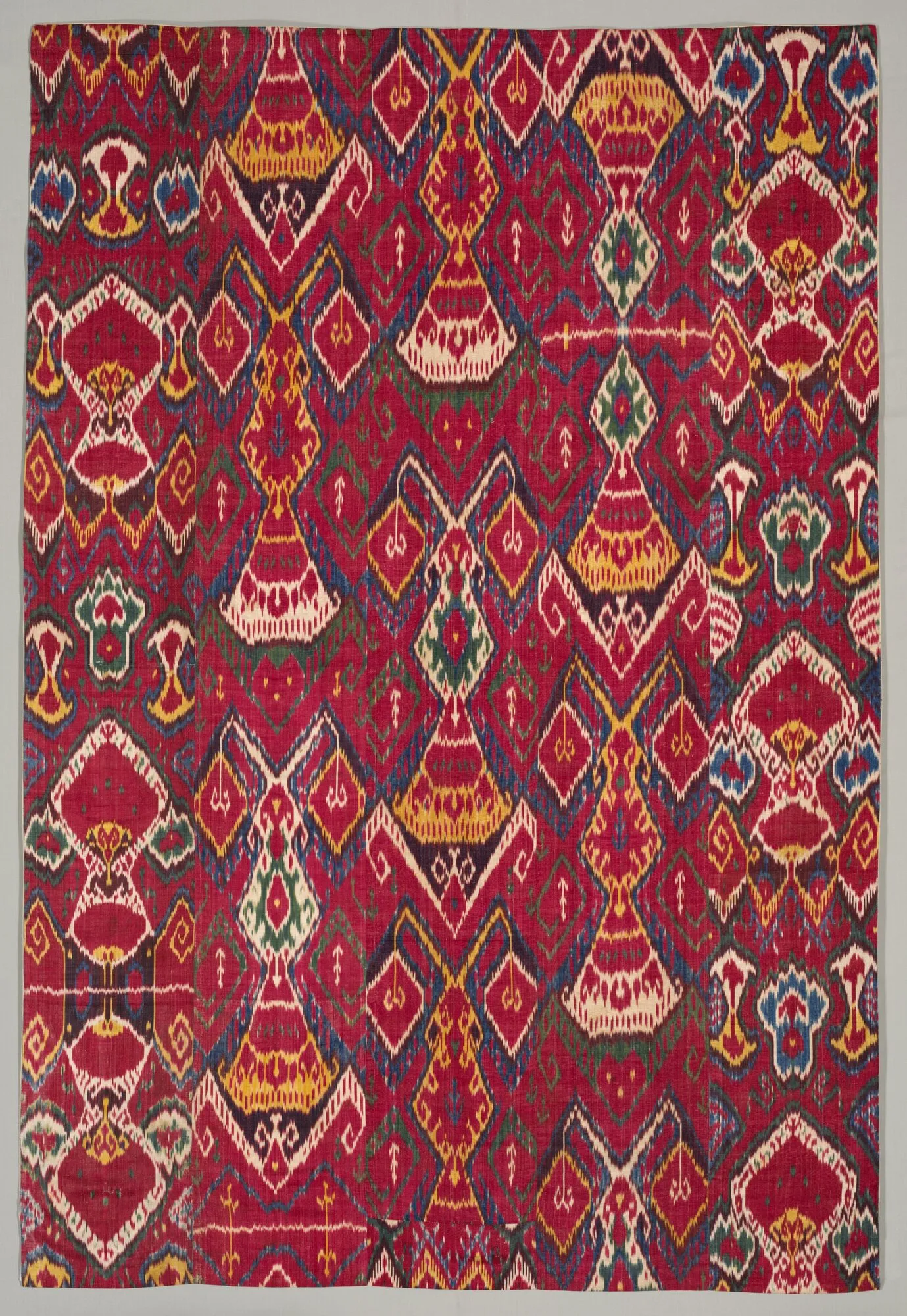
What is the fabric you hang on walls called? Usually a wall hanging. A tapestry, strictly, is a cloth whose picture is woven in: “A tapestry is created by weaving coloured weft threads through plain warp threads,” the V&A says. Many wall hangings sold as tapestries are machine-woven on Jacquard looms, which the Gloria F. Ross Center for Tapestry Studies calls “a casual use of the word”. Others have their own names: a quilt, a kantha, a sampler, or a pardah, the Central Asian silk wall hanging.
How do you hang fabric on a wall without damaging it? Spread its weight across the whole top edge. Either hand-stitch a washed cotton sleeve to the back and pass a sealed rod through it, or machine-sew the soft side of hook-and-loop tape to cotton tape, hand-stitch that to the textile and staple the hook side to a sealed wooden batten on the wall. Don’t put pins, nails, tacks, staples, clips, glue or adhesive strips into or onto the fabric. Frame thin pieces instead.
Can command strips hold up a tapestry? Not stuck to the tapestry. The US National Park Service says “Do not use the adhesive-backed tapes”, and the Canadian Conservation Institute rules out “taping, stapling or nailing textiles directly to the wall”. Sew a sleeve to the tapestry and hang it on a rod; then only the rod’s brackets are fixed to the wall, and nothing sticky touches the fabric.
How do you hang a tapestry without a rod pocket? Sew one on. A sleeve of washed cotton, hand-stitched across the back near the top, takes a sealed rod. For a heavy tapestry, the Canadian Conservation Institute’s method is hook-and-loop tape machine-sewn to a cotton strip, the strip hand-sewn “about 1–1.5 cm below the top edge of the textile”, and the hook side stapled to a sealed batten. Don’t sew the hook-and-loop straight onto the tapestry: it’s “too stiff to be stitched directly onto a textile without causing stress”.
How do you hang a quilt on the wall? With a hanging sleeve. The San Jose Museum of Quilts & Textiles makes it 4 inches wide and places it about 2 inches below the top; the University of Nebraska’s guide makes it a double layer so the rod never touches the quilt. Push a sealed slat through and support it at each end. “Never use nails, staples, tacks or pins to hang a quilt,” Nebraska says, and take it down at least every six months to rest.
How do you hang a rug on the wall? Like a heavy tapestry: hook-and-loop sewn to a cotton strip, hand-stitched to the rug, on a sealed batten. The Canadian Conservation Institute lists rugs among the textiles the method suits. Keep it off outside walls and away from heat: “Hanging a rug above a radiator or fire will cause the fibres to become dry and brittle,” says Icon, the UK conservation body, which adds that “Lining the rug will give it additional protection.”
Can you hang a silk scarf as wall art? Yes, framed. Stitch it to an acid-free board covered in washed cotton, frame it behind UV-filtering acrylic held off the silk by a spacer, and hang it on a wall the sun never reaches. A 90 cm square needs a frame about 100 cm (40 in) square. Don’t hang it by its edge, wrap it round a canvas, or use hook-and-loop: the Textile Museum says that method “is not appropriate for thin or fragile textiles, such as silk”.
Should textile art be framed or hung? Frame what’s thin, small or fragile: the Canadian Conservation Institute says “Most embroideries, pieces of lace, and even small quilts can be safely framed”, on a fabric-covered board. Hang what’s large and sturdy, such as a tapestry, quilt, kantha or rug, from a sewn sleeve or hook-and-loop strip. A silk scarf or square, whatever its size, goes in a frame.
Will textile wall art fade, and how do I stop it? It will fade in light, and the damage is “cumulative and irreversible”, says the Canadian Conservation Institute. Cutting the light does far more than UV-filtering glass: UV “usually contributes less than half of the fading and often only one tenth” for sensitive colours, while moving from window light (5,000 lux) to museum light (50 lux) slows fading about 100 times. Hang it where the sun never reaches, and take it down for rests.
What size textile art goes above a sofa? About two-thirds of the sofa’s width, by Pottery Barn’s guide (Minted says two-thirds to three-quarters), with the centre about 57 to 60 inches from the floor and a gap of 3 to 10 inches above the sofa back. Over a sofa about 150 cm wide, that’s a piece about 100 cm wide: the frame size for a 90 cm silk square.
How much does textile wall art cost? From $35 to $17,040 on the pages we checked on 29 October 2026: a printed polyester hanging at Society6 at one end, a handwoven tapestry by Ulrika L through Wescover at the other. The middle of the 37 pieces priced in dollars was $479, and of the 13 in pounds £225. Framed vintage kantha at Room & Board was $699 and $1,399.
Where can I buy textile wall art? Home-decor shops such as West Elm, The Citizenry, Room & Board and Lulu and Georgia; makers’ own shops, such as Teddy & Wool for Rianne Aarts’s fibre art; marketplaces of independent makers such as Wescover; artist print shops such as Society6; and in the UK, That Rebel House and Loom Designs. For an artist’s silk square to frame, The Kanso Collective sells Aubrey Kurlansky’s, from $219 for 90 cm; he’s one of its co-founders, and frames aren’t included.
Sources
Conservation and display: CCI, caring for textiles and costumes; CCI, light, ultraviolet and infrared; CCI Notes 13/4, Velcro support system for textiles; CCI Notes 13/17, conservation framing of flat textiles; CCI Notes 13/6, mounting small flat textiles; CCI, basic care of quilts; CCI, basic care of textiles; The Textile Museum, George Washington University; National Park Service Museum Handbook, Appendix K; Smithsonian National Museum of American History, care of flags; San Jose Museum of Quilts & Textiles, quilt sleeves and quilt care; University of Nebraska–Lincoln Extension, G1820; Te Papa, caring for textiles; Icon, carpets and rugs; Museums Galleries Scotland, conservation and lighting.
What each kind is: V&A, what is tapestry?; Gloria F. Ross Center for Tapestry Studies, Jacquard textiles; MoMA, Wall Hangings (1969) and its wall label; International Quilt Museum, Abstract Design in American Quilts; V&A, kantha coverlet and kantha, a South Asian quilting tradition; V&A, needlework samplers; the Whitworth, Matisse square for Ascher; V&A, Matisse, Echarpe; V&A, Henry Moore, Family Groups.
Size and height: Pottery Barn; Minted, art size and art for every room; Framebridge; Crate & Barrel.
Prices: each seller’s own page, linked in the tables, checked 29 October 2026. The 16 hanging guides are linked in “How we checked”. Museum images: The Metropolitan Museum of Art Open Access (public domain) and The Cleveland Museum of Art Open Access (CC0), credited under each image; our framed previews are digitally created from Aubrey Kurlansky’s artwork by The Kanso Collective.